Showing posts with label Fujian Province. Show all posts

Wednesday, August 27, 2008

Quanzhou

Quanzhou is a medium-sized city in Fujian Province, a historic port city that Marco Polo once raved about as the largest port city in the world. I like all the temples and religious buildings and whatnot, and actually visiting this city was my impetus for the larger trip. While it was a nice enough city, I'll admit it was perhaps the low point of my trip to Fujian.

But I'll start by saying: yes, there really are a lot of old temples and shrines scattered here and about. Many of them still seem in use, not just a tourist draw the way temples can feel in Beijing or Shanghai. Here's the largest and most famous, Kaiyuan Temple:


But really just walking down the street, it was possible to come across active shrines and temples. I didn't go on a big day for Buddhism, but the Guandi Temple was quite active, and even on the sidewalk people stopped to burn incense. There were prayer pillows just sitting around on the sidewalk, for people to kneel in prayer. I wish I had gotten a better picture of it:


And a little out of the way was Chongfu Temple, an interesting modern neighborhood temple with a beautiful grounds, and a lot of Buddhist monks busily going about their business:


Additionally, there were a few other religions represented: the world's sole remaining (crypto) Manichean Temple is located in a village nearby, UNESCO sponsored a very interesting paper about it. There's also the remains of the Qingjing Mosque from a thousand years ago:


It wasn't all old churches, of course, and Quanzhou has several long streets, filled with shops and restaurants. It's not nearly as vertical as with larger cities, though: most of the shops were kept to a single floor. It all had a lot more character than one might expect: here's a shop that sells only red dresses:


And here's a side-street full of restaurants, this one's sign offers lamb, goose, and dog meat. But all I saw was roast chicken:


While there wasn't much in terms of nightlife, I did see a really cool take on DDR, the rhythm-based video game. It was hooked up to a real drum set! This girl was good, from a distance I thought I was hearing some rock band, playing in a club:


Anyway, these shopping streets are very, very long. I walked them back and forth a few times, and got so tired! In addition to taxis, there were also a large number of pedi-cabs. It seems Chinese-y, I guess, but it's the first time I've seen them in a way that wasn't entirely directed at tourists.


And continuing on with my earlier discussions on xiaolongbao, I ordered the local variety, and it was one of the strangest versions I've ever had. The dough on the outside was thick and mealy, tasting more like wheat bread. The meat filling was hearty and rich, and the dipping sauce was a hot-sauce, rather than vinegar. I like it, but it was really stretching to call it xiaolongbao! Most people ordered it with a broth that had some peanuts added.

Wednesday, August 06, 2008

Fujian's Hakka Countryside

This update is about perhaps the most impressive area of China I've ever been to: the rural interior of Fujian province, a four-hour bus ride from Xiamen. I mean, Shanghai is a lot of fun, but the stepped slopes around Yongding can be breathtaking:


The part to notice is the large structures in the bottom left of the photograph. They're crazy! Gigantic earthen buildings that housed an entire clan, they were built by Hakka tribes trying to steer clear of bandits:


The insides are mostly wood structures, with some stone, and a shrine (and perhaps smaller buildings) located to the inside:


However it doesn't really seem like a pleasant place to live: the rooms are stacked against each other tightly, and there's no modern conveniences like electricity or water. I also imagine that fire is a constant danger. Here are the insides of another tulou:


It's possible to rent a room in a tulou for a few dollars per night, but I opted for a place with an electric light and a shower, nearby. I was still located right nearby to all of this, walking around it was surrealistically beautiful:


That's actually a classic shot of Yongding, and here's another one, which shows how extremely beautiful the surrounding areas can be:


It's all farmland, I heard that the wood used in chopsticks is a big local crop. It's very interesting, the villages are populated almost entirely by the very young and the very old - people of normal working age have almost all left to Xiamen, or to other big coastal cities. Really it's just an eerie feeling. It also leads to surprisingly old people, out working the fields. My friends told me I should have gone out and helped, rather than just snapping a picture:


These houses recently got added to UNESCO's list of the world's top tourist destinations. But when I went, a few months ago, there were basically no other tourists there, and it was obvious people weren't used to tourists - I was constantly asked if I was French, maybe the French equivalent to Lonely Planet highlights the area? I was also told I was tall constantly. On the other hand, people were very polite, and didn't even stare or yell "hello" at me.

But there's definite inconveniences: basically nobody speaks any English, and there's no English menus (or even proper restaurants). So while I would definitely recommend a tour of the area, it's probably best to arrange the tour through a travel agency, unless your Chinese is pretty good.

Wednesday, July 23, 2008

Gulang Yu & Xiamen

I'll have a few posts about a trip I made to Fujian Province a few months ago. Fujian Province is along the southern coast of China, directly across from Taiwan. I had been to Fujian Province before, on a company field trip to Wuyi Mountain. I had considered a trip back ever since then, and so I was delighted that the return trip was also excellent. Some places more than others, but it was generally a sustained high point.

My first stop on the trip was to Xiamen & Gulang Yu. Xiamen is one of the major cities of Fujian, I've also heard it referred to by the name Amoy, which comes from the local dialect. It's a large, sprawling city, although the downtown area was fun to wander around. The city is built on an island, with the Eastern Coast being the downtown of the city:


The picture was taken from the small Gulang Yu island, which was an interesting if heavily-touristed area. More than a century ago, Xiamen was the center of foreign operations in China, and Gulang Yu was where the foreigners lived. A lot of their houses remain, in various states of repair:


And the streets have a charming randomness to them, with a lot of thin alleys leading every which-way:


It's all very beautiful, and with a strong foreign feel. There were a number of small and relatively inexpensive hotels and hostels, dramatically sticking up in the air, to the left of the ferry peir. It was all very beautiful, and I've never seen so many cameras in my life - and in China, that's really saying something! There were plenty of old film cameras or Holgas in use, and also a large number of couples getting their marriage photos taken - it's a big Chinese custom, done a few weeks before the actual wedding:


But while Gulang Yu is beautiful, it's not the most exciting place. There's a cheap five-minute ferry to downtown Xiamen, and the shopping street of Zhongshan Lu. It's a large pedestrian street that's pretty similar to the other large shopping streets in any large Chinese city. However it did have plenty snack foods, some interesting side streets, and a few activities, like these people performing traditional Chinese music:


And there's also Nan Pu Tuo temple, a large active Buddhist temple with an interesting series of hills to the rear of the temple ground:


All-in-all, I don't know if Xiamen and Gulang Yu merit a special trip on their own, but they're relaxed and beautiful and generally interesting places to be.

Monday, June 26, 2006

Taking Wuyi Mountain (By Strategy), Pt. 2

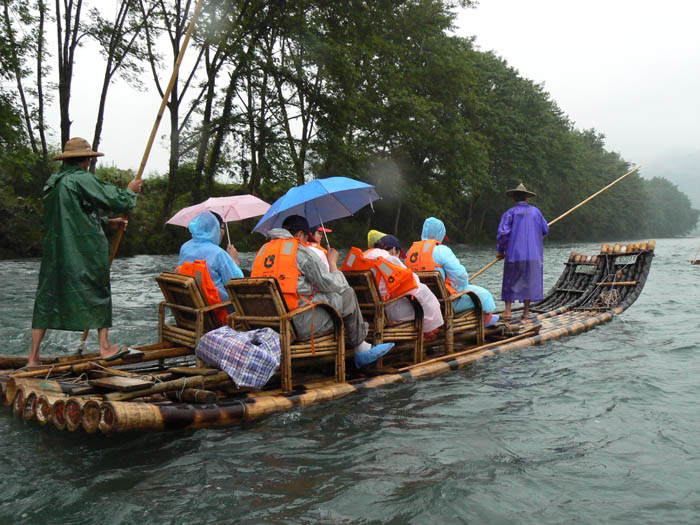
Continuing on with my trip to Wuyi Mountain, probably the highlight was taking a raft down the Nine Twists River. The river is very shallow as it winds its way through the mountains. The mode of transportation was small rafts made of bamboo tied together, with two men with poles who guide our way through. It's a popular tourist attraction and people line up for it like it was Disneyland.


You can notice the umbrellas and plastic rainjackets, it was raining really hard when the ride first started, but quickly got better. In a way that was for the best. It made the river a little rougher, at times it almost resembled white water rafting. What more to say? I'll just link up a few pictures, I hope it comes across how amazingly beautiful the whole ride was.


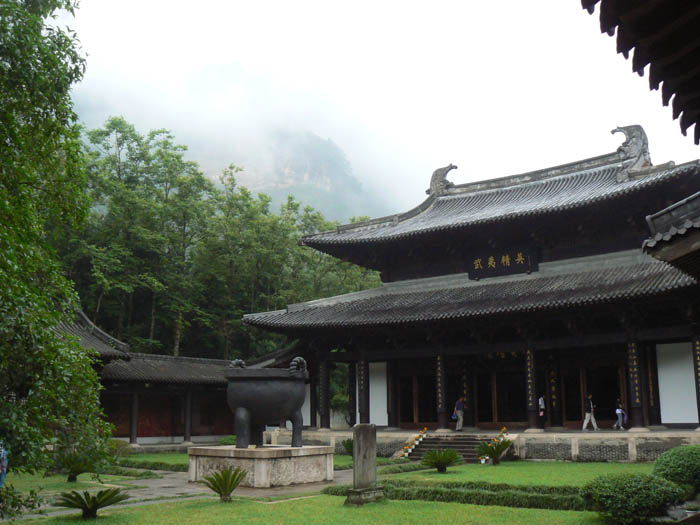
At the end of all of this was some ancient colleges, smallish compounds where the old-school version of graduate students would prepare for the incredibly demanding Imperial Examinations. Some of the associated scholars are very famous to the people I was with, and there were even calligraphy examples about a thousand years old from masters!


A side note: almost every Chinese person will tell you that the place where they were born has both the most beautiful scenery and the most delicious food. I'm no exception, so perhaps this extends beyond Chinese people...anyway while Wuyi Mountain may have a claim at the most beautiful, from what I ate there's no way it could stake a claim to the most delicious food. The lunch & dinners I had, at four different restaurants in total, were all very similar and vaguely inedible, despite the immense appetite I had worked up. My favorite was the spicy bamboo shoots and Oolong-tea flavored Tofu, local specialties. I also thought this pork dish was OK, until I lifted up a piece and saw one side was covered in fur! The people I was with told me that's how country-area restaurants go. There was no convenience store pre-prepared food or fast food to get as an alternative. Normally that wouldn't really be a problem, but I was really looking around for something.

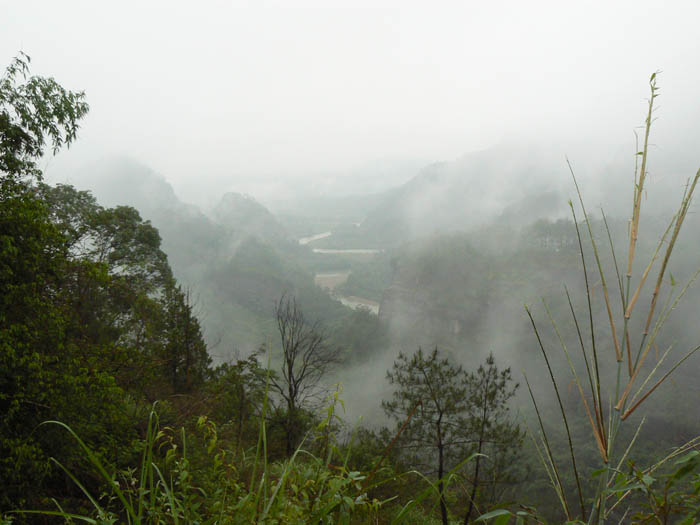
Moving on, I hiked the also transcendant Heavenly Tour Peak. It was really very impressive, although many of the views resembled the views I showed in Pt. 1, so I won't go on too much about it. There were some impressive views of the Nine Twists River, showing through the fog:


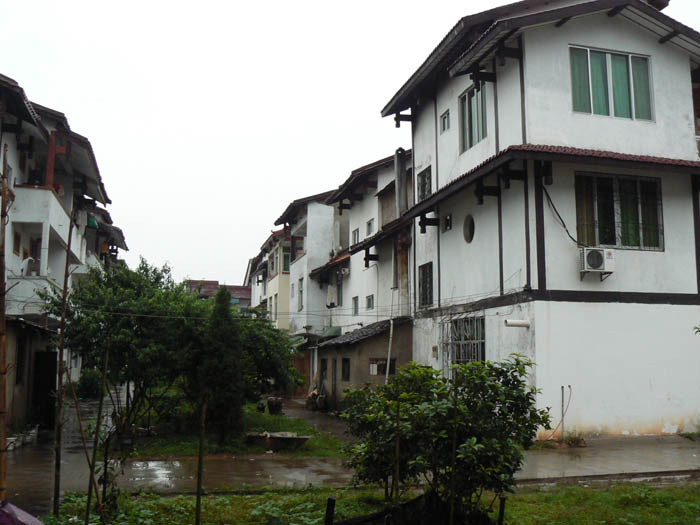
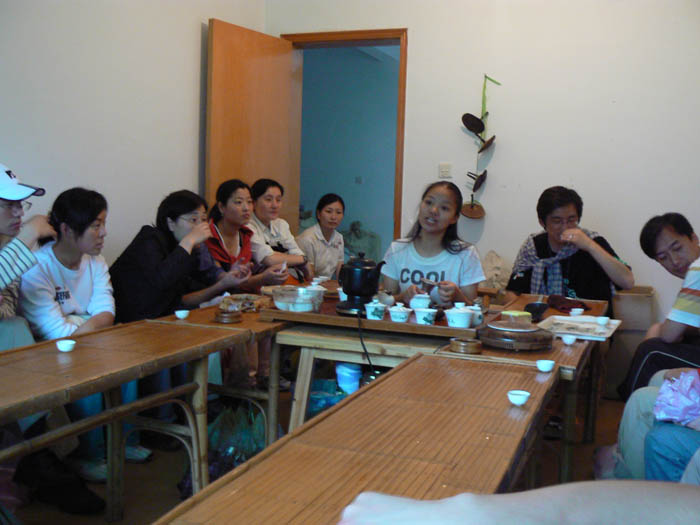
Wuyi Mountain City is small, a lot of the city housing looked like what is shown to the left. Most of the town seems to revolve around selling things to the tourists. Our tour guide led us to a few group buying sessions. That might sound like a rip-off, but they were actually extremely entertaining. At the one pictured below, the company's chief salesman and the seller engaged in some incredibly heated group bargaining for a variety of local products. Some people ended up getting bags and bags of stuff, but I only ended up getting a single bag of Oolong tea. Very high quality, but not well-packaged like you would want for a gift. It was sold at about $7 for half a pound. To me it seems like a lifetime supply, but other people were buying multiple bags, in addition to the more well-packaged teas.


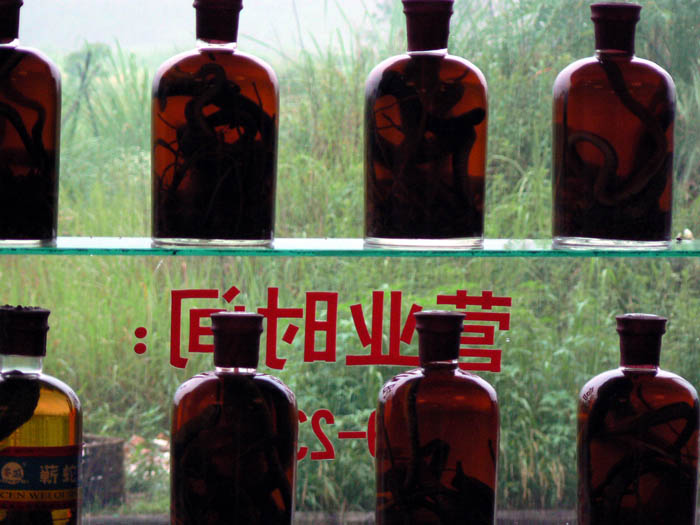
All around town they sold alcohol with snakes in it. I tried a little bit and found the taste surprisingly mellow. I'm guessing it comes from all the herbs, and that the snake has almost no influence on the taste of the alcohol.


I really enjoyed this trip and would definitely recommend it to anyone in Shanghai with a free weekend. On the other hand, a lot of people told me Yellow Mountain, inland from Shanghai, is much the same but even more beautiful. I'll have to give it a look!

Wednesday, June 21, 2006

Taking Wuyi Mountain (By Strategy), Pt. 1

I hesitated a little when first asked if I wanted to go on the company field trip to Wuyi Mountain. "I must think about it," I said. What I really meant was "I have never before heard of Wuyi Mountain, and must look it up on the Internet."

But of course I said yes, and I'm right glad that I did! Wuyi Mountain is in Fujian Province, near the coast and right across from Taiwan. Looking on the web, I learned it was also the area Hakka people are from, I thought it was somewhere west of Canton or something.

The company went there by taking the overnight 13 hour train. I've only taken the train once before in China, for the one-hour trip from Suzhou to Shanghai. Taking the overnight was very different. The train cars are real small and it's stacked three beds high. There were three dimensions of pain involved: first, as a very tall person, I was slightly longer than the bed itself. Secondly, the bed was very narrow, and certainly not wide enough for me to crouch in my sleep. I imagine if I was overweight it would be difficult just to fit! Third, there wasn't much headroom, not enough to sit up even.

The problems are worse when you have the top bunk. The bottom bunks are best, but during the day they're used as a couch by all the people in the above bunks. In the end it was no problem because I knew all the other people in the other bunks, but it would be really annoying to travel by yourself with such a set up. Anyway during the day we played this amazingly complicated card game. It was fun but even if I learned the rules, I'm still entirely lost about the strategies.


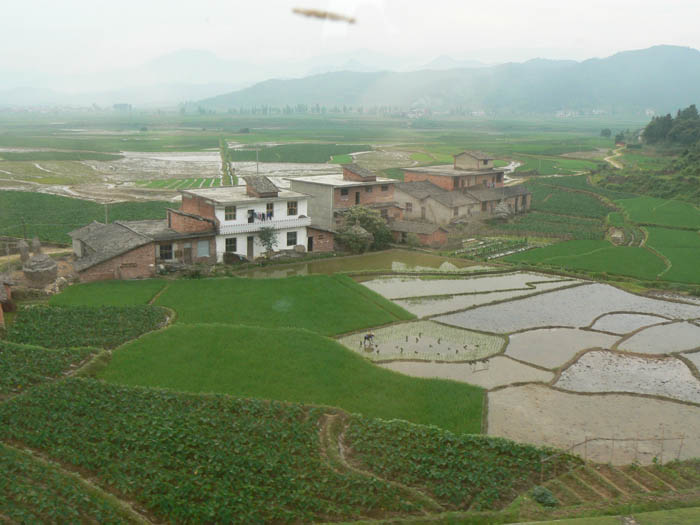
A serious bummer was that lights went out at 10, and the commotion started at 6 the next morning. I had a hard time sleeping on the train, and was unbelievably tired. Still I was stunned looking out the window of the train. I've barely been outside of Shanghai. With knowing naivite, I tell my friends that Shanghai is just another city, and China and the US are basically the same. But looking out the window it looked like a different world:


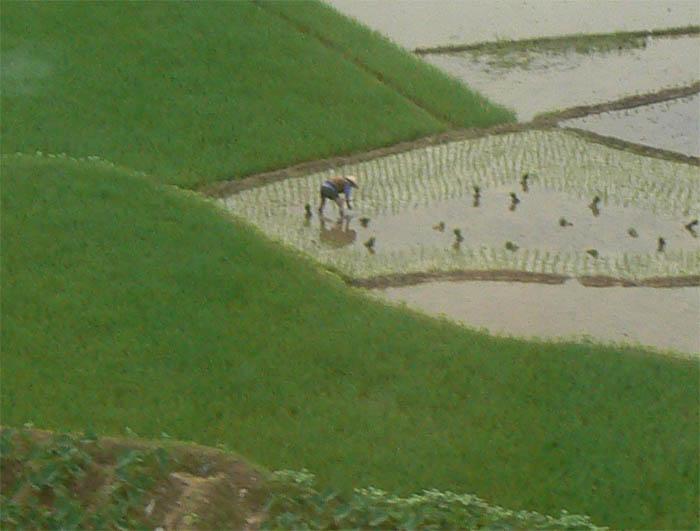
I definitely want to have a look at such an area sometime. Maybe visiting here would be something like kicking it with the Amish. Cattle were used to draw plows, and hills were terraced into irregular planes and used to harvest rice, often by hand. The best photo I got of that is a zoom from the above picture:


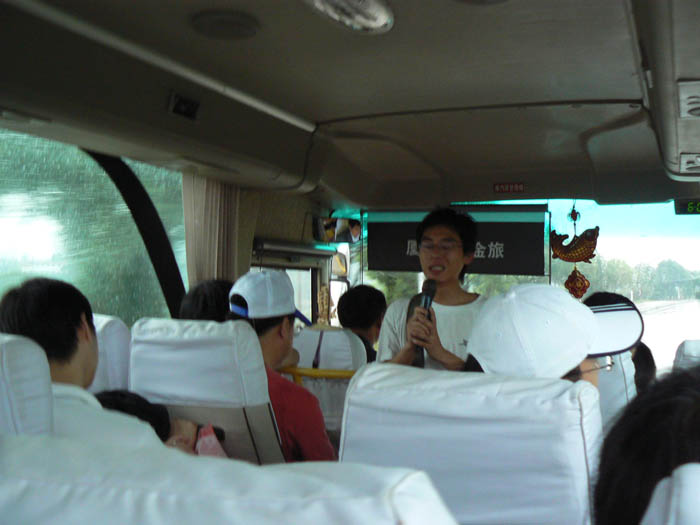
On arriving we first checked in to our hotel. Shanghai keeps Christmas signs up throughout winter, it's different but I think it's pretty chill, keeping the Christmas spirit going. However this hotel still had Santas up in June, and so did some of the other fancier hotels and restaurants throughout town. And it should be mentioned, the whole trip was one of the dreaded Chinese tour guided trips, hilarious! They had the flags and the whole business, they even had a small megaphone but they only used it once or twice. Anyway they were surprisingly not annoying, and they kept the whole thing orderly. To my complete shock I didn't mind it and would consider using one again, at least for a short vacation.


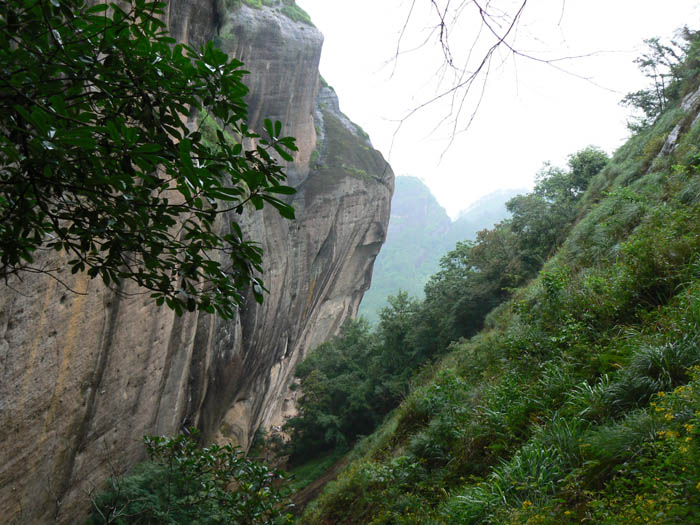
The first think we did was climb some mountains. When I got my first look I don't know what to say. It was so beautiful I wanted to cry. I'd have to visit the big island of Hawai'i again to really say for certain, but it may have been the most impressive nature I've ever seen in my life. Photos don't quite capture it:


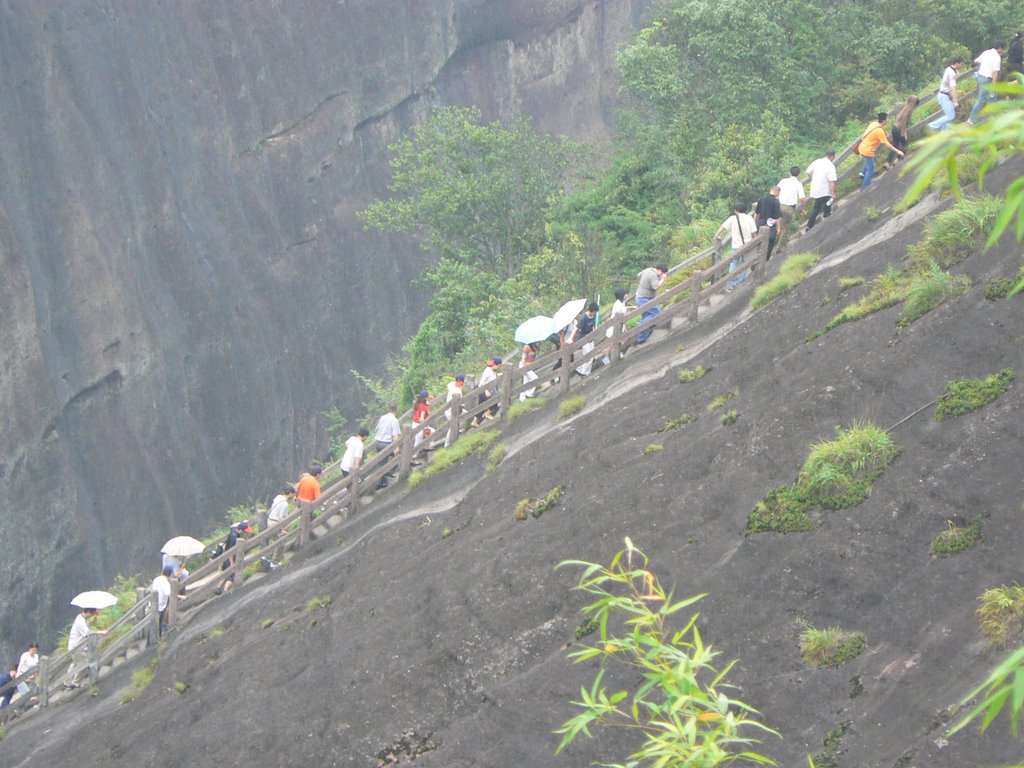
The paths were well-defined, often with stairs cut into the mountainside. Some sections could be extremely steep, and it was raining real hard at times. So there'd be a line of people, one after the other, going up a single step at a time. It sounds annoying but the view was so impressive I could have cared less. In retrospect, maybe I should have been scared - if one person had fallen on the steep slippery steps, everybody behind them would have followed like Dominos!


The cliffs were stark. Walking through them evoked all the cliches as once: walking through a Chinese painting, walking through a Martian landscape, etc...


There were a few pieces of historical interest scattered throughout. This Buddha, carved out of the rock, was impressive, although it looks like a modern re-construction:


Also scattered about were tea groves. They were so scenic and small, I at first thought they were purely for decoration, until I noticed it was one scenic and small grove after the other:


I'll have more to say and more scenery to show in part two, in the next couple of days.