Showing posts with label Transportation. Show all posts

Monday, June 19, 2006

Riding the Bike

I remember as a college student, getting in a small bicycle crash, and complaining to a classmate about how crazy bicycling could be. She just didn't see it. "I was raised in China..." she explained. Say no more.

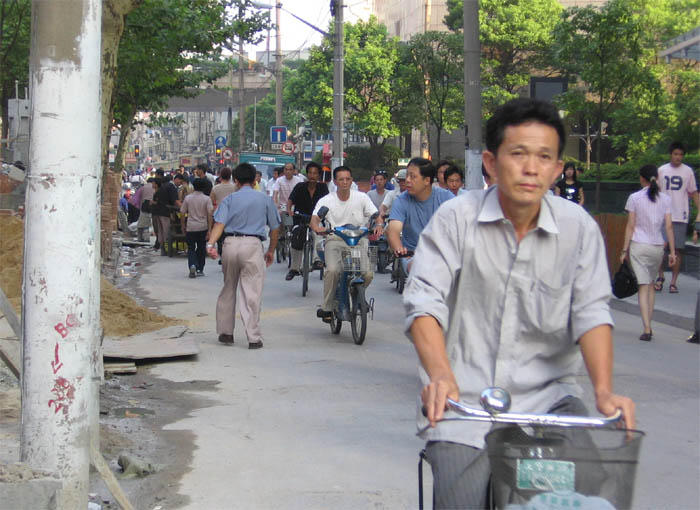
Bicycling in Shanghai is out of control. It depends where you are - on highways, obviously, and on the main roads in the center of town, bicycles aren't permitted. Elsewhere, there can be swarms of bicycles:


Still, I imagine the crowds are much worse in other cities of China, many of which are missing either a subway system, or an extensive series of busses.

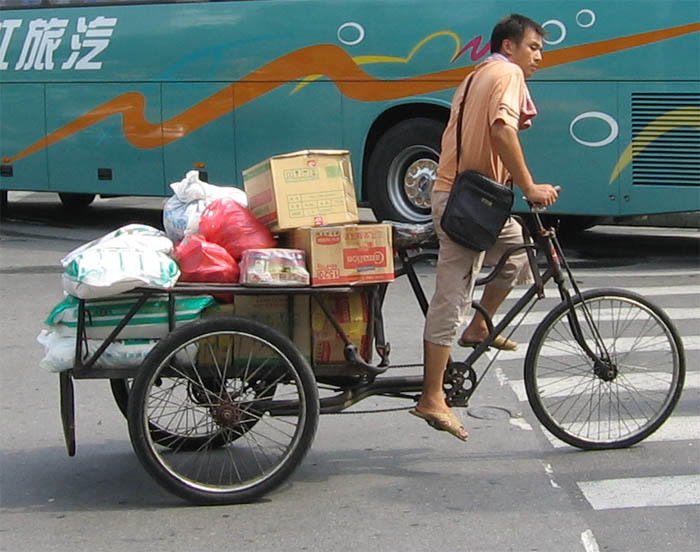
I don't see the stereotypical underpowered scooter loaded down with a family, their pet dog, and a large refrigerator or two. To be fair, I do see these push-cart bikes, often loaded down with so much they can barely be moved, perhaps requiring a friend on a scooter to help pull them.


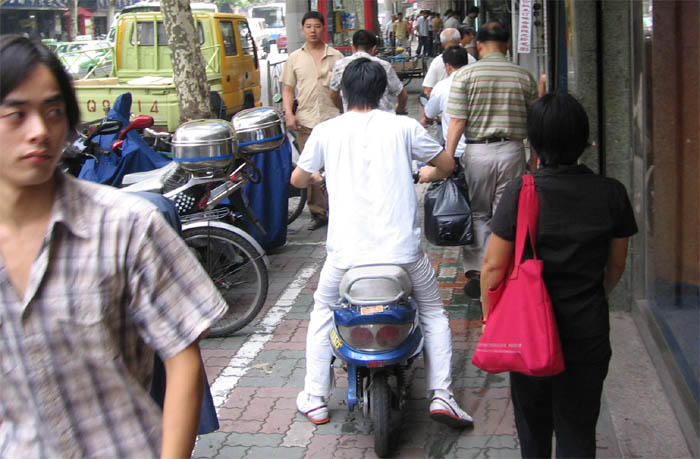
Bikes are common throughout Shanghai, perhaps especially on the less developed parts of town beyond the reach of public transport. I'm not sure on an exact breakdown, but I'd guess it's about half bicycles, and the rest is a combination of electric mopeds, electric scooters, and gasoline powered scooters:


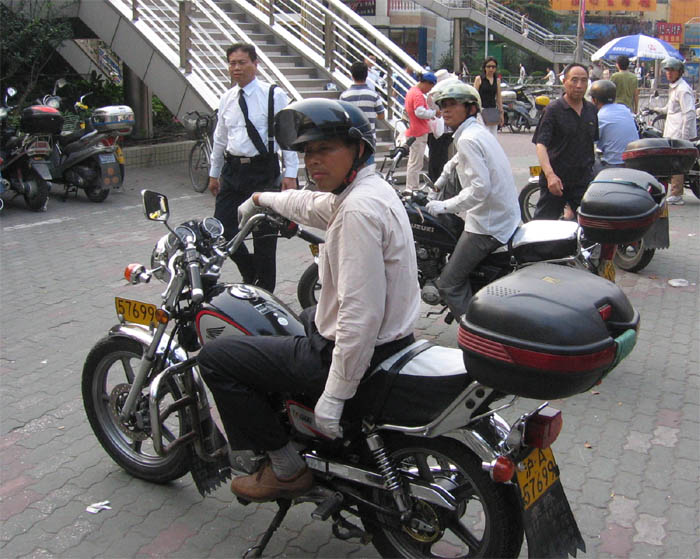
Shanghai used to have gasoline mopeds, but they were phased out, beoming illegal on Shanghai streets as of half a year ago. Also illegal on Shanghai streets are extremely large-engined motorcycles such as Harley Davidsons, for reasons of noise and pollution. I told some people about my father's Harley Davidson, they found the top speed and so forth kind of ludicrous. I understand Harley Davidson does operate some dealerships in China, but you have to park them outside of most large cities. Anyway, you do see a few smaller-engined motorcycles in Shanghai. Mostly they're operated by the police, or as independent taxis, generally lined up near certain subway stations.


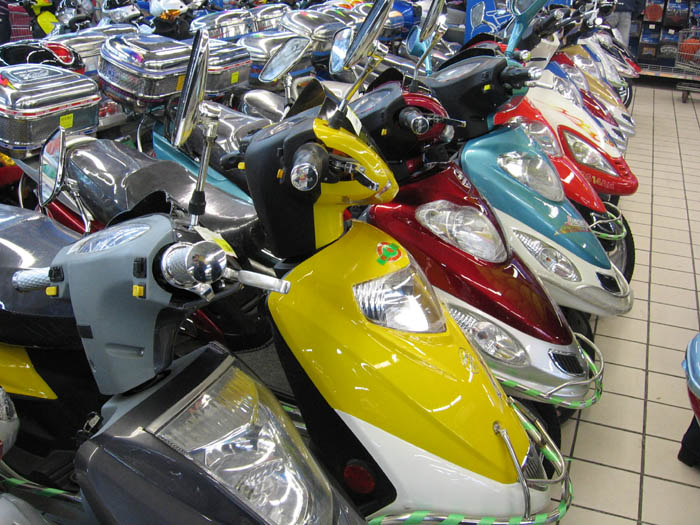
I'll admit I totally want an electic scooter or moped. Why? First of all, because they only cost $200 or so - although a bike goes for maybe $30, a gas scooter for maybe $300. Secondly because they are stealth. Even a bicycle makes small noises, you can notice them when they come up on you. Electric bikes are totally quiet and way sneaky. They surprise me every time, at least they do in the rare case when the driver isn't leaning on his horn. They're even sold at department stores in Shanghai:


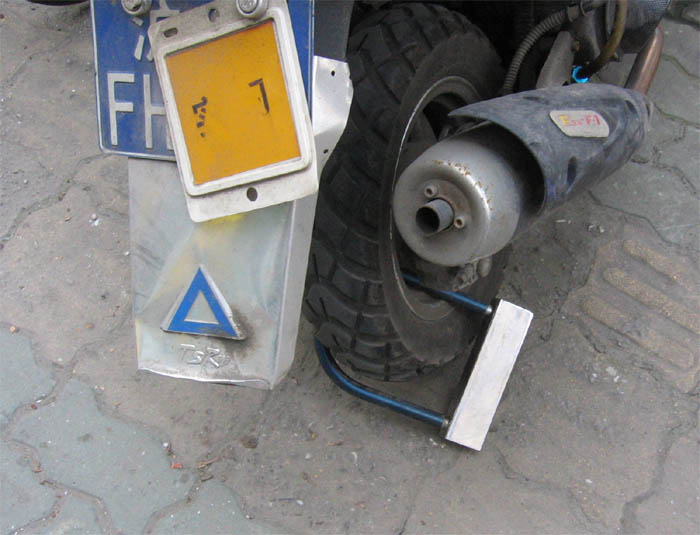
So what stops me? For one thing, maybe the traffic in Shanghai is still too intimidating. Also, even though in most ways Shanghai is a very very safe city, bike theft is very common, I know one guy who had three bikes stolen in one year! To prevent theft, some of the bikes have some serious locks on them:


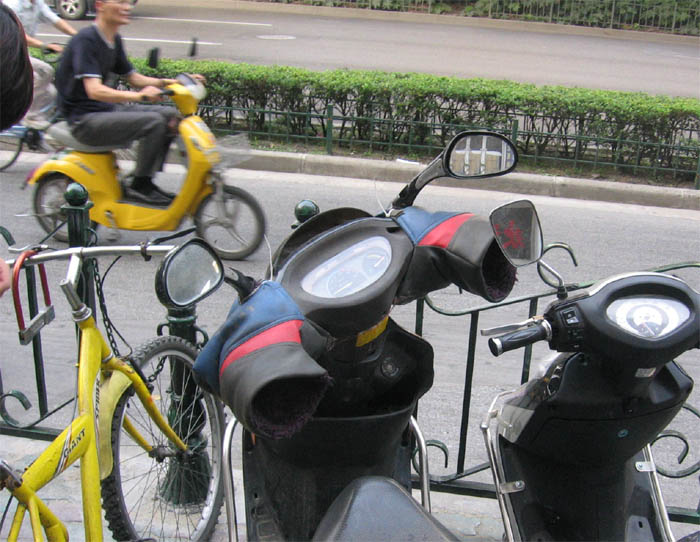
During the winter, a lot of powered bicycles will have mittens attached to the bike handles, to keep your hands protected from the cold wind. They also lock your hands in places and I'm sure they result in some really ugly accidents. Even though it's June, this bike still hasn't had its mittens taken off:


A lot of the bikes are old and not in the best of condition, and batteries need charging, so there's an equally huge amount of small bike shops. My apartment complex has a guy who sits by the side wall and fixes bike problems, he also repairs shoes. Here's another roadside shack, it has parts and is probably about as large and thorough as these places get:


I should mention, these bikes are kings of the road. Cars at least feel an obligation to slow down for large masses of pedestrians. But bikes will never stop for anything - when the roads are crowded with them, it can be tough to cross the street!

Thursday, April 13, 2006

The Maglev Train

Shanghai's Maglev Train is pretty cool! Or at least that's my opinion. Nobody I talk to agrees with me about this. They say it's overpriced and only foreigners who don't know any better would use it.

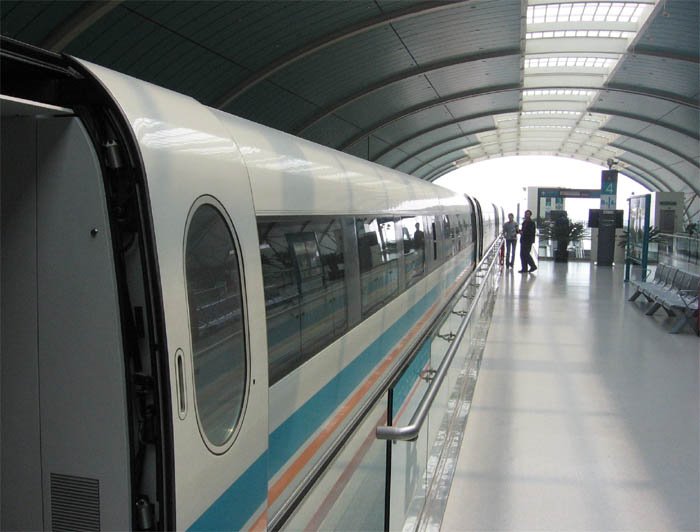
The maglev is a Magnetic Levitation train, using magnets to suspend the train a fraction of an inch above the monorail, and then uses magnetic propulsion to zoom the train forward. I don't want to get into the technical details, the point is that you go really fast and it's a very smooth, quiet ride.

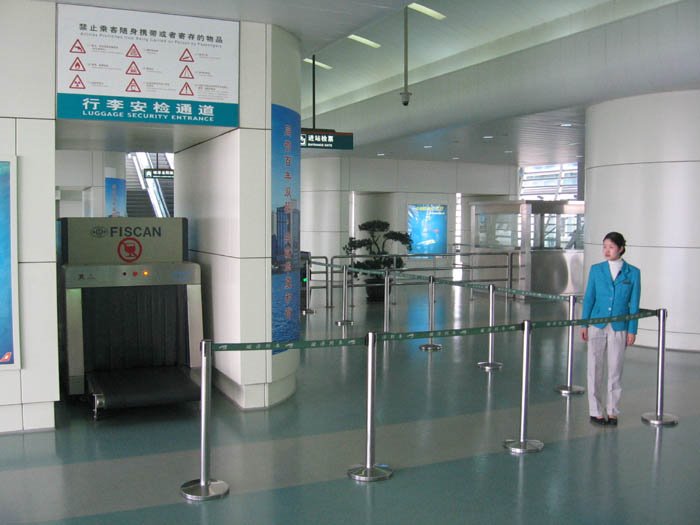
A ticket to ride the maglev costs $6.25 one way, compared to a $1.50 bus offering the same route. The entrance gate area is bright and clean and has a small check-in process, giving the station the feel of an underused aiport, or maybe a subway system from the future.


Looking at the picture, it obviously has an empty feel - it's a matter of logistics. The subway goes extremely fast, but only for 19 miles, from the International Airport to a train station on the far end of town. From my apartment to the train station is 14 subway stops, which isn't slow, but isn't at all fast. So truthfully it's somewhat absurd. They talk about expanding to the domestic airport across town. I don't doubt it could happen, but first they'll need to knock down some massive apartment buildings, directly across from the station.


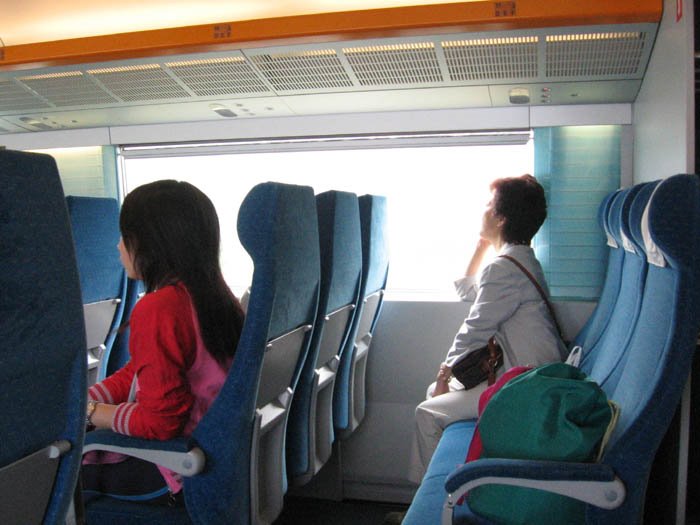
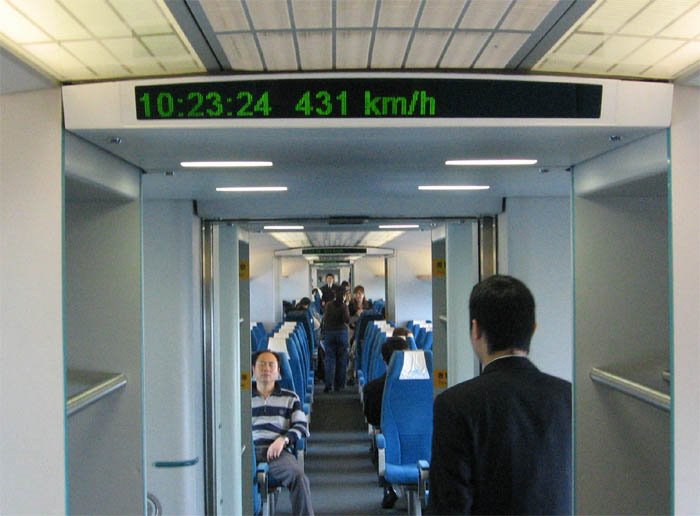
The errors of the system are obvious, but it's not all negative. The maglev train is faster and more convenient than taking the bus from the aiport to the subway, only a few dollars more expensive, and it makes for a fun introduction to the city. I would definitely recommend it to new arrivals who don't require a taxi. The insides are a lot more pleasant than your average bus or taxi, and this simple photographic evidence shows that Chinese (or at least, East Asian) people also use the Maglev.


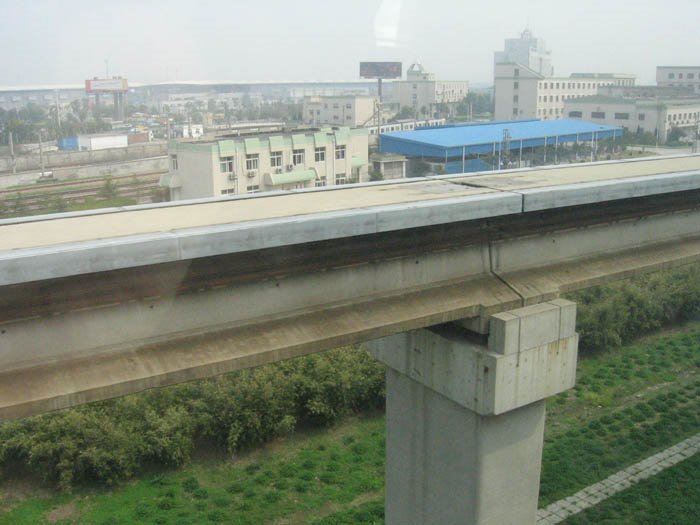
The train works on a monorail system. There's two monorails, but for whatever reason only one is used. Probably because the ride only takes about 10 minutes, and there aren't enough people to require two trains operating in parallel. Taking the train is a rush, way better than a Disney ride. The train goes 270 miles/hour right alongside the ground, it feels more like a low-flying jet than a car or a subway. It doesn't stay the top speed long, though - after just a minute or two it starts slowing down, for arrival at the destination.


The train goes through a lot of turns, and there's no friction from the rail, so the track leans over an absurd amount - maybe 45%? Of course the g-forces cancel that out, and you wouldn't even know the train was leaning, without looking out the window. Things fly past so quickly, it's really strange. As soon as you notice any details, it's out of sight. For the most part the view is nothing exciting, though - the train passes a lot of farmland, although there's the occasional factory or group of housing.


Even though I like the train, it's something of an albatross to Shanghai. That'll be less true in the future - for one, the system would probably be very useful if it gets expanded across Shanghai. And more interesting, Shanghai will have a Maglev train built to the city of Hangzhou, 122 miles away. Unbelievably, while it started just a few months ago, it's supposed to be completed by the International Expo in 2010. It seems like a good idea, if done right - it'll cut the travel time down from more than two hours, to half an hour.

Monday, August 22, 2005

Trying to Cross the Road in Shanghai

Back on the mean streets of Oakland, I have a friend who refuses to cross the street unless it's on a green light. I think about this in Shanghai - how could you get anywhere, when the roads look like this?


There's a few key elements the untrained eye might gloss over. First, the sidewalk is blocked off by contruction - which is pretty much on par for Shanghai. Second, the street here is not one way, yet bikes and pedestrians are on both left and right side of the road. Third, there's a truck in the background, headed towards the camera, which will take over almost the entire road.

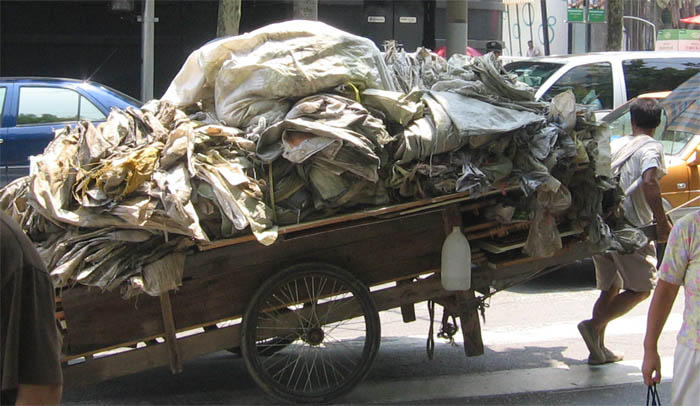
Lanes are a fluid concept in Shanghai, and how could they not be, between all the road construction, and the freight being carried down the street, both by old-time bicycle crates, or by push-carts. Either can get enormous to the point that you can't believe they can be moved.


More annoying is the tendency of businesses to set up shop on the sidewalk, blocking off pedestrians. Or, the tendency of both bicycles and scooters to ride on the sidewalk. You'd like to imagine the sidewalks as a safe zone where you don't have to worry about getting run over.


There's a certain algebra to the pedestrian traffic: one car is worth seven or eight people. So if cars aren't willing to yield you the right to cross the road, bunch up with a small gang of people and the cars will be forced to yield. Bicycles operate outside these rules. For the most part they won't stop or even slow down for a right turn on a red, and are perfectly willing to cut in front of you. You just have to wait for a moment when there aren't any bicycles around, and then cross. In some parts of town, this can involve a lot of waiting.


But I don't want to imply all Shanghai is like this. In many newer parts of town, streets are wider and more-or-less car dominated, just like in the US. And even in the older parts of town, there are main roads strictly for the cars - which tend to be busses or taxis. The taxis are all Volkswagens, and about half the cars on the road are VWs or Audis - they have a big factory, right in Shanghai.

I hope I'm not sounding negative - I really enjoy and am bemused by the perpetual game of chicken that is getting around in the former International Concession (where I'm now staying). Adding to the charm is the hustling around you, whether from sidewalk vendors or from the numerous small shops which line the streets. But I'll admit, the wider tree-lined streets of the former French Concession are probably more to most people's tastes. While they're crowded, you might even say it's pleasant to walk around.


And big ups to the sister, for mailing a phone-picture of a Night Blooming Cereus, in bloom! It's been too long since I've seen one, plus it's a cool picture, so I'll link it up. They don't have these in Shanghai but it would be great if they did.

Saturday, August 06, 2005

Shanghai Underground

I'm braving a typhoon right now, the first I've ever been caught in. Making it even more fun, I decided that would be a good opportunity to take the Subway across town to an Internet cafe I like, near the ancient Jing'an Temple - and next door to a Burger King.

The Shanghai Subway is my method of travel when possible. Sure a taxi is only a dollar or two (possibly three), but the subway is even cheaper, and is a good opportunity to scope people out. It's a work in progress - there's now only two underground lines and a BART-esque light rail, supposedly there'll be four more lines in the next five years. There's also a transfer to the magnetic-levitation train which takes you to the International airport at 270 miles/hour, or the train line.

The adventure begins with buying a ticket, which is quick and cheap. A yuan is about twelve cents, so the marked prices of 2 or 3 yuan really isn't much.


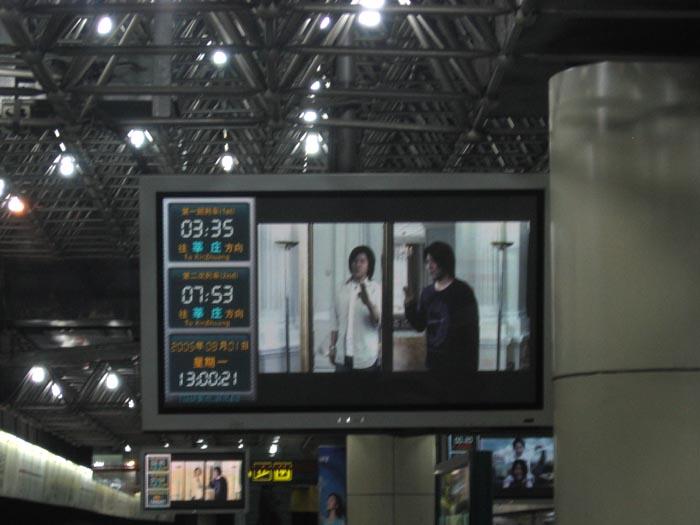
Inside the subway is a bunch of signs, some of them more helpful than the others. Trains come every four or five minutes - in this case 3:35 to the next train, then 7:53 until the train after that.

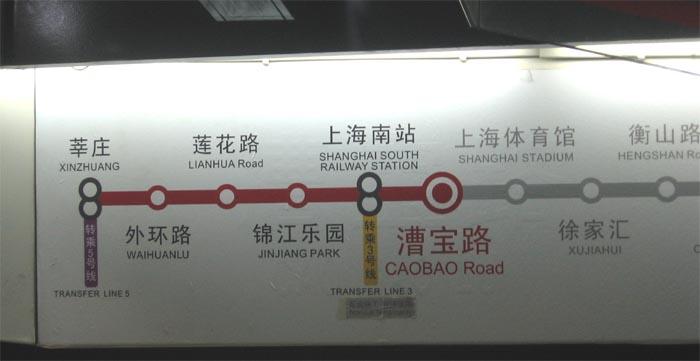
A sign pretty clearly marks which direction you're headed in. It's easy even if you don't speak a word of Chinese! Well almost. The signs translate select words into English ("Lu" into "Road"), when usually these words are just romanized, and most people (include taxi drivers) have no idea what the word "road" means.

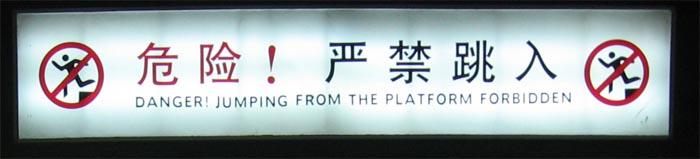
And while I hate to resort to cheap shots, I'd really like to print the following sign on a shirt, or possibly make a bunch of posters and display them across town.


My favorite aspect of the subway is hard to photograph: rather than wait for people to get off and then get on, everybody tries to get off and get on at the same time. When there's a lot of people doing both, the two masses basically collapse into each other. It distinctly reminds you of the offensive and defensive line in football, right after the ball is snapped.

On most subways are LCD TVs which show advertisments and teach English idioms ("u-turn" or "on the rocks"), which is kind of fun. The scoping is hard to beat. My friend Emiko complained about the smell, but I don't think it's all that bad, especially in the larger scheme of Shanghai.


When you're off the subway, the adventure isn't quite finished. Some of the stations are huge, and the distance you walk to transfer between the two underground lines is absurd. Also, some of the stations empty into underground malls, or shopping centers.