Saturday, October 15, 2005

American Fast Food

Yes of course they have McDonald's over here.

I'm in China and I guess I'm supposed to be experiencing the famous cuisine as often as possible, but that hasn't quite happened. Going out to eat can be a little intimidating over here, where the menus and talking to the waiters are all entirely in Chinese, I don't know all the foods on the menu, and people expect you to order at right about the time you sit down. Also I must admit, it's very easy to find a good meal for $2, but I'm having a hard time finding a great meal no matter how much I pay. So in the end I'm settling for fast food a couple times a week.

Fast food is common to Shanghai. Depending where you go - around the city center or the Xujiahui shopping area, fast food is everywhere, literally one after the other. On the other hand, the crowded residential area I live in has plenty of restaurants and stores, but only one fast food restaurant, a KFC about a 10 or 15 minute walk fom my apartment.

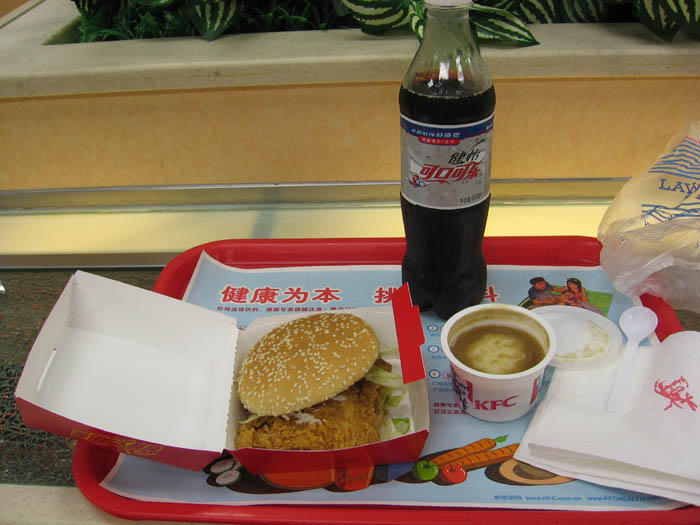
KFC was supposedly the first to arrive in China, and is by far the most popular fast food over here. It costs about half as much as in the US. The emphasis is on the chicken burgers rather than fried chicken, and it has some traditional Shanghai breakfast congee or something, but it's mostly the same as KFC in the US. The portions aren't always the same size though - this cup of mashed potatoes isn't much larger than a shot glass. They don't serve Diet Coke, and I've lost my taste for normal Coke, so I'm forced to drop by a convenience store beforehand - life is hard.


McDonald's is #2 in popularity, and seems to have an almost exclusively teenage following. Depending which one you go to, it can feel something like crashing the junior prom. The concept is the same but the menu is about half different from the United States - among other things they serve shrimp mcnuggets and triangular sandwiches. I don't like McDonald's and my only reason for going is that they serve poi pie. Or at least I call it that, it's really Taro pie, slightly sweet and chunky. But it still has the pleasant purple-ish grey color. A value meal costs about $2.00. Update Jan 14, 2006 - these are now available at McDonald's in Hawai'i as well.

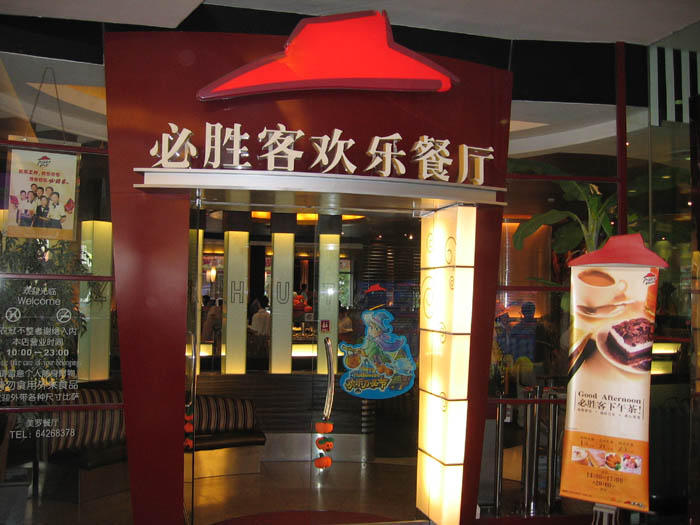


The other big chain is Pizza Hut, which I've never gone to. It markets itself as a somewhat upscale family chain restaurant, maybe the equivalent to an Olive Garden in the US. I've heard most Shanghainese think it's Italian, and maybe to play off this, the waiters dress in clothes that I guess are supposed to be traditional Italian clothes - really billowy pseudo-silk.

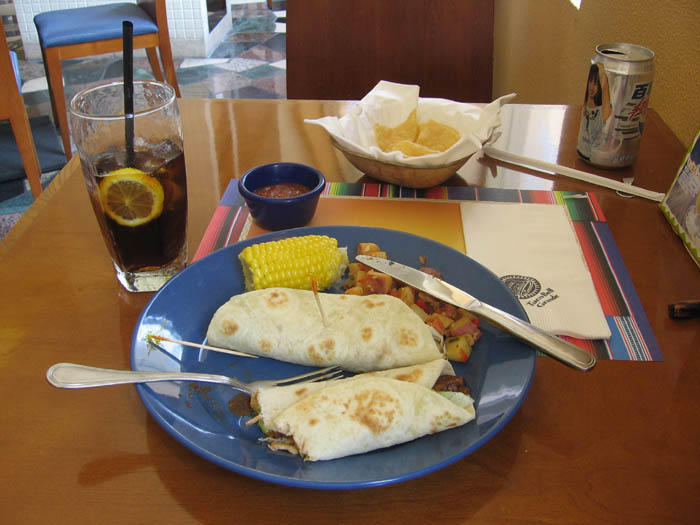
There's a few other chains that have recently put up stakes in Shanghai. They only have a couple branches but I assume they're testing the waters for more expansion. Taco Bell has gone the Pizza Hut route, and is the more upscale Taco Bell Grande over here. There's only a single location, but it's right near the City Center. It's actually a decent place, and pretty much the only game in town if you want passable Mexican food. The $7 price tag for lunch keeps me from going regularly, although it's almost worth it to see the Chinese waiters wear their goofy attempts at Mexican clothes (including brim-less sombreros), and greet customers with a friendly "Hola!"
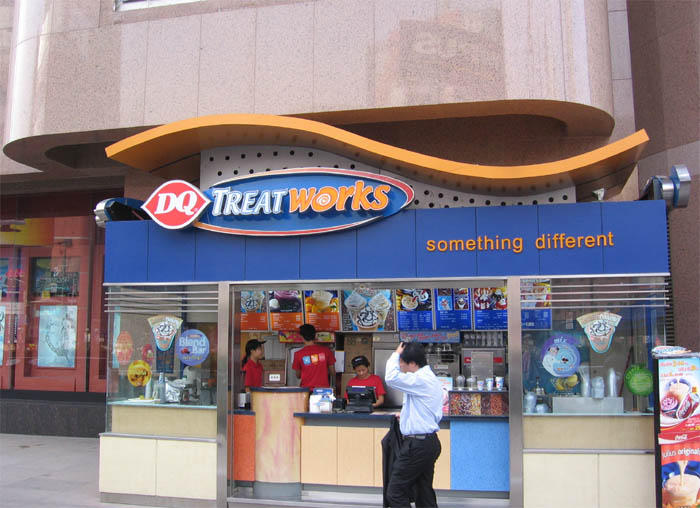

Orange Julius/Dairy Queen has a couple of chains around town. I hadn't been to Orange Julius in years and years and forgot that they're actually pretty good. On the other hand, for the same $2.50 their Julius costs, I can get a 4-course meal at a local restaurant. So I only go when I'm feeling my most Capitalist. And Burger King opened in Shanghai just recently, and has two locations that are both pretty convenient, and exactly like the US versions. It's my favorite American fast food restaurant.

One surprise is that as popular as American fast food is, there isn't really a Chinese take at it, the way France has Quik Burger, or Japan has Mos Burger. There's plenty of local Chinese-food chains, I go to the Taiwanese chain Yong He Da Wang more than any burger place. I also have favorite crack seed chains and manapua chains. But If you want hamburgers, they're pretty much only sold at McDonald's. That's probably a good thing.

Sunday, October 09, 2005

I am a Tourist: Jiading


I very much enjoy Shanghai. Really. I'm committed to living here, with no plans to leave. And I genuinely appreciate Shanghai's transportation system, where the subway is easy, and taxis are a cheap supplement when you're headed to the outskirts of town, or when you're just feeling lazy.

At the same time, three months of never venturing more than a mile from a Shanghai Subway Station was getting to me. From what I understand, there's more to China than just that. So with the week-long National Nationalist Holiday and all, I decided to make a quick day trip to a neighboring town. I decided against the booming neighboring cities of Suzhou and Hangzhou, which are historically famous tourist destinations - they're a little too far, and probably far too packed with Holiday tourists. So I decided on visiting the city of Jiading, just 12 miles Northwest of Shanghai, along with my apartment-mate. Jiading is not particularly a tourist destination for either Chinese or foreigners, and that was part of the attraction.

It's my first time taking a bus in China, and I'd love to report it's vastly efficient and got us there in record time. Instead, it took about an hour and a half to reach the destination. A little arithmetic gives a speed of 8 miles an hour, or a pretty slow speed for an express bus. To be fair, it was during a holiday. But I think the problem is China doesn't quite share America's system of large highways going every which way. Most of our journey was on side streets (competing with the pedestrians in the road), or on stretches of farm road with a 25mph speed limit, where the older tractors on the road used a lever system to turn left or right, a little like a Model T. If the bus had actually stopped for red lights, it would have taken even longer - instead the driver just leaned on the horn and plowed through, without slowing down.

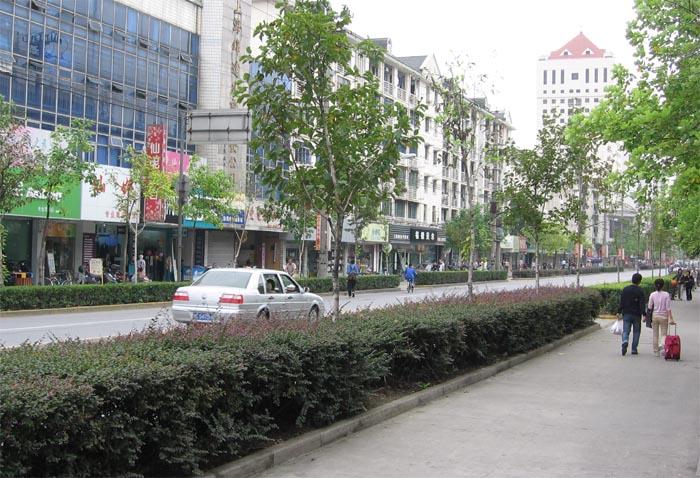
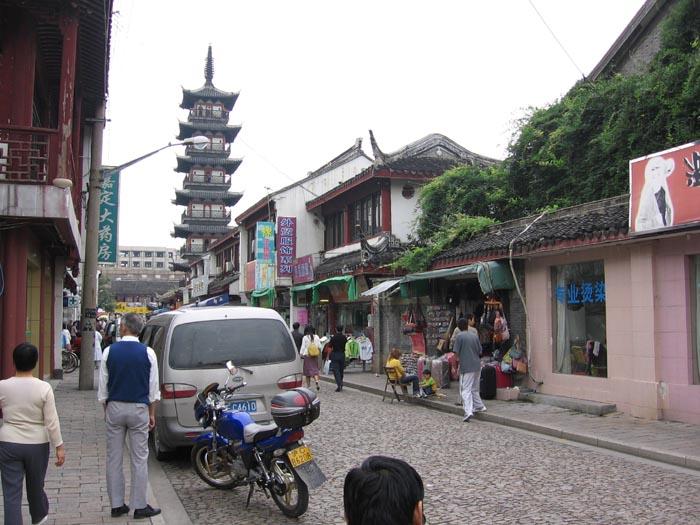
On the other hand, this transportation-isolation does allow Jiading to maintain its own identity, instead of being absorbed into Shanghai. Streets are wider, and have a more laid-back feel than anywhere in Shanghai, with enough space to accomodate pedestrians. This is particularly true in the historic center of town, which is cented around a large pagoda and bordered by a canal.


We ended up going to Wei restaurant, a Japanese-Korean place. Like every other good Korean restaurant I've been to, the service was slow and slightly odd - when I ordered some Katsu, they went down to the market to buy some pork! Afterwards we wandered the area. The Canals are criss-crossed by a number of bridges, and the whole area is host to a lot of restaurants, shops selling clothes, and street vendors selling jewelry or snacks.


A lot of the traditional architecture remains. This includes Shikumen, a traditional style of brick apartment complex centered around courtyards, placed right against the canals. To me it seems like the area should be prime real-estate, but a lot of the houses are poorly maintained.


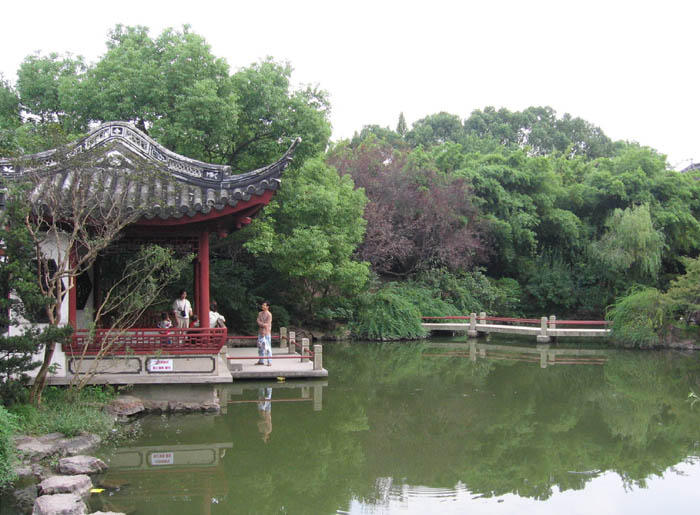
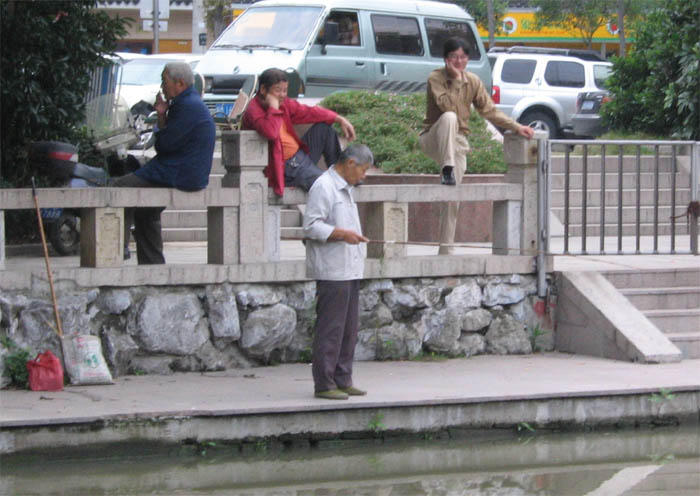
Finally I wandered the Dragon Meeting Pond, a 450 year old Garden. Although we walked in to a couple taking their wedding photos, the garden seemed to be mostly empty. It has a central pool and is generally very likeable - Yuyuan Gardens in Shanghai might be nicer, but all the tour groups there bug me. The people at Dragon Pond seemed to be taking it mellow, with some kids playing and adults fishing.


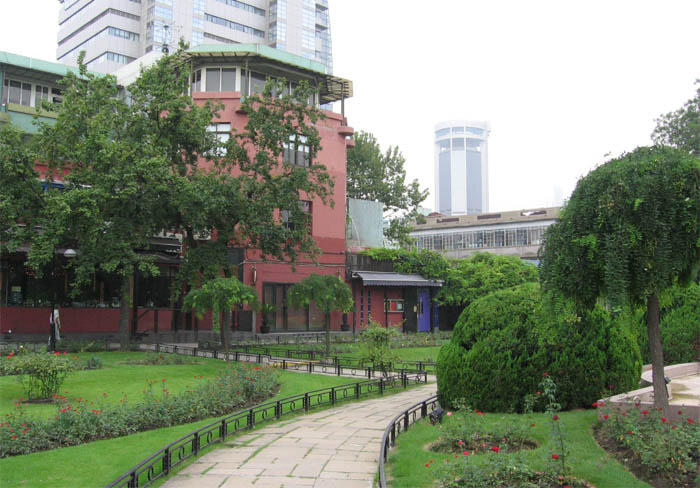
We took the long bus ride back, arriving at the Shanghai Stadium just in time to catch masses of teenage girls lining up to get into the "Super Girl" concert, which celebrates the top 12 competitor's of China's answer to "American Idol." I didn't go, but I enjoyed taunting the un-talented, un-cute winner.

All in all it was a fun trip. However, the moral of the story is, next time I travel outside of Shanghai, it'll be by train!

A few other issues: First, please realize that if you click the pictures on this blog you'll see a larger, full-size picture. Also, don't believe the hype about Chinese censorship - it exists and it's terrible, but it's not a hundredth as bad as US Newspapers make it sound. More political blogging can be found in China. Also, my 510 number is now much, much improved, plus it now auto-forwards to my home phone or cell. Let it ring five or six times, though. Hope to hear from y'all - from California or Hawai'i it's best to call me at night, or use World Clock to check the local time.

Friday, September 23, 2005

Bootleg Movies in Shanghai

Anybody who knows me knows I love the movies, of all kinds. I never got around to installing an antenna in my old apartment in Oakland, but I did my part to catch up on America's 4.5 hours/day average of watching TV by maxing out my rent-by-mail account. I'm convinced the owners held a little celebration when I cancelled.

I also made a little side business of re-selling Asian movies shipped from Hong Kong. It bothered me a little, was I importing bootleg materials? The boxes came with holograms and it all seemed legitimate, but I really had no way of telling if they were real, or just high-quality bootlegs.

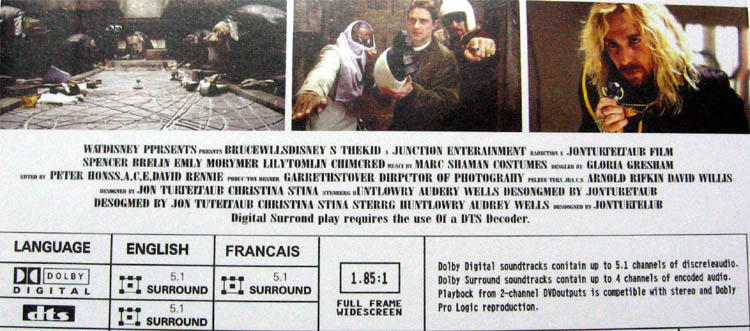
Well, there's differences between Hong Kong and Mainland China, but still my mind has been put at ease about the whole experience. There is no way I could possibly have mistaken a bootleg for the genuine article. Not when a bootleg looks like this:


If it looks legitimate at first glance, that's the point. If you look closer you'll notice that it's a box for Hitchhiker's Guide the Galaxy, but "WatDisney PPrsents" it, and it supposedly stars "BruceWills Disney s The Kid" along with "LilyTomlin."

And the video quality? It's a very good camcorder recording of a theater screening. Watchable, but not so great.
I can't speak for the 15-20 million Shanghai residents, but from the people I've talked to, it seems most people skip TV, and opt instead to watch the bootleg DVDs. It's about as easy and convenient as turning on the television. On my 10 minute walk from the subway to my apartment, I can pass maybe 6 or 7 different stores dealing bootleg DVDs. The cost is about seventy five cents per disk, before bargaining.

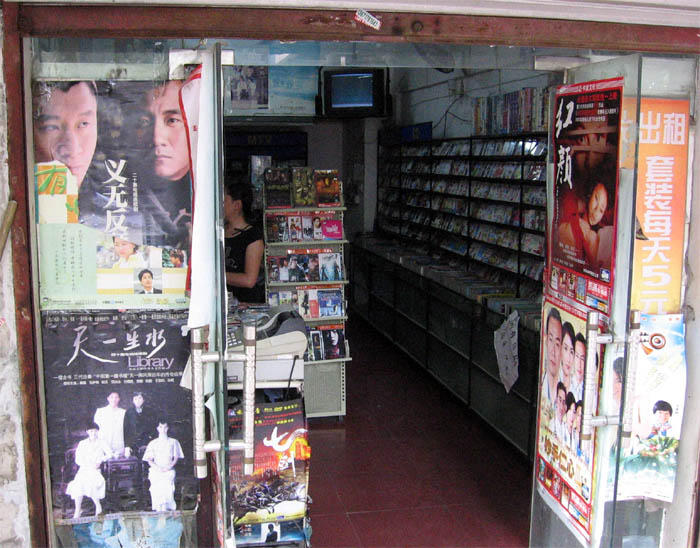
These DVD sellers take many forms. Often they'll just set up a small dinner-tray size table with a couple shoeboxes, but you'll also see closet-sized storefronts packed full with disks. These larger stores will also sell computer software, video games, and maybe some Hong Kong pop CDs. This store is about as large as they get, though:


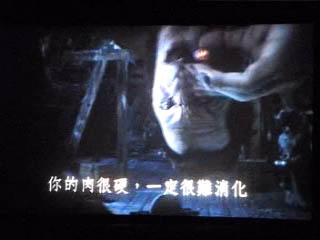
The quality is a crapshoot. Movies more than a year old are often ripped from DVDs and can be as good as the original DVD, although generally missing the extras. Newer movies, though, are usually from camcorders in the theater, and they may not be American theaters. My copy of "Batman," was in Russian, with Chinese subtitles. This copy of Van Helsing may look OK, but I didn't use any computer program to make the picture smaller - it's this image, blown up to the size of a TV screen.

The selection is surprisingly eclectic, especially considering how small the stores are. Of course the biggest Hollywood movies are represented, but French and Italian art movies seem to have a following. Korean movies and TV-dramas are well-represented, although only a few of them will have English subtitles, unfortunately. You also see movies you just don't expect, like the gonzo Blaxploitation comedy "Petey Wheatstraw - the Devil's Son in Law," starring Dolemite. Who would have guessed? One thing you don't find so much of is Chinese movies. This includes HK movies. Maybe the movies in the theaters will be available on DVD, and there will be some HK pop star concert DVDs, but that's often about it.

There's also large stores and, that's where it gets a little murky. You'd think large chain stores (equivalent to a Target) would be on the level, but I can't believe the movie cover I saw with three Darth Vaders fighting each other was legitimate. The government-owned foreign bookstore also seems legitimate, but their copy of "Children of Paradise" claims to be the prestigious Criterion edition, but was compressed to one third the proper size and stripped of any features. Regardless, even if these quasi-official DVDs cost twice as much, they tend to be less of a crapshoot and are probably worth the extra money. Their American movies tend towards the old classics, though - Alfred Hitchcock or "My Darling Clementine."

One thing kind of fun at the bigger stores is the old Cultural-revolution era movies. So far I've only seen Hai Xia. I can't quite understand it but it has something to do with a cute woman who carries an assault rifle around her village.


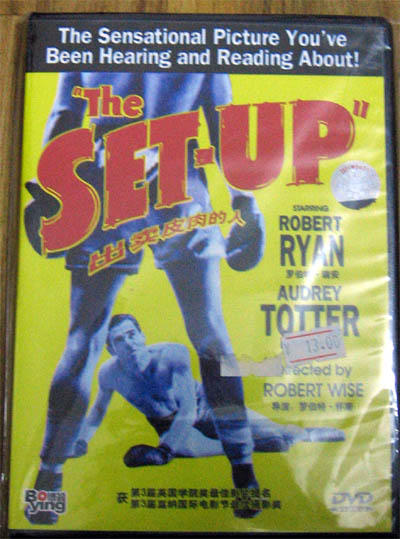
They also have legitimate DVD releases of movies that came out in the theater just a week or two ago - since everybody's bootlegging the movies anyway, I guess the studios realize they're forced to compete with the bootleggers. The movie on the left has an English name of "Drink Drank Drunk" but is just a typical romantic comedy, not a Chinese "American Pie."

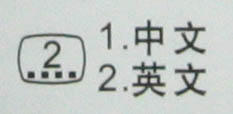
One thing you do have to watch out for with "foreign" movies is the English subtitles - half of them have them, half of them don't. You look on the box for the characters near #2 here. If you're in the US buying movies at a Chinatown (which really everybody should be doing), you also need to make sure it's NTSC and encoded for Region 1 or 0 - most of them are. I'd recommend looking for movies directed by Johnny To or Wong Kar Wai to start with.

Wednesday, September 14, 2005

Cheap Chinese Booze - a Tasting


A few weeks ago I was buying my hourly Diet Coke at a Kedi Convenience store (located on a street corner near you) when an annoying drunk cut in line in front of me, to buy a large bottle of alcohol. I was initialy peeved but it was worth it to see the price: 5.9 kuai, or slightly less than 75 cents.

Don't get me wrong, I realized this wouldn't be the top level stuff. At a logistical level, you can't run a legitimate civilization if a bottle of high-quality alcohol can be purchased for $.75. There just wouldn't be a motivation to do more than $1.50 of work a day.

From my limited earlier exposure to cheap Chinese alcohol, I have two problems. First is a sickly sweetness, worse than with a fruit brandy. Perhaps you can take it for a small amount, but I can't even imagine you'd want to keep at it. Second is a strong taste of mold. This isn't a defect in the manufacturing process. The mold is an intentional flavor that has been cultivated specifically to flavor the alcohol, much the way mold is cultivated for cheeses. Still I find the taste terrible, the smell worse, and it makes the drink impossible to mix in a cocktail.

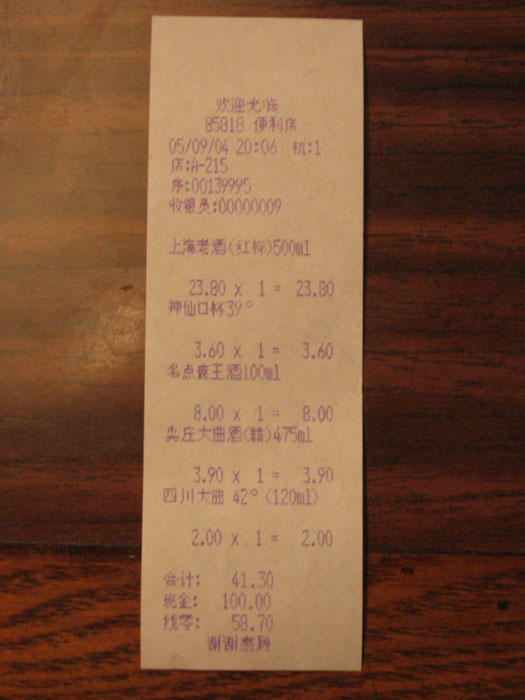
I realize an obvious criticism: if I want the quality stuff, I should spend more money. Well I'm a cheap jerk and going to China hasn't changed that a bit. Instead I went hog-wild and spent $5 trying out five bottles of the cheap stuff - and really, the lion's share went to one $3 bottle of a low proof alcohol.

Here are my tasting notes. I include a price to get drunk off the alcohol, with the mathematics that six 50mL shots of 80 proof alcohol will get a person drunk. Please believe that I didn't myself partake of more than a few sips. Also, 1 kuai is approximately twelve and a half US cents.

Tasting Notes:


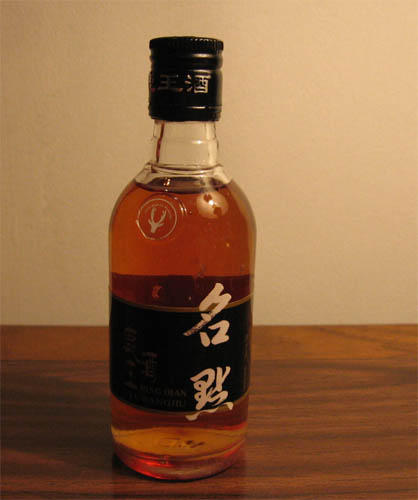
Ming Dian Lu Wang:


3.6 kuai 100mL at 70 proof: An unidentifiable but rich, musty aroma. Not stong in taste. Initial sweetness with a thin flavor gives way to a smoky moldiness. A syrupy mouthfeel. Surprisingly drinkable, although I suspect I would grow sick of it quickly. Price to get drunk: $1.54


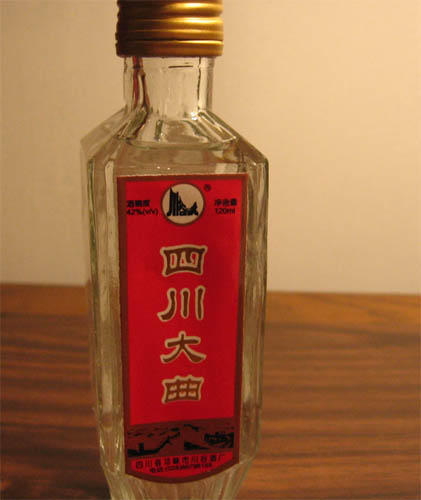
Si Zhou Da Qu:


3.9 kuai 120mL at 84 proof: Cool bottle with tapered bottom. Smells like an old cheese. Strong pungent taste that overwhelms the other flavors (sweetness, overtones of mold, and a not-subtle hint of lighter fluid). Boring. Price to get drunk: $1.16


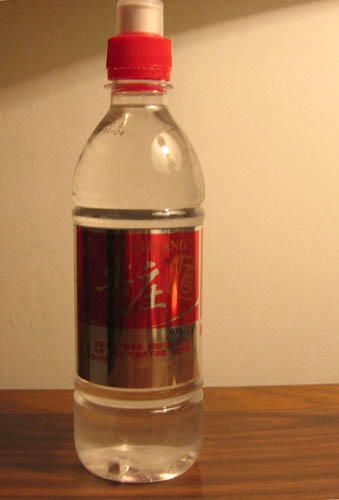
Jian Zhuang:


8.0 kuai 475 mL at 100 proof: Unbelievably packaged in a re-purposed plastic sports water bottle, although plastic sports water bottles aren't otherwise available in Shanghai. A somewhat repulsive smell of mold, locker room, and wet cardboard. Initial balance between a sharp pungency and mold flavor is interesting and masks the sharp bite of the alcohol, but the mold quickly overwhelms everything else. Drinking more than a small amount of this would probably make you very sick. Price to get drunk: $.50


Shen Xian:


2.0 kuai 150 mL at 78 proof: Comes packaged in a drinking glass with a plastic cap. The plastic cap is re-attachable but the definite idea is for the alcohol to be finished in one go. Overwhelming aroma, dominated by a horrid smell of mold. Upon taste, surprisingly enough, this is a step away from a neutral spirit. Very smooth, with a lesser amount of mold flavoring than previously reviewed alcohols. Dangerous. Price to get drunk: $.51


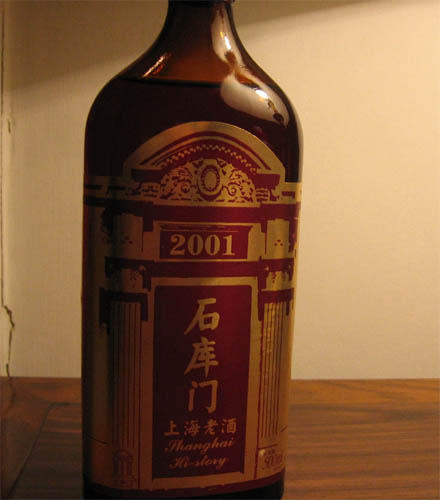
2001 Shikumen:


23.80 kuai 500mL at 20+ proof. A tinted caramel coloring with a somewhat musty smell. Strong initial flavor of berries is slightly sweet and tart with an appealing if somewhat chemical taste. Quickly gives way to a dissappointing wateriness. Still a likeable drink that is probably worth experimenting with in cocktails, perhaps as a replacement to Pimm's Cup. Bottle doesn't specify alcohol content, merely that it's higher than 20 proof. I'll make a guess of 30 proof. Price to get drunk: $4.78

In conclusion, I can't recommend getting drunk off of really cheap alcohol purchased from Chinese convenience stores. I can even say that I strongly advise against it. However if such is your wont, I would recommend paying the extra cent and opting for Shen Xian over Jian Zhuang, even if Jian Zhuang's packaging is more convenient at the gym or local basketball court. Ming Dian Lu Wang and 2001 Shikumen are perhaps worth an impulse purchase, and I'd even consider buying the premium versions of these alcohols.

Even if the thought of moldy alcohol is repulsive to you, China isn't the place to go for a forced sobriety. Johnnie Walker Black and Red are available on pretty much any block, and many other international hard alcohol brands are available as well, for prices equivalent or cheaper than in the US. Beer is available at convenience stores for a quarter to fifty cents apiece. Tsingtao is the best of them, unfortunately, but it's better than the Tsingtao you get in the US. And Kirin has been giving away their recently-launched fruit ciders for free, right on the street.

Finally, some cocktail experts give a few ideas about mixing Chinese alcohols into drinks on the E-Gullet Forums. David Wondrich (who wrote an excellent cocktail book for Esquire) makes some recipes that even sound appealing, in post #7. If I ever get around to trying them, I'll post the follow-up.

Thursday, September 01, 2005

Scoping in Fuxing Park

Fuxing Park is a little off Huaihai Road, one of the big yuppie shopping streets. It was set up by the French when there were still foreign concessions. The park was a little familiar to me even before arriving in Shanghai, because actors playing Wong Fei-hung (perhaps Jet Li or Jackie Chan) always get bug eyes when they see the sign in the park saying "No Dogs or Chinese allowed."

The park is my favorite part of Shanghai to just kick back and scope. I like how people do what they want, and others don't give them stink about it. You'd think that just through the sheer number of people doing weird things in a close space there would be some problems, but everybody is pretty cool about it.

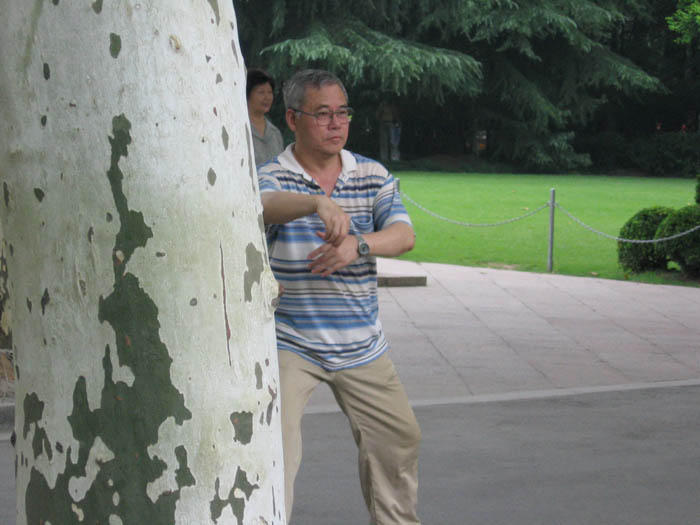
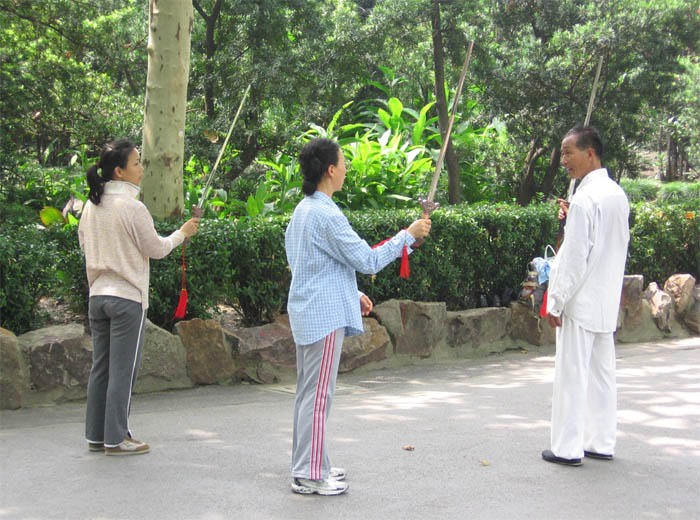
The first thing you notice, especially if you go in the morning, is a number of people doing exercises. This is mostly going through tai-chi routines, either in a group or as an indivisual. Similarly, you often see people practice stretching, doing yoga, or practicing grappling. My favorite is the people who walk around backwards. It's supposed to be good for the health, I'm not sure on the reasoning.


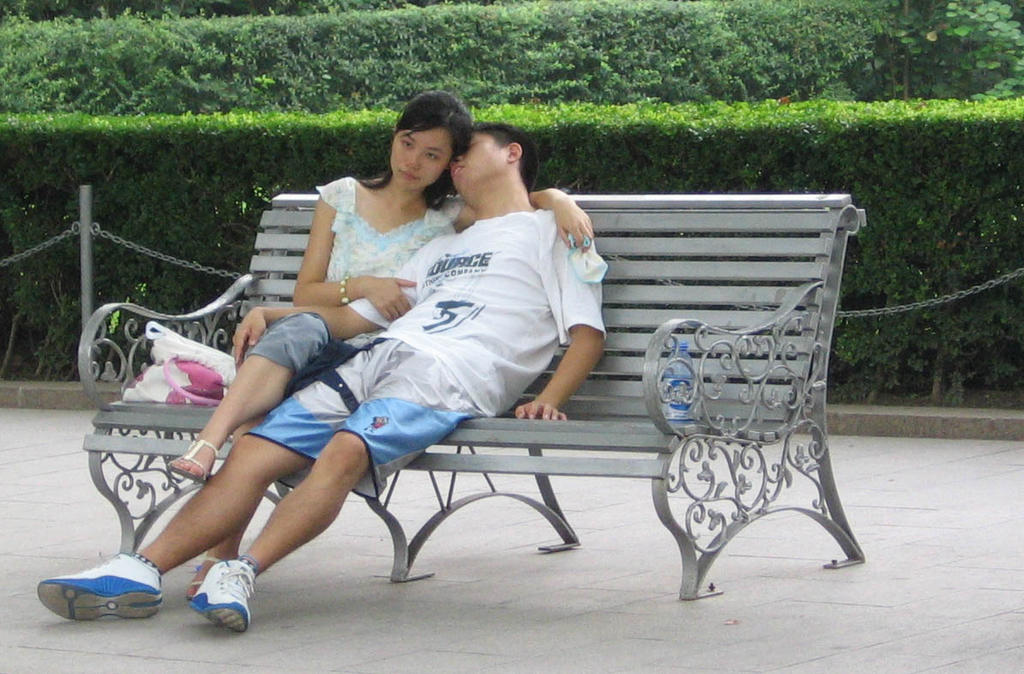
You'll also see one of those weird phenomenon of Shanghai: teenagers apparently go to crowded public parks and American fast food restaurants to make out.


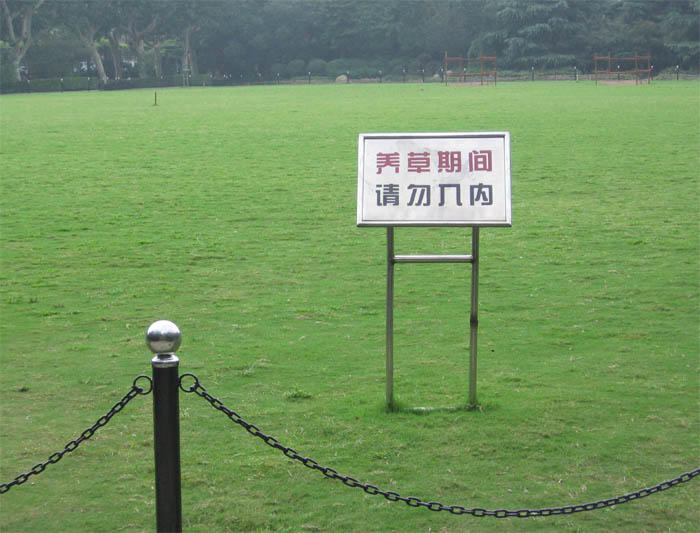
Another important difference from the US is that, like most other Shanghai Parks, you're only allowed on the pathways. If that seems unusual, there's more a reason to all the parks than as a place to relax. Shanghai is a heavily populated city in a warm area, so the greenery is there to keep down the pollution and heat build-up. I read that Shanghai is 35% green, and is aiming for 40%. Trees dominate many parks, and Fuxing is one of the few with such a large amount of flowers, gardens, and fields.


Heading to the center of the Park, you can see just how heavily this park is used. A number of older people just hang around in groups. They don't seem to say much, though. There's also lots of tables with people playing poker and mahjong.


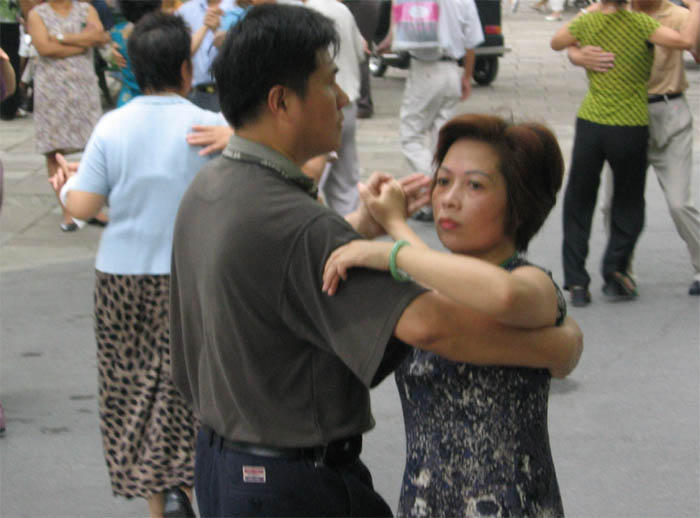
Loudspeakers are set up throughout, and it's very popular for couples to practice their ballroom dancing. Different groups will have different songs playing, each with their different rhythm. It seems confusing but I didn't see any toes getting stepped on.


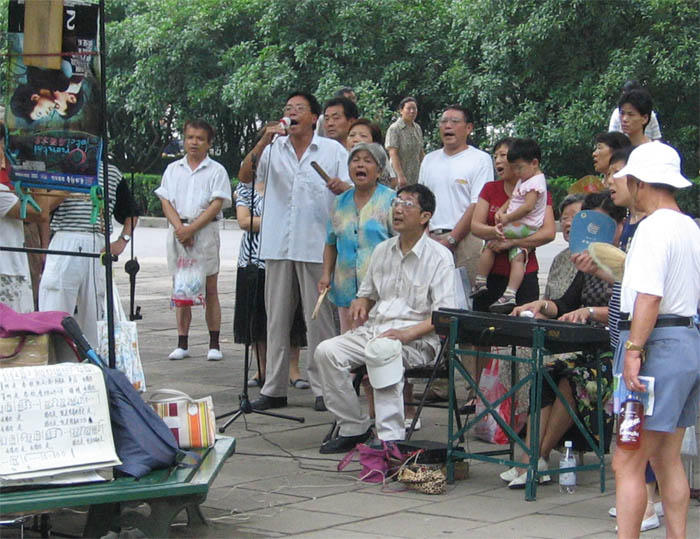
Right next to this is several groups of singers. It would be really cool if they were singing about the movie "2046," but that's only on the back side of the board, the front side has lyrics.


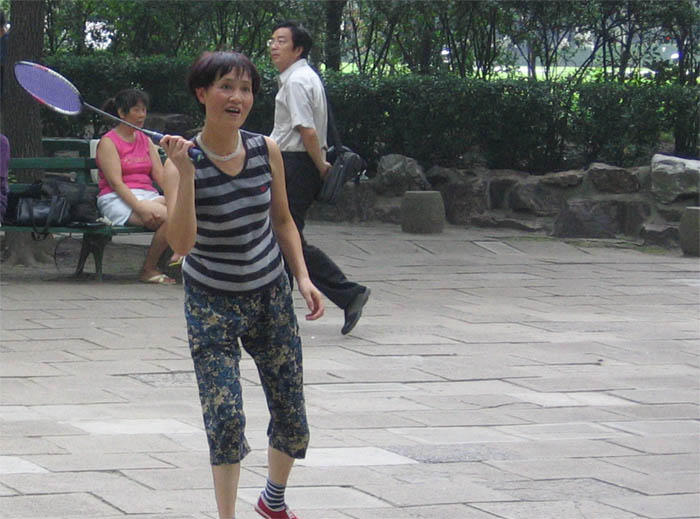
Somehow in the middle of it all, people practice their badminton, or even net-less tennis. They're actually pretty good. More intense is the people practicing their swordfighting, although it's not so common a sight.


There's a few buildings around the park. Near the south side are some restaurants, and at night there's a club that spins hip-hop and promises free drinks for women in Office Lady get-up.


There's also a jungle gym for the kids, and a small amusement park with a few carnival-type rides.


And there's the really cool statue of Marx & Engels, although I showed a picture recently and won't show it here. There's other smaller statues around, mostly classical-esque, like you might see in an English garden.

A final word: Fuxing Park isn't really atypical, but each park has its own characteristics, and Fuxing is much busier than most. Just a few minute's walk North is another much quieter park, basically empty except for a few people studying or eating on the benches.

A Meta-Blogging

This posting isn't actually about Shanghai - just a quick word about the blog itself, for those who may be interested. I recommend skipping ahead to the Suzhou River article!

So: This blog will be in the format of various topics being talked out and photographed. The idea is two fold: first, it's a motivation for writing and taking pictures on a number of subjects that might skip my mind otherwise. Second, I don't think the literature on Shanghai is very good, and I hope that eventually this blog becomes the best look at the city, or at least better than what I've seen so far.

There's several things I want to avoid. This is not a personal webpage where I talk at length about me and what I did over the weekend, I want to keep this interesting for people whether or not they know me. Some blogs are a replacement for sending out mail to everybody. That's not at all my intention and I hope to keep in touch with all of my homebodies. Some blogs have wacky links and smarmy commentary on news articles. I have no interest in writing this, although many of the articles on shanghaiist.com are very good and I recommend a look at that site, especially for Shanghai residents. Most commentators on foreign places play armchair sociologist. It's easy (even inevitable) to do this, but I'll try to keep it to a minimum - although TalkTalkChina does a good job of it.

The pictures are taken using a digital Canon A510. I like it because it fits in the pocket and the photographic settings and focus are all easily adjustable. However the camera is on the cheaper end and it frequently shows, especially with blowing up shots, or in dark places where I'd like to use higher ISOs. I hope to get a higher-end camera soon, to use in addition to the 510. When I photograph, I like candid shots and zooming in very tightly. My big pretention is I try to go for the natural-light feel, and will very rarely use the flash.

The writing is something I feel I need to work on. I want to avoid using slang words, but keep things from getting dry. I also intend the words to accompany the photos, rather than stand alone. Perhaps this will evolve over time.

I've mentioned the censorship: China blocks the blogspot.com domain as an after-effect of anti-Japan protests blamed on bloggers. However, actually posting the blogs is done on blogger.com, which isn't blocked. Also it's not all that difficult to get around the domain block. Still, if the block isn't lifted soon, I'll consider moving this site to another domain.

I hope to write about features of the city I find distinct, as well as looks at neighborhoods and events. I'm happy to hear any suggestions on what to write about. Also, please mail if you have any questions or comments.