Monday, March 13, 2006

Hot Dog Piracy

One of the things that just blew my mind was to go into a busy HMV store in Hong Kong, and see DVDs and CDs selling for ten to fifteen dollars. Unbelievable! CDs, DVDs, video games, and software, will all go for somewhere south of $1 in Shanghai. It's entirely widespread. I wonder why there isn't a crackdown, I suspect because it would be a serious impact on the quality of life.

But perhaps the biggest quality of life issue is bootleg hot dogs. China does have hot dogs, they're usually cooked on those cheesy rollers like a 7-11, or sometimes they're barbequed. They don't look like anything special, and I'd never gotten around to eating one. Until, right across from Fuzhou Lu in People's Square, I noticed a new shop going up last week.

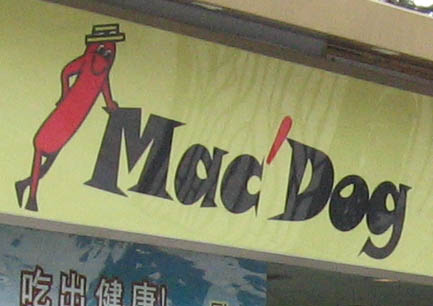

Yes that's right, Top Dog - or Mac Dog, perhaps the "Mac" comes from McDonald's??? This won't mean much to most people, as it's a Berkeley-based chain with just six locations, one inside a drug store. I'm not much of one for hot dogs, and I rarely went to the Top Dog in downtown Oakland, as the same price got you much better food just a block or two away. Still, it's a good place to go for a late night snack. For those not in the know, here's a Top Dog Menu in Oakland. It uses a more modern-looking version of the Mr. Hot Dog logo, but other Top Dog mascots look exactly the same.
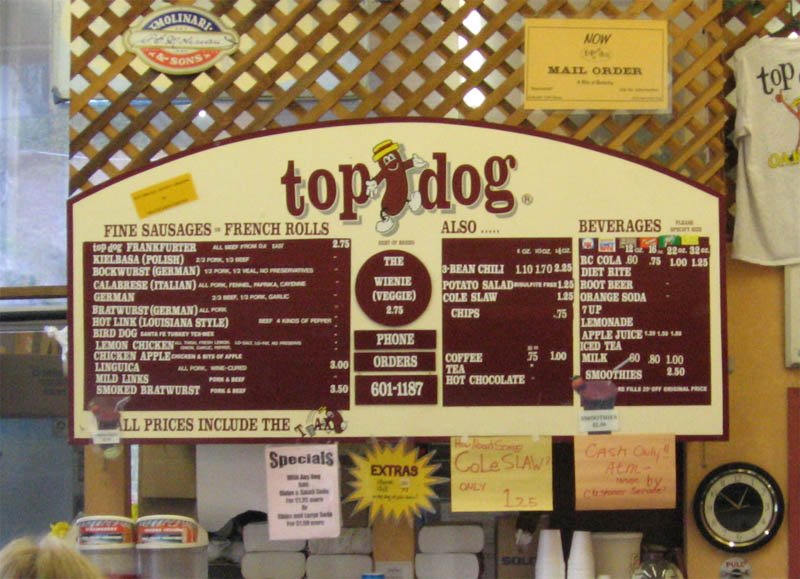


They do the same gourmet hot dog thing, although the Chinese version has a much better selection of milk teas, shown elsewhere on the menu.
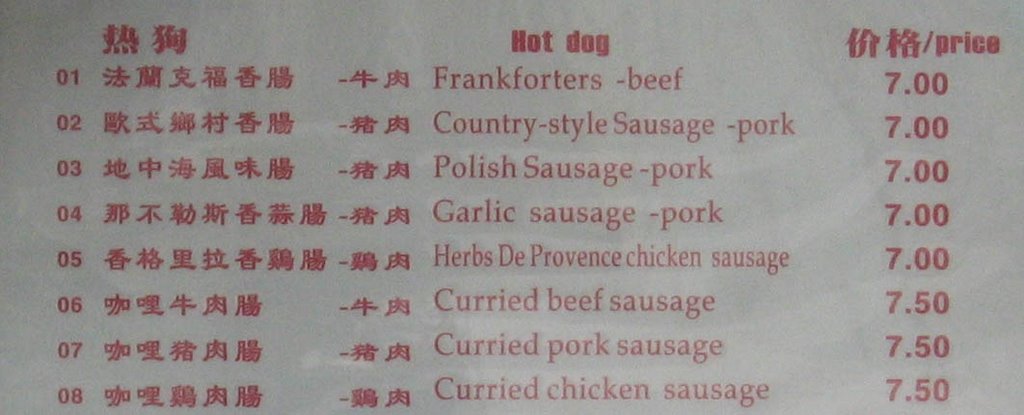


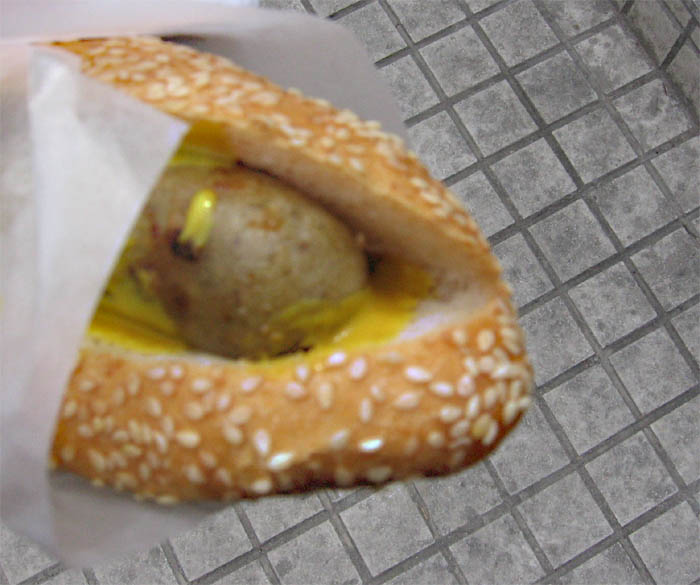
I asked a lady who works there about the place. She was very friendly, and said her husband worked at a Top Dog for half a year, and wanted to bring back the hot dogs because they don't have them in China. I pointed out that hot dogs are common, which they are, and she replied that they're too expensive. A strange comment, as $.90 cents for a hot dog is definitely expensive by Shanghai standards. On the other hand, I'm sure those other hot dogs aren't nearly as good. The hot dog I got (Garlic Sausage - Pork) was right tasty, although the bun was a little too substantial and could still use some work.


Update 2/3/2007 - I regret to report that this place now focuses on the sweet drinks and deserts. It still sells hot dogs, but without all the flavors and variations, and they use the 7-11 style rollers.

Update 2/23/2009 - There isn't Mac Dog anymore.

Saturday, March 11, 2006

I Love Hong Kong: Hong Kong Island Edition

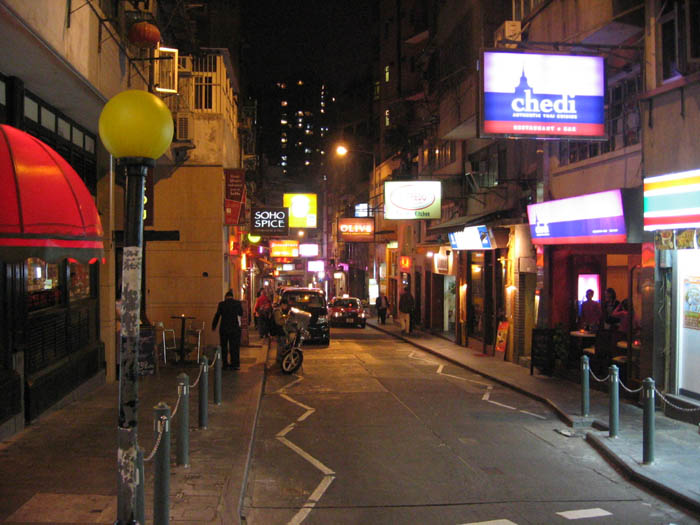
I'm recently returned from a very short trip to Hong Kong, and I must admit that I totally loved the city. Where to begin? Howsabout the place where I first got dropped off, Hong Kong Island. The comparison is less than complete, but in many ways Hong Kong Island is to Hong Kong, what Manhattan is to New York City.


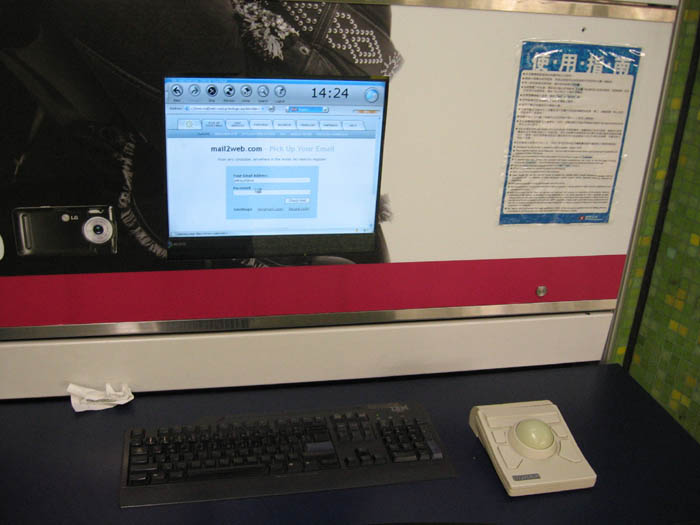
When I came in by bus, as shown above, I was extremely surprised both at the density of skyscrapers, and the obvious wealth and design to many of them. It's immediately apparent that there is much, much more money in Hong Kong than in Shanghai. This was hammered in by something silly but kind of cool: free Internet terminals inside the subway station!

In Shanghai, when I told people I was going to Hong Kong, the inevitable next statement was that it was a shopper's heaven. That might be true, but I wasn't looking to buy anything. In the two products I was keeping an eye out for, shoes large enough to fit me and a larger selection of spirits than that available in Shanghai, I came up empty. Anyway Hong Kong has one boutique store after the next boutique store, and parts of Hong Kong Island reminded me, in many ways, of the area around Union Square in San Francisco, hills and architecture and all.


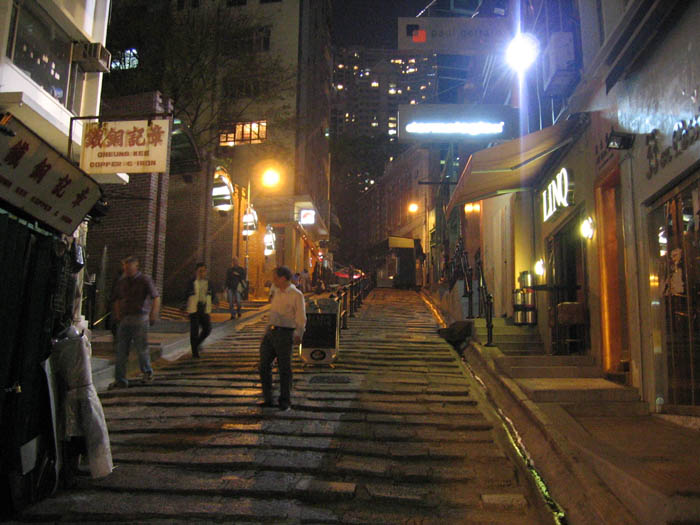
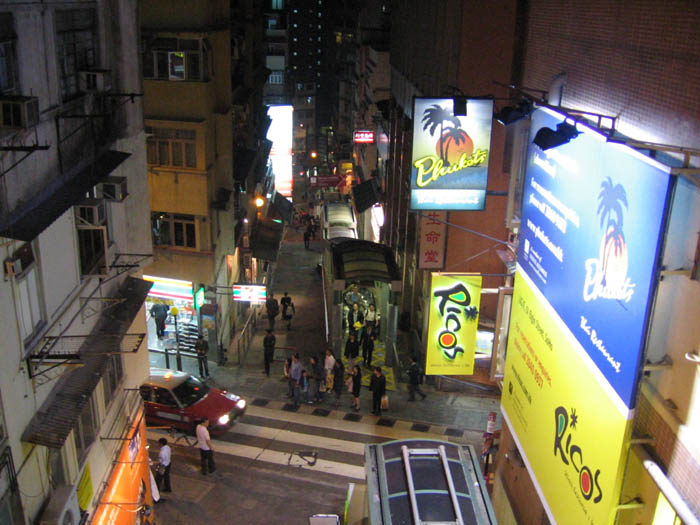
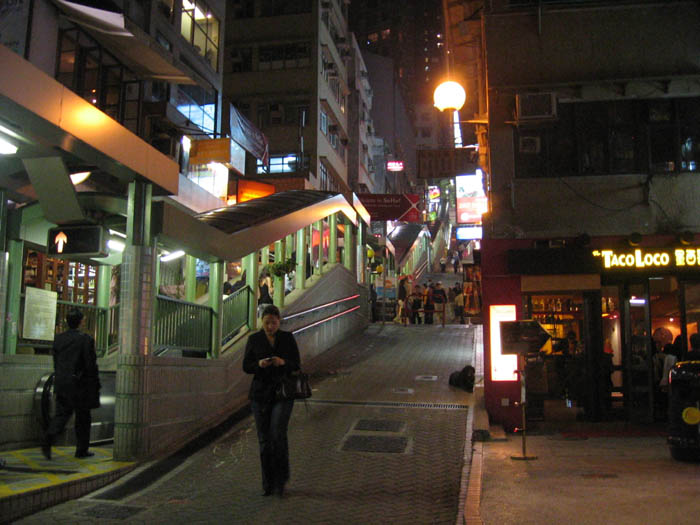
As in San Francisco, but even more so, these hills just keep going on and on, and are quite steep. It's extremely pictaresque, but not many rich boutique stores would want to locate so high up. To address this, there's a huge linked series of outdoor escalators running up the side of the hill, from the shops to the apartment buildings at the very top. Although the cobblestones streets are so beautiful, it's tempting to walk.


Let me say a little more: these escalators just keep going and going. You rapidly get pretty high up taking these escalators. One pleasant surprise was that as opposed to Shanghai, where people think nothing of blocking off both sides of the escalator, in Hong Kong people stopped on the right side and kept walking on the left. The other huge contrasts I noted is that cars very rarely honked their horns, and I didn't see anybody spit. I guess Hong Kong has a more developed city culture, Shanghai is still booming with recent arrivals.


The escalators took breaks at side streets that were obvious hang-outs for Hong Kong's large foreigner population. Many of the bars and restaurants didn't have any Chinese people in them, aside from the people working the tables. Shanghai has a range of foreign food, but Hong Kong's easily eclipsed it. On the other hand, from my very limited experience of eating at a single Mexican restaurant in Hong Kong, the foreign food is just as bad as Shanghai's.


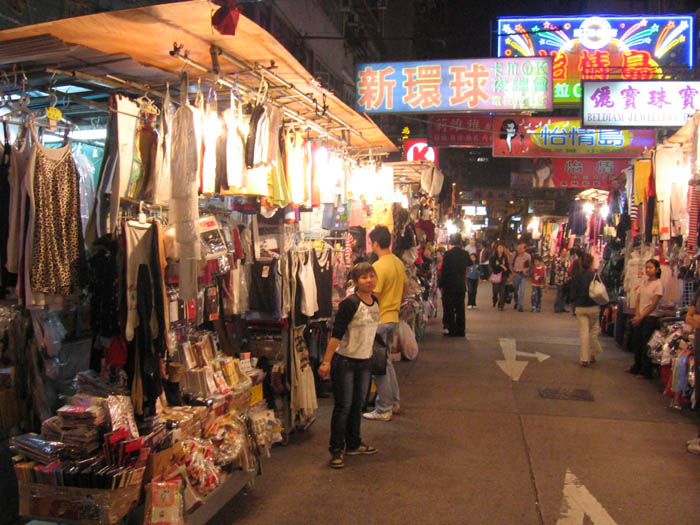
While Hong Kong Island was dominated by malls, department stores, and boutique shops, there were a number of extremely packed side-streets, where Chinese and immigrant Asians sold clothing and a range of other products.


I chose to go to Shanghai for valid reasons that remain valid, but I wonder if I should have done things a little differently. I have to admit I think Hong Kong blows away Shanghai in some regards. I definitely hope to visit again, for a longer time. Over the next month I'll have more to say on Hong Kong, so stay tuned.

Thursday, March 02, 2006

Tujia Minority Chinese-style Pizza

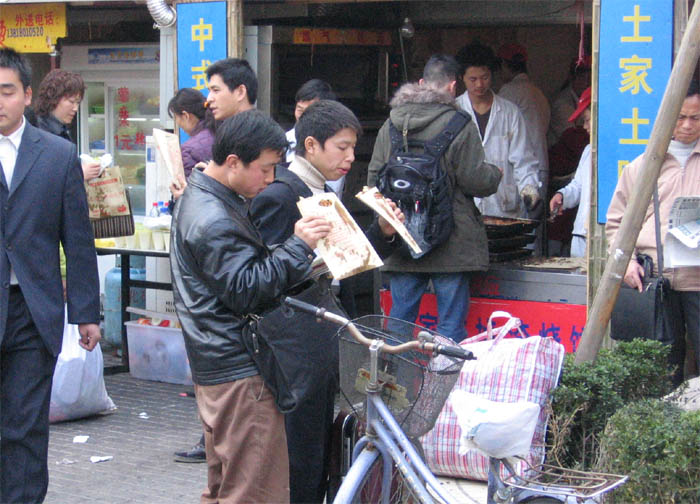
I've said it before and I'm sure I'll say it again: Shanghai has great street food. My favorite remains Manapua, and the most common is probably grilled meats, but there's a lot to choose from; you could easily make a meal out of a little of this and a little of that. The street food will be sold from booths set up right on the sidewalk, or more normally from small booths along the side of the road. Here, there's a little alcove next to the entrance to the subway, with four or five stalls.


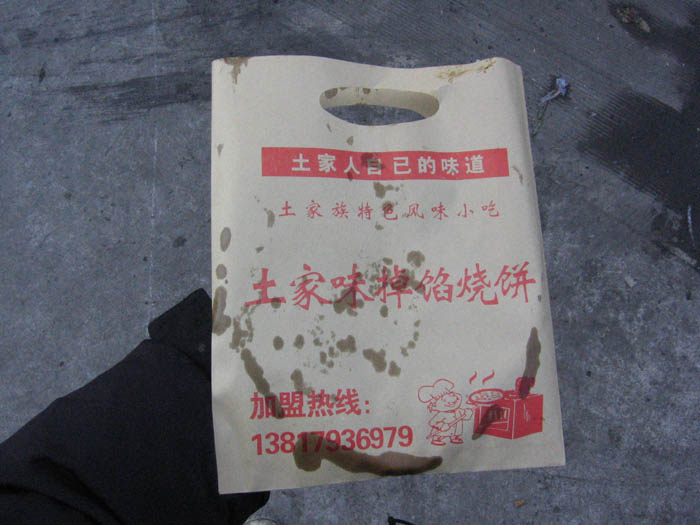
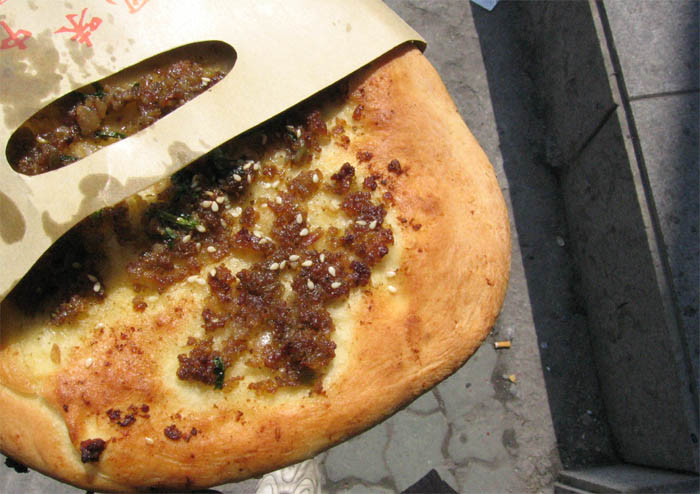
If you notice the people eating from the brown paper wrappers, it's interesting. Just a couple of months ago the snack was nowhere to be seen, but now the snack is everywhere. It's called Tujia Minority Chinese-style Pizza, and no the unwieldly name hasn't been shortened.

It's a big trend, and the places that sell it can have weirdly desperate lines form up. These things are made quickly and sold just as quickly. Even though the shacks are so small, these are often assembly line operations. I've heard the places that sell them can stand to make huge profits - the cost is maybe 25 cents, but they cost about 10 cents to make. Whereas, I've heard the profit margin on a Babi Manapua is only 1 cent.


So what do they taste like? They certainly aren't pizzas, although with the thin, oily bread and the greasy, spicy meat, they do have a sausage-pizza-like vibe to them. There's also a strong herbal taste, however. I asked some locals what they thought, they told me they smell very good, but are really nothing special - the main complaint being that they're far too greasy. If you look at the slicked-up wrapping paper it's difficult to disagree, but I'd like to add that they're also far too salty. Still, on occasion they make for an excellent snack.

Tuesday, February 21, 2006

Food Just Lying Around

I'm swamped with work and studies over here, so while I try to update more-or-less weekly, it may take a few more days before I can make a full update. In the meantime, here's a quick update about food just lying around my apartment complex. I got a bunch of responses from my earlier picture of food and laundry drying on the line together. Well here's an alternate take at the same image:


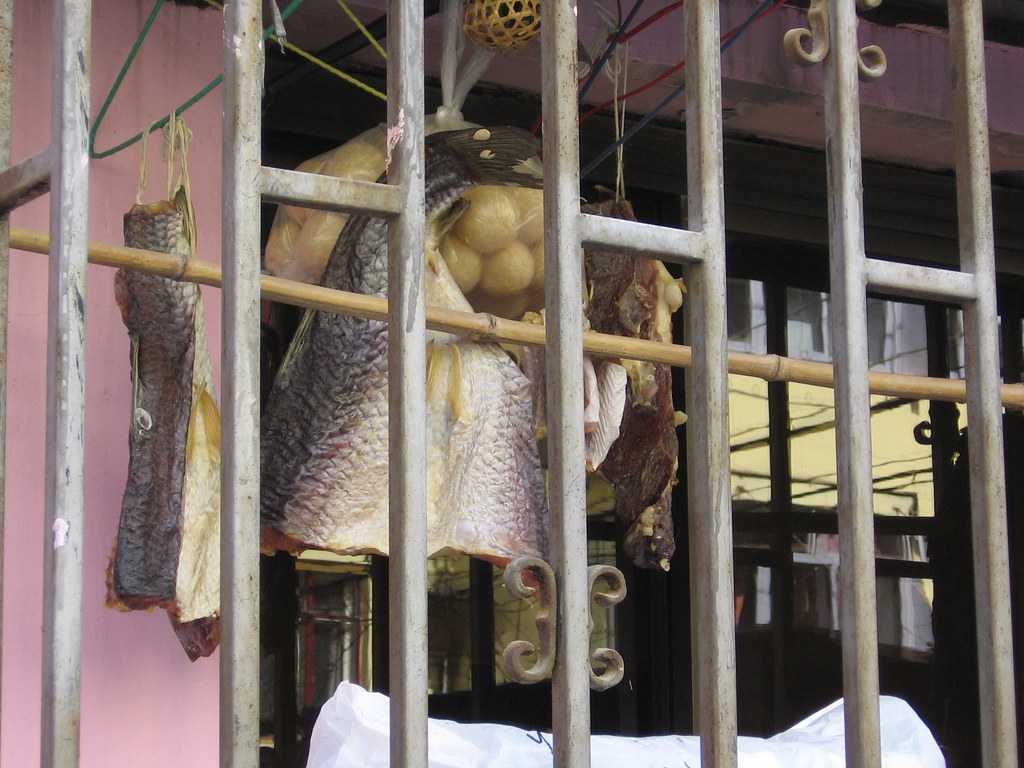
Kind of disgusting, right? The worst thing about it is there's no clear path to get to the nearby convenience stores, or the bootleg DVD place. You kind of have to walk around the hanging meat. One of my neighbors is very considerate and although they always seem to be drying meat, they do it behind the bars on their window:


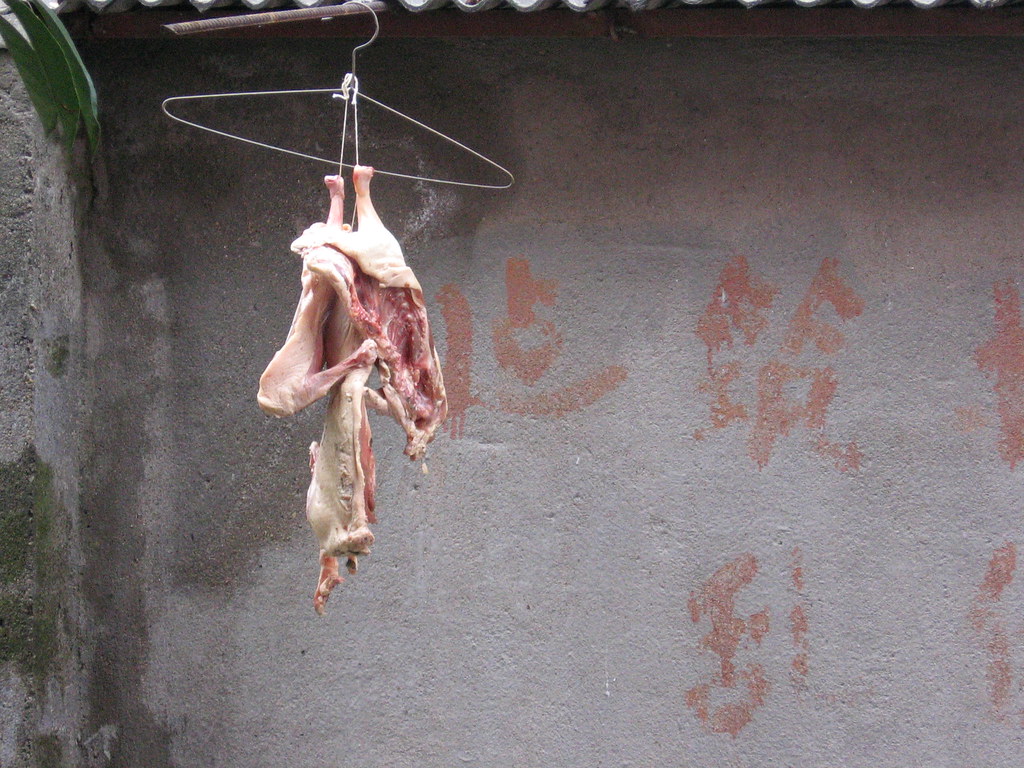
You can barely tell that's fish drying above. I hope they didn't catch it themselves as I can't imagine you'd want to eat any fish caught in Shanghai waters. The meat below is more fresh, in fact last weekend I saw this guy kill and de-feather a couple chickens, right near my front door. Not having been raised on a farm or in a Shanghai apartment complex, I had never seen that before. Me and a couple kids stood around in rapt attention. In the end I still don't know why you'd want to dry freshly-killed chicken, but it looks vaguely HR Giger:


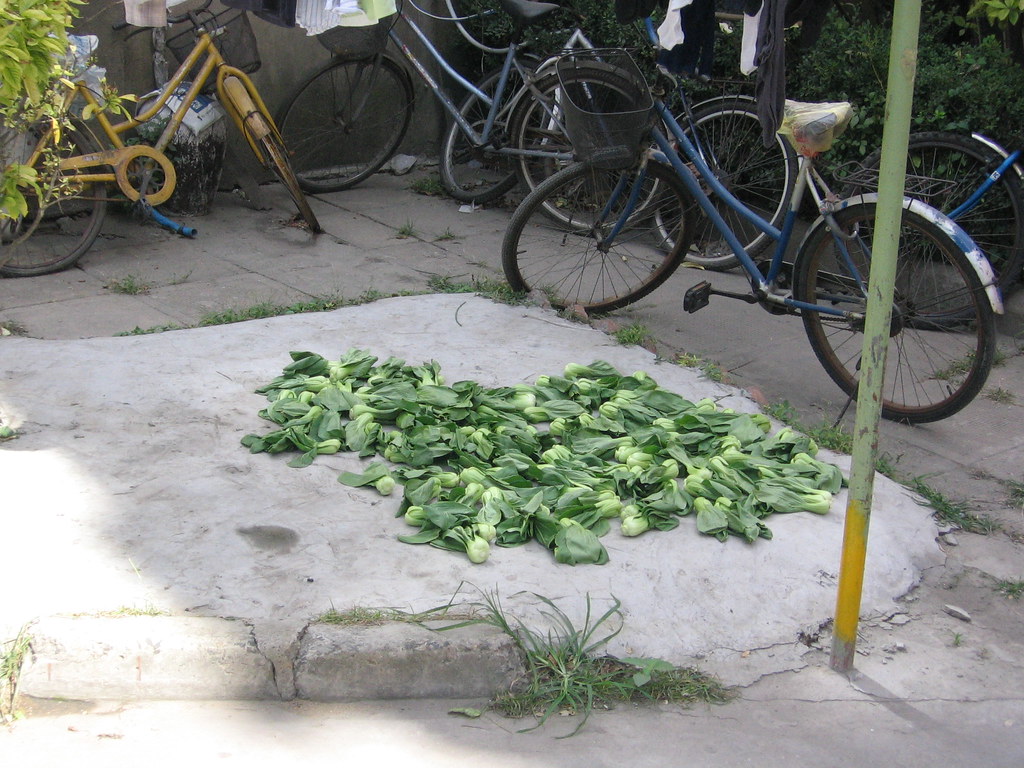
Maybe most disgusting of all is the following, although it takes a little cultural understanding. The ground in Shanghai is tabu. There is no 5 second law. Between people spitting and the garbage on the street and a few other things I'd rather not mention, anything touching the ground is hopelessly contaminated with a large range of germs not yet studied by science. So to see somebody willfully ignoring this taboo and drying their bok choy on the ground is, to me, mind-shattering.


It's worth saying that food lying about is the highly visible exception to the rule - most people in Shanghai don't do that, and of course restaurants don't, or at least I hope they don't. As ever, click on the picture to see a larger version. Also, I'll be making some minor changes to old updates, for accuracy. Originally I wanted to keep all mistakes, as some kind of comment on what I knew and what I had wrong. However I decided that was a silly idea.

Sunday, February 12, 2006

The Po-lice

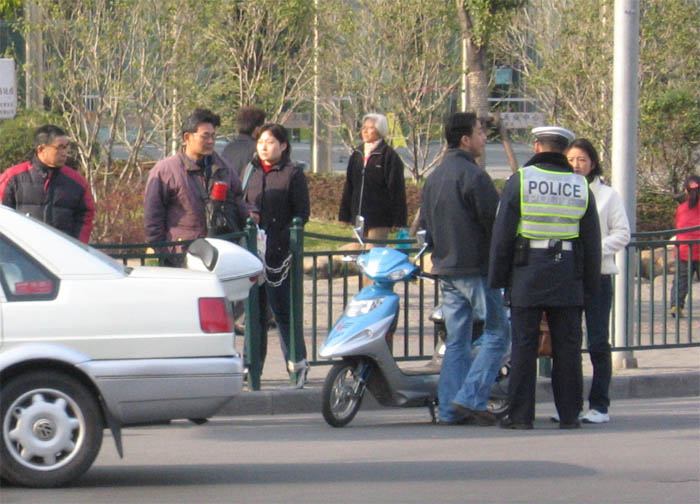
A pet peeve of mine is, I get the occasional mail or IRC asking what's it's like to live in a police state! People much more knowledgeable than me make the assertion, and I read about definite abuses of power involving police, but I personally don't think that criticism applies. It seems to me that a necessary feature of a police state is a lot of policemen, but instead policemen are strangely rare on the streets of Shanghai. It's entirely possible to walk across crowded areas of Shanghai and only see a couple of them. I could definitely imagine walking all day without seeing any, if it wasn't that Police are often used to direct traffic.


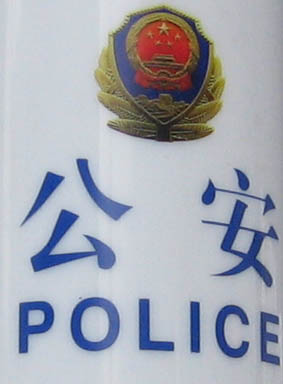
For the most part, the police are out of sight, out of mind. My only real interaction with them has been when I got my Visa half a year ago, I had to register where I lived with the closest police station, then have them stamp some form. On the right is the police station closest to my house. There's some hoopty cars out front, but I think it's more common for Police to use newer Suzuki motorcycles, or to stay in their station until someone calls them.


Which isn't to say Shanghai is unsafe. Shanghai is an extraordinarly safe city, a city where your wallet gets returned with the money still inside, and little old ladies take the shortcut through the un-lit alley. Supposedly the worst cities in China are the Southern coastal cities like Canton, although I hear this from people who've never been there. And even those cities don't so sound bad.

That said, there are some crimes a more solid police force would counteract. In some Muslim areas you'll be offered Marijuana every several seconds. Prostitution and selling counterfeit items are basically de-criminalized, although there are occasional token raids. And most annoyingly, traffic patterns are completely crazy, with motorcycles and scooters ignoring all traffic laws, and carts veering out onto the road. You do see the occasional person get pinched, but it's the exception rather than the rule.


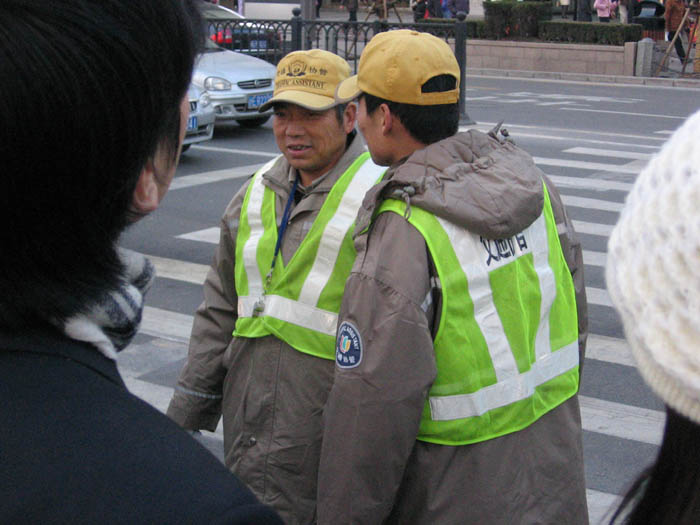
Just as in the US, some of the slack is taken up by Rent-A-Cops, who can veer from looking and acting all official, to some guy in a dirty jacket listening to Chinese Opera all day. It's probably less common than in the US, but you'll see Rent-A-Cops at banks, at malls, at the entrance gates to apartment complexes, and such. Also, most of the manned intersections will have "traffic assistants," rather than full-on-police.

Thursday, February 02, 2006

Chinese New Year's!

It's Chinese New Year's right now, a week-long holiday marking the beginning of both Spring and China's spectacuarly complicated Lunar calendar. In the US, New Year's Day is mostly just a numerological reason to party rather than a proper holiday, but in China it's the most important holiday of the year.

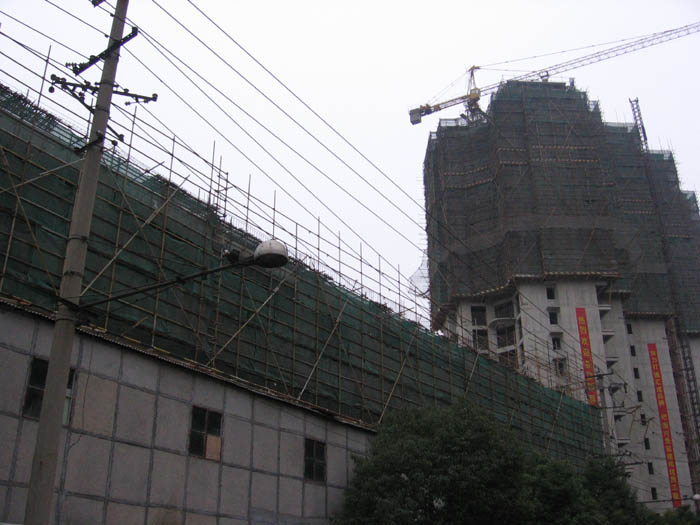
It's the time of the year that everybody goes back to visit their family. In Shanghai, almost all the upper-middle-class locals I know came here from some less-developed region away from the coast. Also, the five million or so transitory workers who construct buildings and so forth are entirely gone, leaving the jobsites, usually busy, entirely motionless. In the lead-up to New Year's, the subways were overcrowded with lower-class Chinese citizens with large plastic suitcases, and supposedly the train stations were complete mayhem. Ticket prices were jacked up very high and still sold out, and a lot of people I know had to arrive on the Day of the New Year.

While I'm sure the villages in non-coastal China are overflowing with people and activities, Shanghai feels about 75% abandoned. It's very strange. The restaurant on the left is always busy, even late at night, but when I went there were more employees than customers! Of course, a lot of shops and restaurants just close their doors for the week.


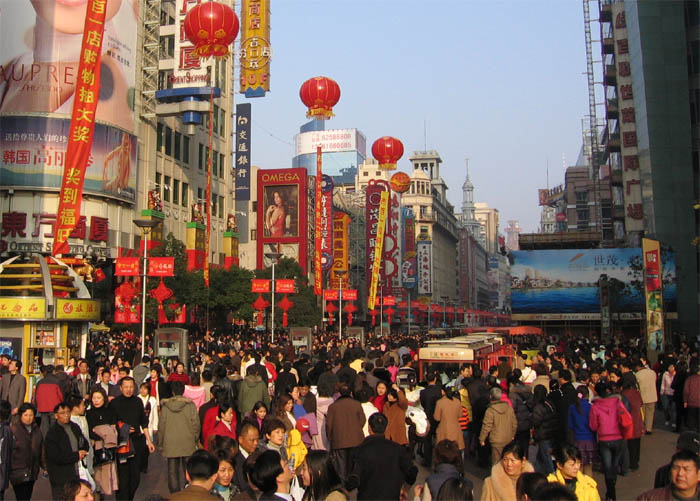
The commercial areas of Shanghai are very busy, though. A lot of shops are offering sales on big-ticket items, such as cell-phones. The weather on the starting weekend was excellent, and the shopping street of Nanjing Lu was as packed as I've ever seen it.


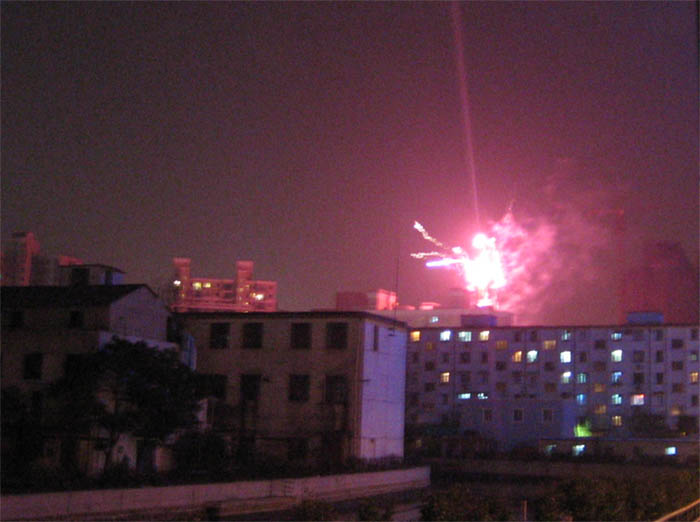
The celebrations aren't as crazy as one might expect - I expect you have to go to one of the villages or Hong Kong for that. The highlight was the firecrackers going off. It doesn't nearly measure up to Honolulu around midnight on New Year's Eve, but it lasts all week. People light them off mostly from when it gets dark until ten, but really at all hours - I was woken up at 5 in the morning last night, by somebody lighting off a whole bunch of them. The most popular firecrackers in Shanghai don't have much light to them, but do have spectacularly loud booms. Car alarms go off, and I briefly wonder if the city is under some kind of attack. Also, fireworks are somewhat popular, miniature versions of what you'd see at a fireworks show. The firecrackers are sold around town, mostly from little stalls on the side of the street.


Another thing you see a lot of is gift boxes of fruit. There's about half a dozen fruit stands within five minutes of my apartment, and all are offering fruits in dolled-up packaging. Generally the boxes are oranges or kiwis, and the gift-baskets are a variety of fruits.


I mentioned before about Shanghai's XMas Decorations. For the most part, they remained up until Chinese New Year's. To my surprise, Chinese New Year's decorations were no more common, or perhaps even less common, than Christmas decorations - at least at the stores and in public places. On the other hand, people's homes will be decorated with some banners, or a hanging or two. Carrefour, had a large selection of New Year's decorations, just as a it had a large selection of XMas decorations. The main difference was that you could get New Year's decorations all around town, not just at the superstores.