Thursday, June 08, 2006

Seoul: Castles!

As a final word on Seoul, I'd like to show a few pictures of the castles that dot the city. They add something to the character of the city, giving it an ancient quality that's missing in most of the other cities I've either lived in or visited - including Shanghai.

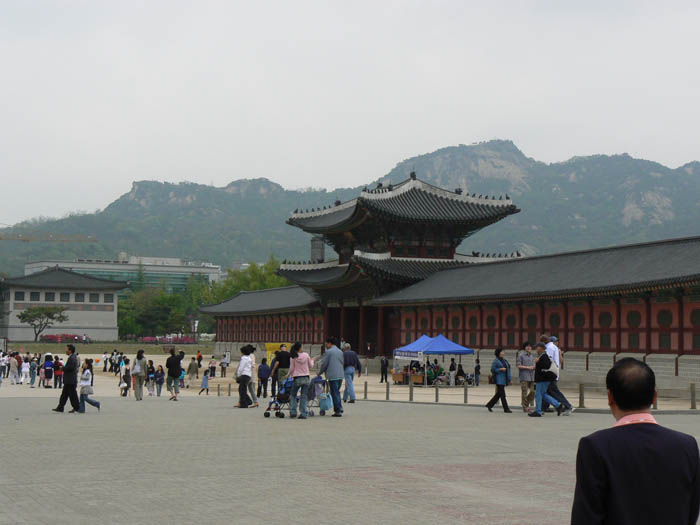
I'll start with Gyeongbokgung Palace, which was essentially the central Palace to Korea since 1395. It's very large. Unfortunately it was destroyed by the Japanese during the occupation, and has been re-built as a series of identical empty concrete buildings with a half-hearted historic facade. It's ugly, but the location is still amazing - right near the downtown on one side, and facing beautiful mountains on the other. It featured hundreds of people re-enacting palace pagaentry in colorful traditional Korean clothing.
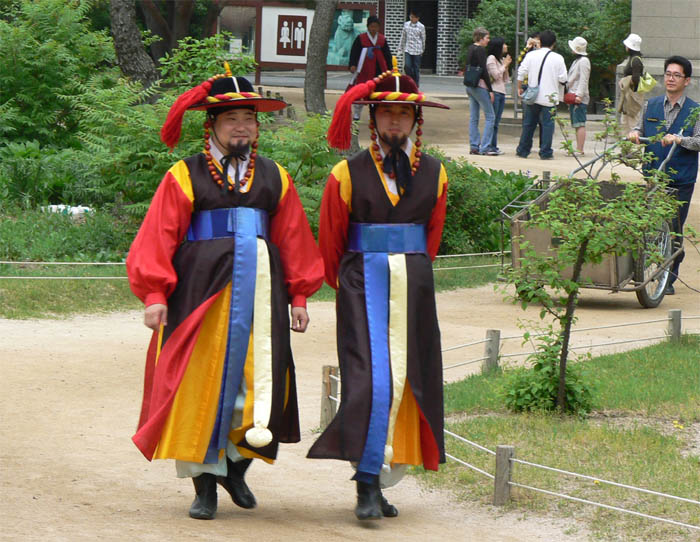


Similar, but more impressive and containing much of the original building construction, was the nearby Changdeokgung palace. Unlike Gyeongbokgung, touring was limited to guided tours, so it lacked a parade-type atmosphere. One of the more impressive points will sound really boring: the beautiful sloped rooves and roof tiles.
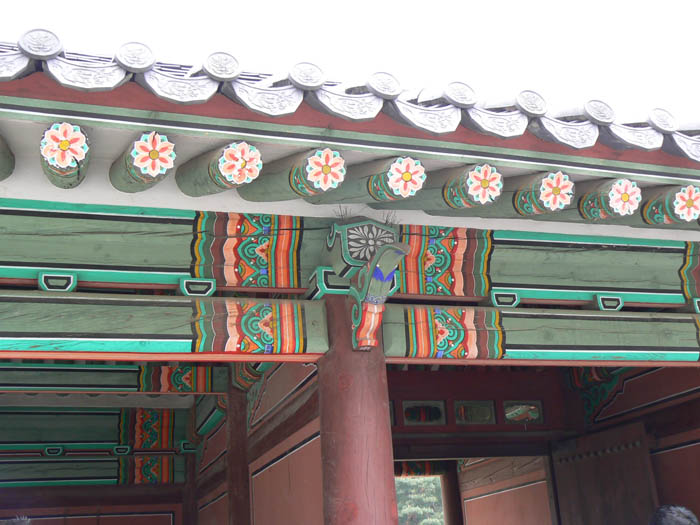


But definitely the most impressive castle in Seoul I ran into by accident: Changyeonggung.


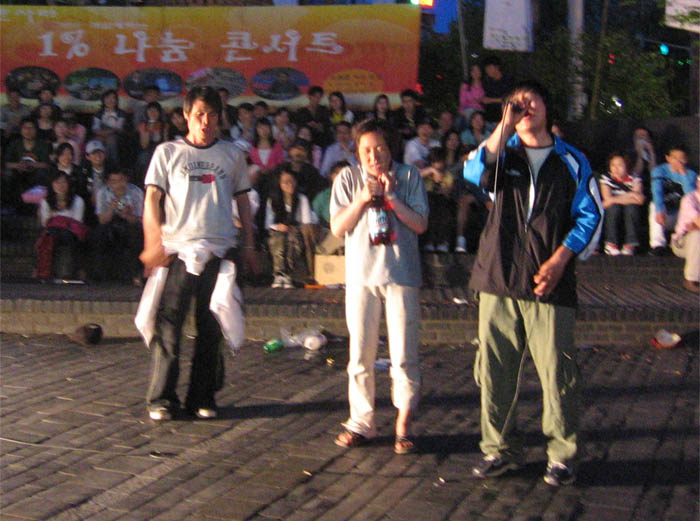
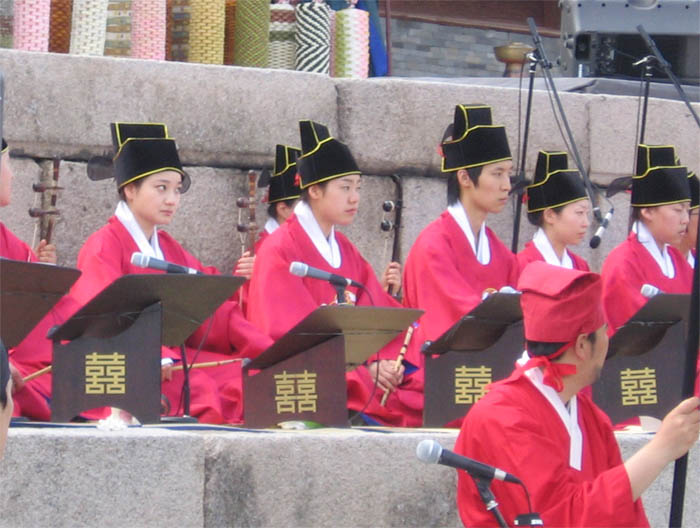
You can see from the above photos, when I went there they were having a really interesting traditional musical performance.


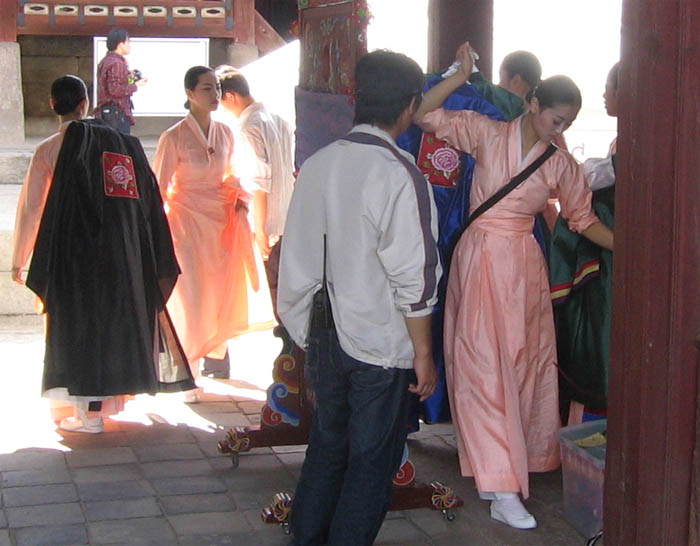
Traditional clothes are always more interesting once the show's over:


The castle is very well preserved, instead of being destroyed during the Japanese colonization it was used as a zoo. That sounds like an unimaginable insult until you stroll the palace grounds. They're large and expansive, and even though there's a lot of buildings towards the entrance, overall there's a feeling of being inside a large park.
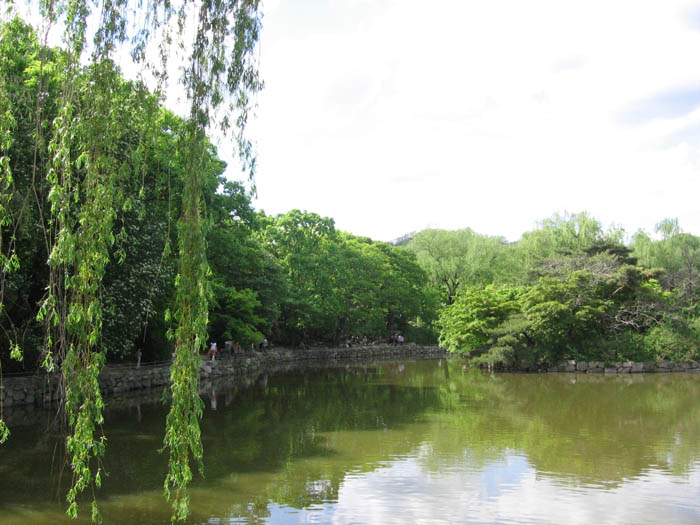


There's a connecting bridge to Jongymo Royal Shrine, where I managed to miss a huge annual rite by a few hours. Anyway I wandered around the parks out front, where a seemingly endless supply of weird older people of indeterminate housing status did weird things.

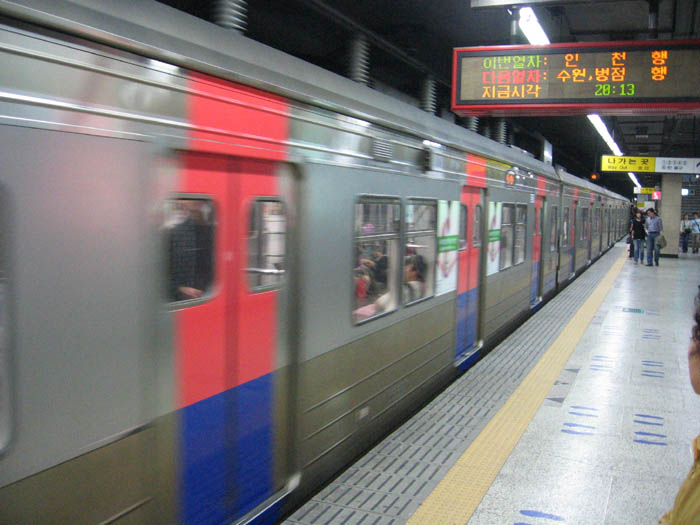

I also want to mention Suwon. It's not really a suburb of Seoul, and is very far away, but I still managed to take a subway there. It took about an hour and a half, and I feel the train would have been a better option. For those in the know, riding Seoul subways is just like being on the set of "My Sassy Girl," which is awesome. Anyway, the reason to go to Suwon was both to get out of Seoul and to check out the fort in the downtown area.


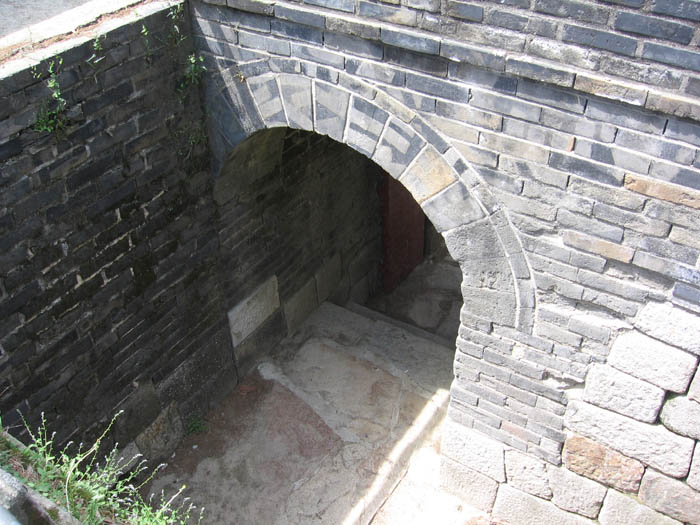
I have to say, the actual fort was really boring. The main attraction seemed to be that it was used in the historical soap opera "Jewel in the Palace," which was supposedly really fun, and was popular throughout East Asia. Much more impressive was the large city walls, which are on the top of a rather steep series of hilltops that surround much of the city's downtown.


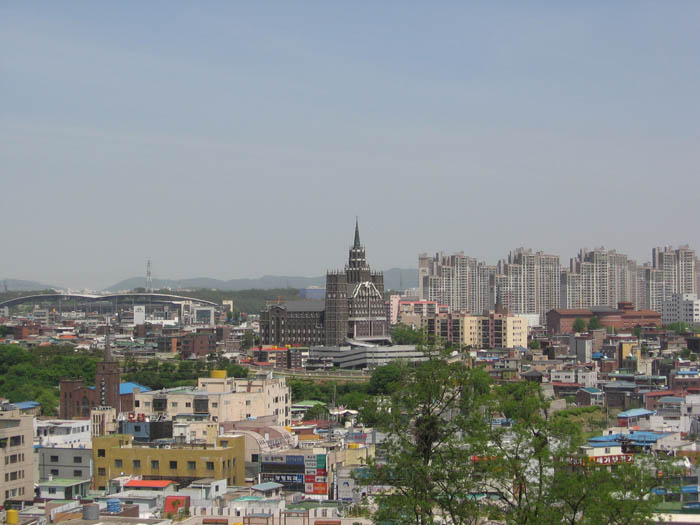
You have a very impressive view of the city's features, such as this large church - Seoul seems to be an even mix of Buddhism and Christianity, and both of these seem to be much more publicly practiced in Seoul than anywhere else I've been.


Most of the outer wall and the associated attractions were under construction. However what I went to was really impressive. I'm sure that when the site is finished it will be a must-visit attraction to those visiting Seoul - or anywhere in Korea, really. I was surprised to find that South Korea can be entirely traversed with a two-hour train ride!

Friday, June 02, 2006

Seoul: The Scene

In San Francisco and the cities I've lived in, I've thought of myself as a bit of a scenester. I can't make any grandiose claims, but I know the clubs and the weird fringe events and the best local bands and so forth. I had every intention of keeping the noble tradition up when I came to Shanghai, but I think Shanghai's nightlife is pretty much non-existant unless you are looking for a prostitute or have extremely low quality standards. I'll have more to say about it later.

For now, suffice is to say that Seoul's night life is much better, and I have pictures to prove it! I'll start with this one:


That photo was taken near the City Hall, but really there's half a dozen districts that I could have shown pictures of, areas that are intensely populated and brightly lit at night, even late on a weekday. The obvious comparison is when I've visited Tokyo, and comparing the two I think Seoul comes up short to some of Tokyo's districts. But in terms of being bright and crowded and having lots of people around, it definitely beats anywhere in, say, New York City or San Francisco.

Maybe the nightlife isn't all to an American's taste, however. It's dominated by bar-restaurants like a Japanese izakaya, the idea is you eat a bunch of Korean food and drink a lot of soju and beer while you're at it - separating nightlife from my update on Seoul's food is a little artificial. A lot of the places say "Hof" in their name, as in "Hof Brau." I haven't been to Germany or the UK, but I think an English style pub might be a better comparison.


Some of the places are massive or even chains, but as you can see above a lot of the places aren't much more than cubbyholes that might not be able to fit more than a single group of people. I'm sure once you know your way around it's a lot of fun.

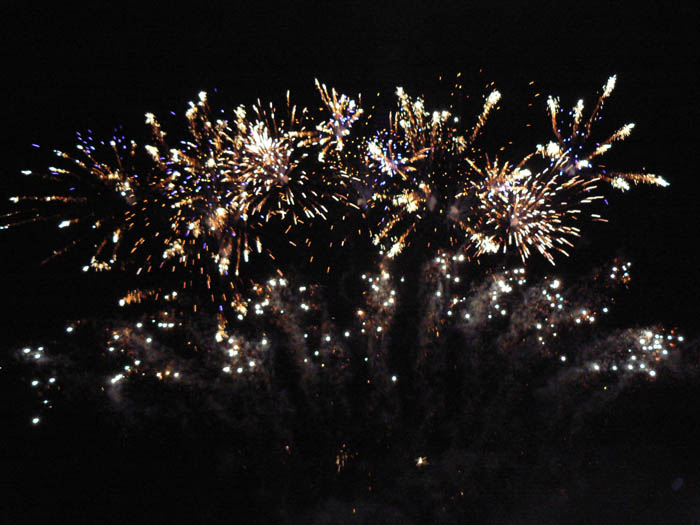
But I didn't always take pictures of everything, and this blog is dictated by the pictures I take. I can't much talk about, say, Itaewon, a district dominated by foreigners, where even the city's official (and undeniably excellent) tourist brochure admits "a certain amount of risque entertainment is also available here." The only pictures I took were of the big fireworks show that happened in the middle of the district.


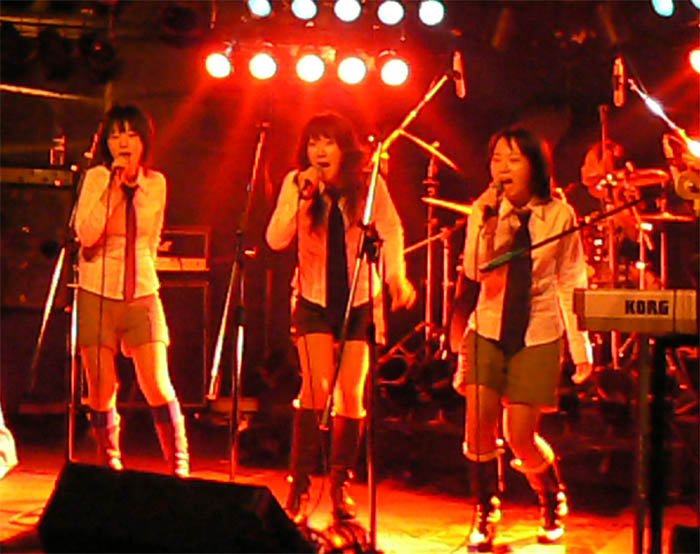
My memory was better with music. I wouldn't say Seoul has a great music scene, but at least it has a scene, and can even support music that's a little weird, or not related to the mainstream. The first music I saw was at Live Club Ssam, a somewhat hidden club with an art-warehouse feel, near Hongik University. Click on the link to hear crazy Korean pop music - basically if the club re-located to Shanghai my quality of life would go up at least 75%. I saw the band Strawberry 60's TV Show. Their blend of J-Pop and early 60s girl-group music (complete with choreographed dancing) was surprisingly catchy and natural and not-annoying, although maybe they were a little stretched to perform as a main act.


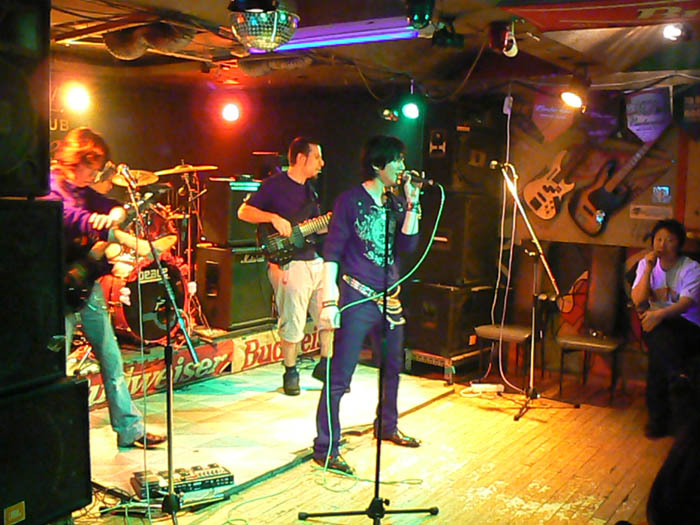
Afterwards I kind of wandered into a music club nearby with what I guess was a house band, a very technically talented group playing 80's hair metal type music. I couldn't tell if it was performed in irony or not, but the band was completely over the top and the music was fun.


As part of Seoul's Golden Week celebrations, there was a pretty large concert given near the World Cup stadium. It was raining and not many people came, but it was still a fun time. Particularly for me, as some San Francisco indie-pop kids were playing concerts there! Folk-rocker Mike Park, and Sonawon with Jenny Choi.


I had seen both of them before. I hadn't particularly cared for either of them, and seeing them again didn't change that. It was still fun to hear music from the old scene, though. Don't know if their music was a success, indie-pop isn't the sort of music that caters to outdoor stadiums, especially as the crowd that was mainly waiting for the Japanese band Nine. They're a bunch of asexual stars with an act aimed at teenagers, they had really good rapport with the audience and were generally fun, but their music was too cheesy and at times obviously canned.


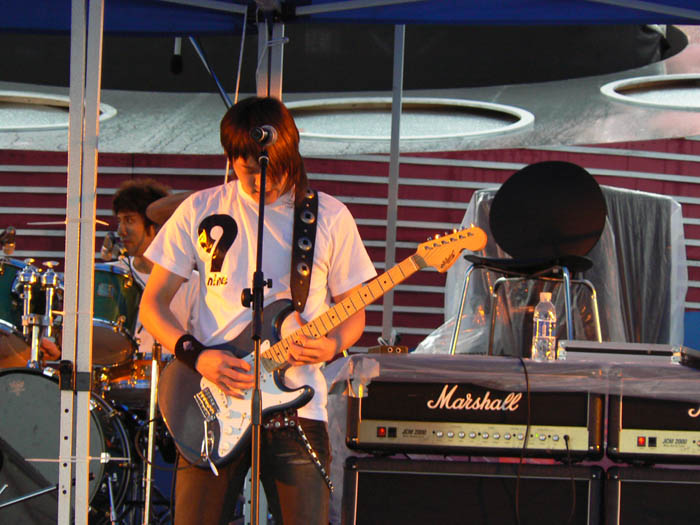
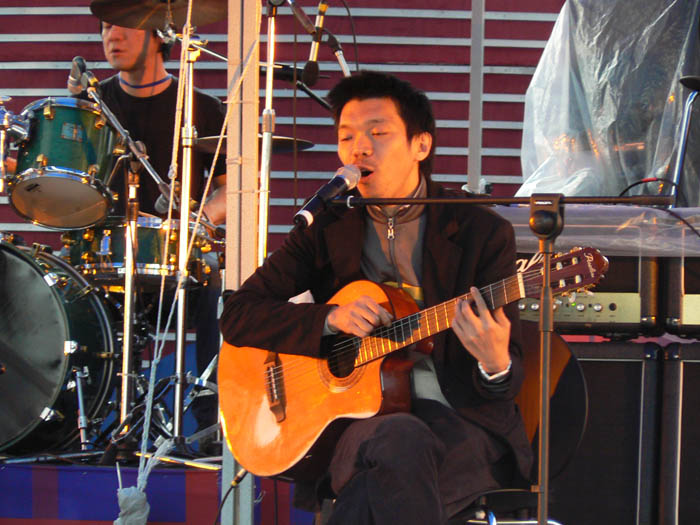
My clear favorite was the Korean band that played. I'll try to get someone to help me romanize the name from the flier I took - my Korean is a little, uhhh, non-existant. However their music was fun 90s style rock. Their lead musician looks like a classical musician with his nylon guitar and conservative jacket, but the music was real bumping.


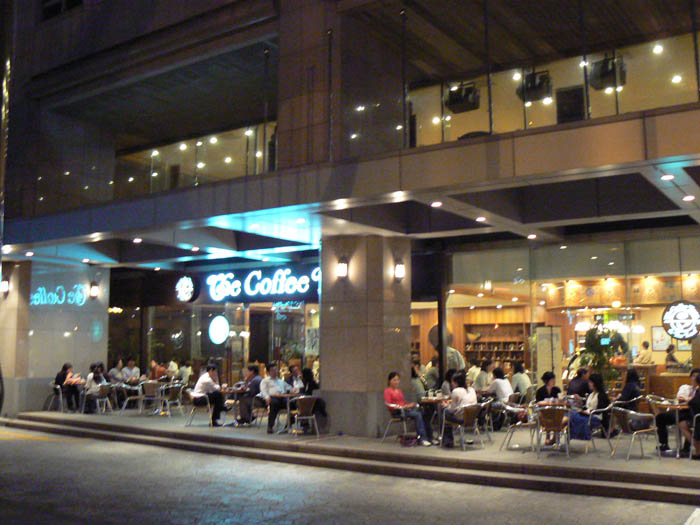
Oh! And the cafes were crazy, often selling coffee for $5 on up. Even Coffee Bean and Tea Leaf, a common America-based chain that I thought might be a little cheaper, was selling at a price too expensive for me to ever pay for a cup of black coffee. Still, many of these cafes were very busy late into the night.

Tuesday, May 30, 2006

A Quick Word on Yonghe Da Wang

Yonghe Da Wang is a Taiwanese chain restaurant that's popular in Shanghai. I've mentioned it a few times on this blog, and both times I've mentioned it I also brought up McDonald's. That's the obvious, if incomplete, comparison. Nobody would confuse McDonald's or Yonghe with either a fancy restaurant or a friendly neighborhood standby. However it's bright and clean and consistently OK, and a safe bet if you're not familiar with the neighborhood and don't feel like being adventurous. I'll admit that I probably went too much when I first came to Shanghai.

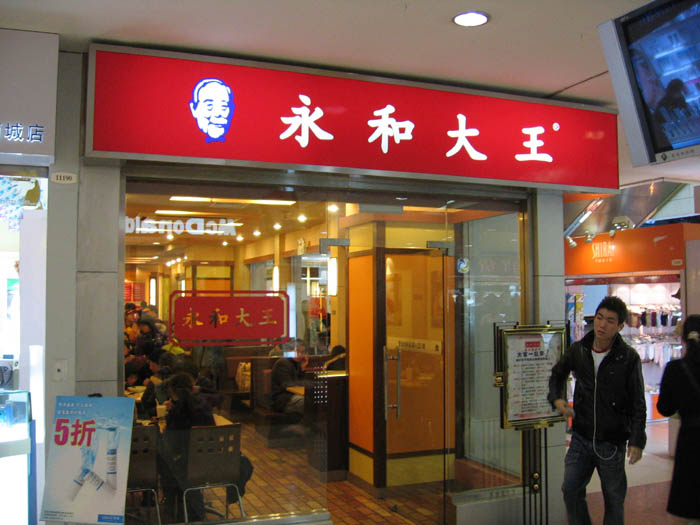
My favorite thing about the restaurant is definitely very stupid. Blowing up the mascot from the picture above, you can see he looks like KFC's Colonel Sanders with a melted face, perhaps he just barely peeked when the Ark of the Covenant was opened. By the way, "Yong He" is a river in Taiwan. There's some other Taiwanese restaurant chains with Yong He in their name, but as far as I'm concerned they're real gross!

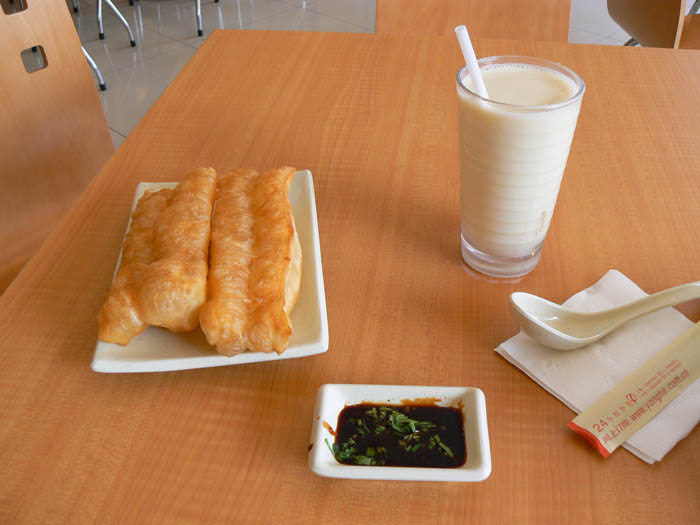
Oil rolls with sweet soy milk are definitely the thing to get, and I actually think they're pretty tasty. It's a snack of puffy fried bread. It may sound like a doughnut, but they're much fluffier and not nearly as sweet. They are pretty oily, though. They're mixed with a small amount of a strong salty & savory sauce, or some people dip them in the sweet soy milk. They're very large and so the first step is wielding the chopsticks like "Operation," separating them lengthwise into two pieces. The ladies below skipped that step, though.


It's also worth noting above, like most Chinese restaurants there often aren't enough seats at peak times, people will share tables with each other. The restaurant is open 24 hours, I can't imagine there's many people there at three in the morning. Yonghe will also home-deliver food for free.

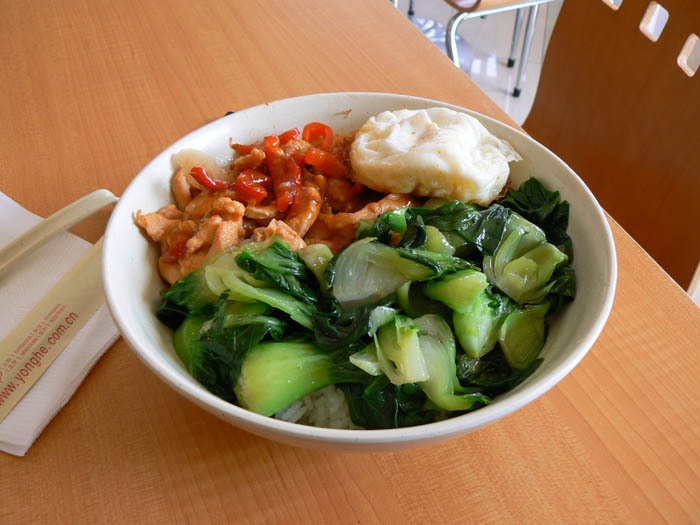
Anyway, a lot of people in Shanghai will talk bad about Yonghe Da Wang, but I think it's fine if you order the right things. I get the Spicy Chicken Rice, it's served on a bowl of rice, with bok choy and a lightly fried egg. It costs a dollar and a half.


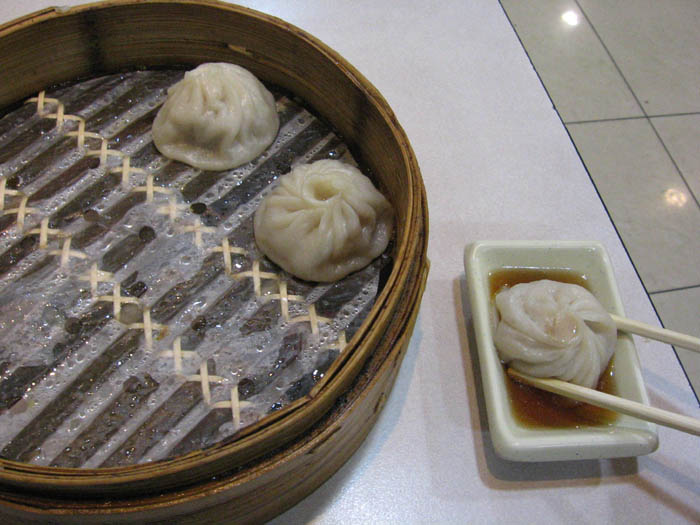
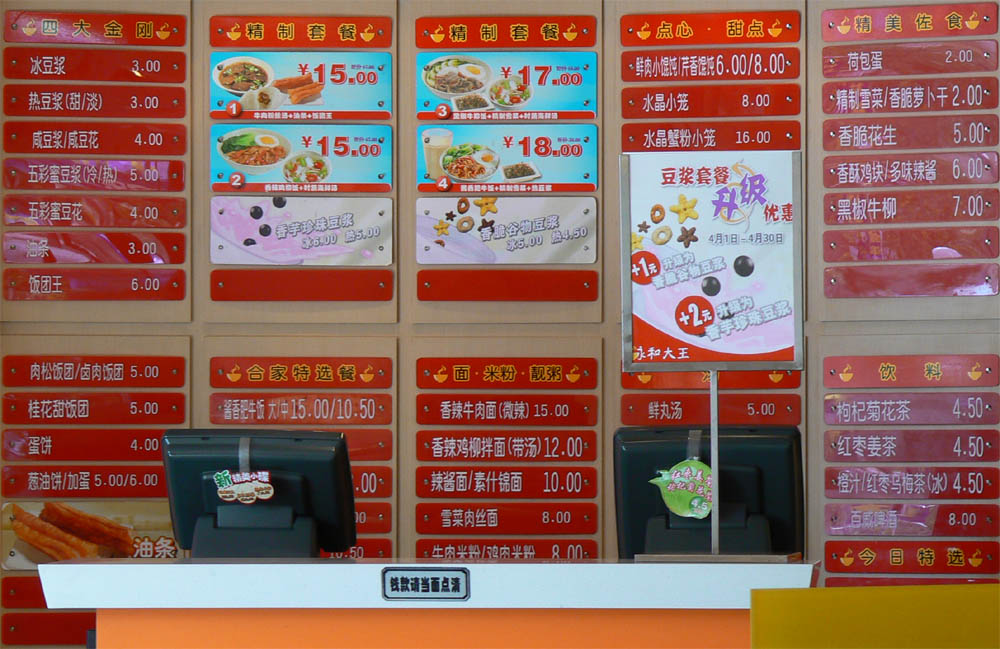
But my favorite part of Yonghe Da Wang is no more. They used to offer a really weird take on Xiaolongbao, a small steamed dumpling with liquid inside. The wrapper was extremely chewy and the inside's flavor was dominated by the soup, which was really oily. The recipe was changed to something more normal, but less interesting. Here's a complete menu below. Like many places, you order at the counter, and get a reciept. Then you sit down, and give the waiter your receipt.

Wednesday, May 17, 2006

Seoul: The Food!

I didn't know this before going to China, but much of East Asia has a week-long vacation at the beginning of May. The Japanese version is a little famous, with "Golden Week" being the time that cities world-wide are swarmed with Japanese tourists. The holiday comes from two holidays that are near each other, and are also Hawaiian holidays: Lei Day/May Day/International Labor Day on May 1st, and Boy's Day/Children's Day on May 5th. I didn't realize, though, that these holidays also form a week long holiday in South Korea and the PRC.

For the holiday I took a trip to the nearby city of Seoul. It's only a 1 hour flight from Shanghai, closer than the vast majority of China. However, it felt very different and distinct from China. I thought the trip was entirely interesting and I'll have a few things to say about it. I'll start by talking about the food in Seoul.

First, I should say that food seems to be everywhere in Seoul. You're never far from a restaurant or snack stand. Most surprising to me is that the more crowded streets are lined with stands selling food.


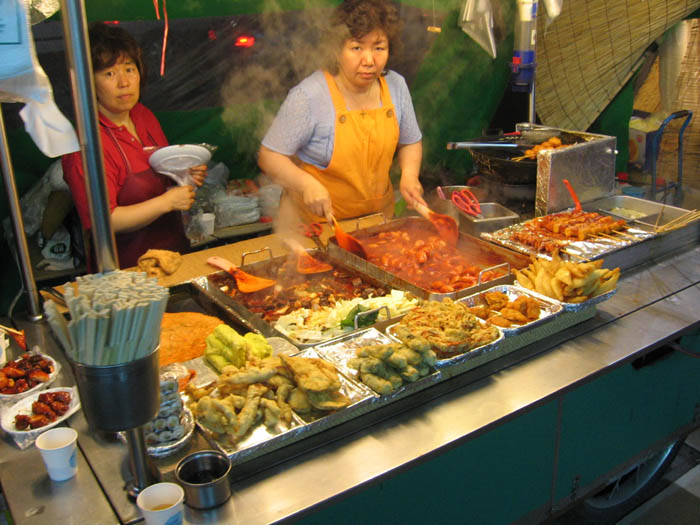
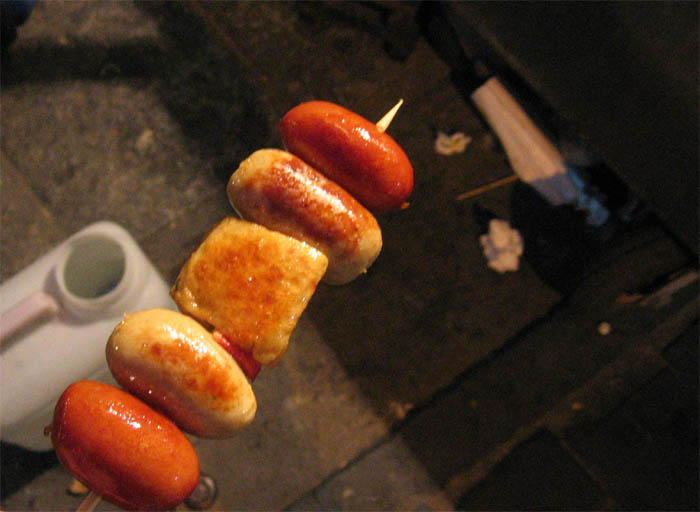
The stands are interesting. You don't just grab a bite on the run. The idea is that you stand along the side or even pull up a chair and sit down for a bit, along the crowded sidewalk. Some of them are larger and have chairs or even benches inside tents, but for the most part people just stand near the side counter. You see a lot of the same foods everywhere, generally selling for one or two dollars. On the left were some sausages on a stick, except for the size they felt German style. Below some rice cakes, a bland food with a rubbery texture that I actually really like. It was in a sauce I would have to describe as very spicy ketchup. Instead of giving a fork or chopsticks, with most places you wield a kebab skewer, stabbing at your food to pick it up.


Just as I expected from American Korean restaurants, you'd order a main dish, and then get maybe 5 sides of Kimchis, preserved vegetables which are often sour or spicy. The main surprise was, these Kimchis weren't as hot or as funky tasting as the Korean restaurants back in Oakland (albeit a heavily Korean part of Oakland). No fermented fish, and nothing I ate was hot enough to prompt me to immediately reach for the water glass. And many of the main dishes I ate were actually quite bland, although that could be what I ordered. Here, some soup dumplings.


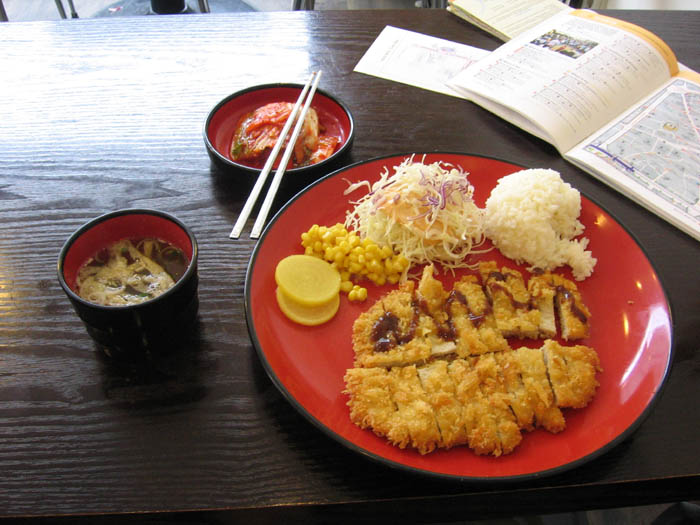
I've gone to Korean restaurants my whole life, and expected being in Korea to expand on my enjoyment of Korean food. However I have to admit I left Seoul unimpressed with the food. On the positive side, I think it is extremely healthy, and I appreciate the emphasis on fresh ingredients. However I think the food is far too simple, and oftentimes the food tasted extremely bland, only with nearly identical (and again, simple) hot pepper sauces put on top. My favorite meal ended up being a simple katsu, it could have been a normal plate lunch back in the US:


And so I occasionally indulged myself on Western Style food. Western style food in basically not worth eating in Shanghai, and I've been to Japan and it's generally too localized to recognize. In Seoul there was a lot of it, it was pretty good, although sometimes given a weird twist - I saw that McDonald's served a Big Mac variant with bacon and strawberry jam added. There were also a lot of chains you didn't expect to see: Popeye's chicken, Cinnabon, Sbarro, Baskin Robbins, Krispy Kremes, and so on. There were also a few Mexican restaurants I went to. They were thoroughly in a US style, and pretty good. The burrito below tasted like being back in a gentrified part of San Francisco's Mission. It sported Sour Cream and Guacamole, which would be unimaginable in Shanghai. Bizarre amounts of cumin were used, and the nacho cheese was a sauce made from mayonaisse and velveeta (or something), but it was generally much better than would be possible in Shanghai.


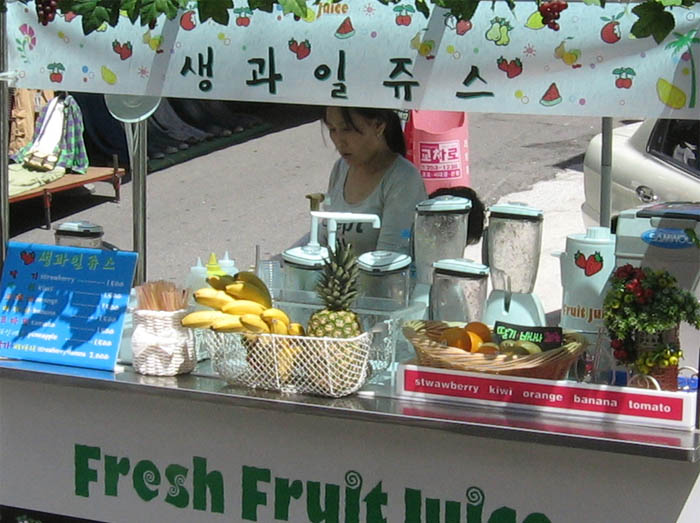
The drinks were a big positive. My favorite was the juice stands. They would take a large cup of fruit, add ice and a little sweetener, and blend it up. It would sell for just a dollar or two, and was very delicious. If you look at the cups of fruit below, each cup's worth of strawberries was used per drink.


Drinking alcohol in Shanghai is a little rare. Consumption is obviously far below that of the US. In Korea, drinking is just as obviously much more common than with the US. A lot of the restaurants and food stalls had people who'd clearly consumed too much, and it didn't matter which day of the week it was. The national drink seems to be soju - advertisements are everywhere, just as with Coke and Pepsi in the US. Soju is a tasteless mix of industrial ethanol and water, much like vodka except it's mixed at 1 part alcohol to 3 parts water, whereas most vodka is mixed at 2 parts alcohol to 3 parts water. Green soju bottles with the equivalent of 5 shots of vodka are sold pretty much everywhere, and I noticed them going for $1.25 at a 7-11. I have to believe alcoholism is a serious problem, although I only witnessed some wacky drunks harassing a karaoke competition.

Wednesday, May 03, 2006

And to Think That I Saw It on Tianlin Street, Pt. 2

This is part two, where I show a little more of the shopping street of Tianlin Lu. It's a fun little shopping street that nobody would call the highlight of Shanghai, but does provide some nice scoping.

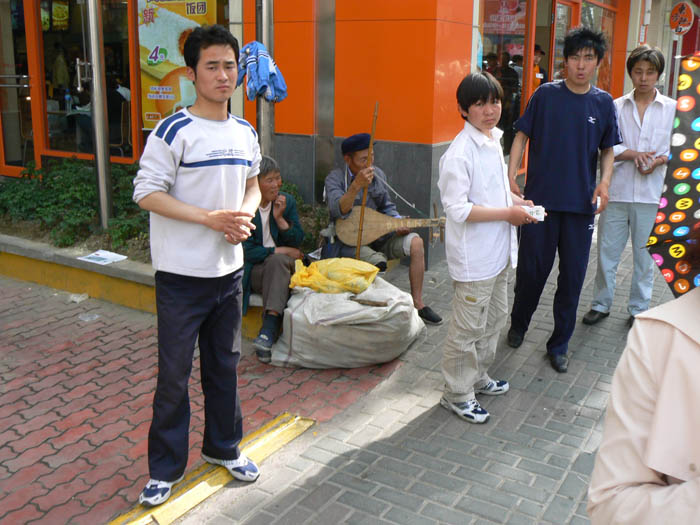
Shanghai doesn't have as many beggars as San Francisco or Oakland, but it does have a fair number, many of whom are missing limbs or have some obvious physical problem, other of whom have sad stories written out in chalk in front of them. Actually they seem to do pretty well with donations, I see people give beggars money plenty. Personally I give money to street musicians.


But that's that backdrop to the picture. In the foreground is a gang of teens, they give cards that list, generally, discounted fairs on air flights. They can be really agressive in trying to give you the card and they're pretty annoying. Maybe they'll suddenly flick the card right in front of you, or they'll dive at your bag to drop a card inside. There's not many on the street though, and for some reason they're all congregated on this one corner. The same street corner, tangentially, has a Pizza Hut restaurant. In Shanghai it's considered a fairly nice restaurant, I get the impression it's a popular place for dates. Whatever the reason, people are lined up outside:


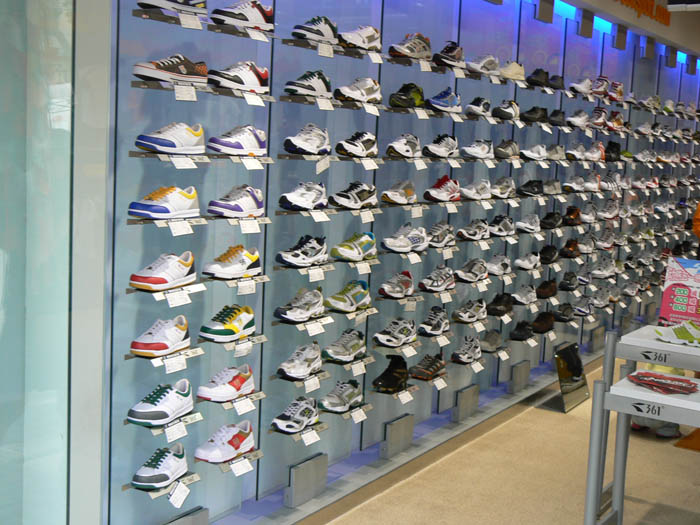
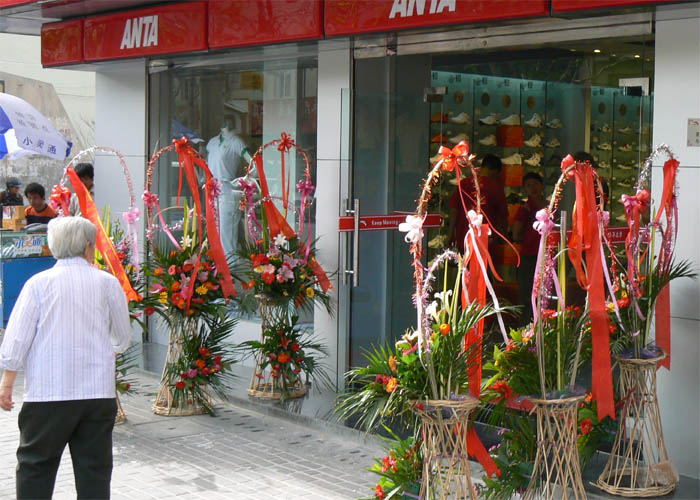
Like a lot of places in Shanghai, similar groups of stores congregate here. There's a number of athletic supply stores, selling upper-end athletic shoes and higher-quality athletic equipment. The athletic store below is just recently opened, so there's a group of floral decorations out front, mounted on reed stands.


Another thing you see a lot of is smaller boutique clothing store, mostly it's women's clothes. It ranges from places that look very fancy to places that sell overstock, on massive sales. These places are full of frantic women, tearing through the stockpiles. There's also mannequins that seem vaguely scary, and I'm not one to be easily scared by a mannequin.


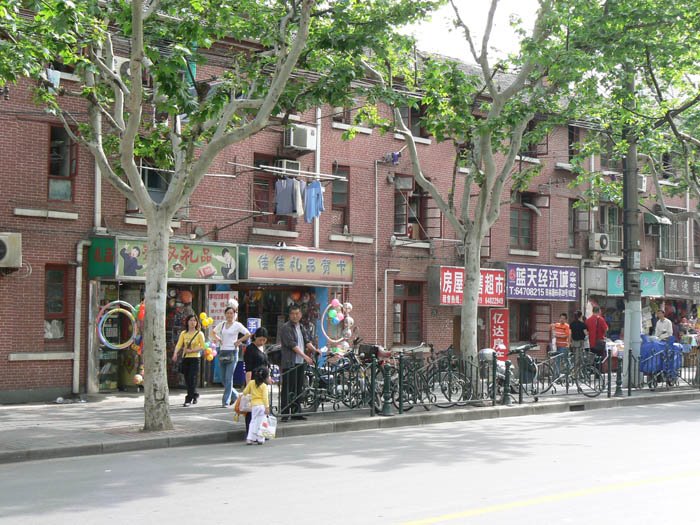
The shops along this area look pretty nice. Whether this building is brand new or just kept in good condition I'm not sure, but brick buildings and trees along the sidewalk give a pleasant atmosphere.


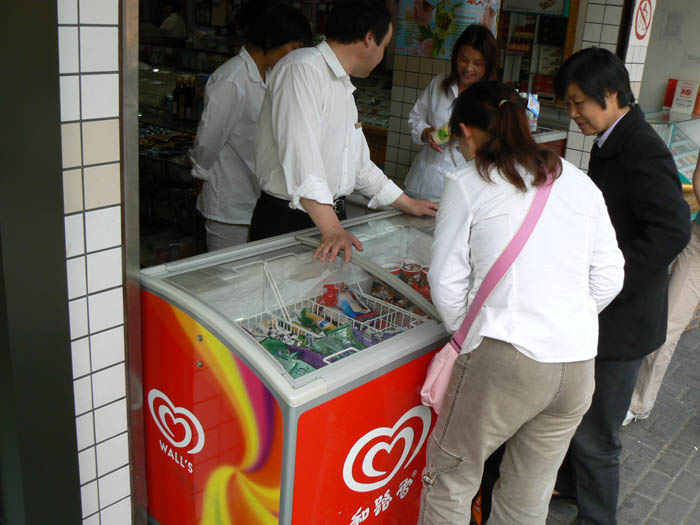
There's a lot of food on sale here. Some of the stores have side-fronts selling pearl milk teas or ice cream. Shanghai's Ice Cream is cheap and I think it's pretty good, but foreigners in Shanghai are always complaining about it so maybe I'm wrong.


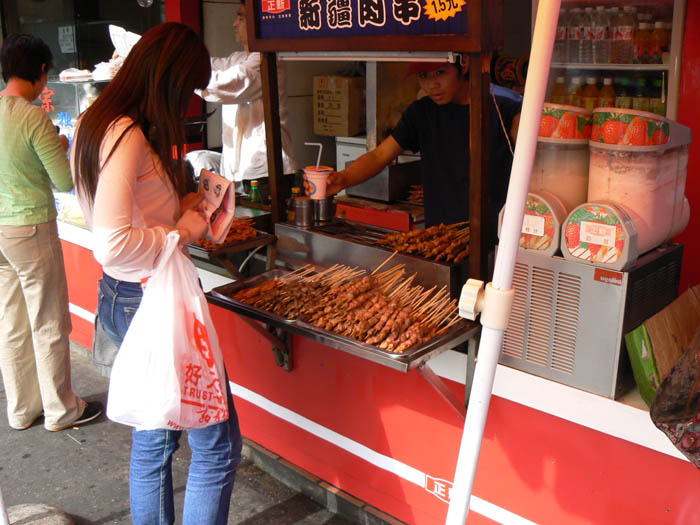
I guess it's a seasonal thing, but lately there's been a lot of crawfish being sold from stalls. They're huge and they look pretty tasty, but they're sold by the entire body and I'm lazy to eat food I have to pick at. The most popular street food is probably grilled meat on a stick, which I think tastes fine but is really nothing special.


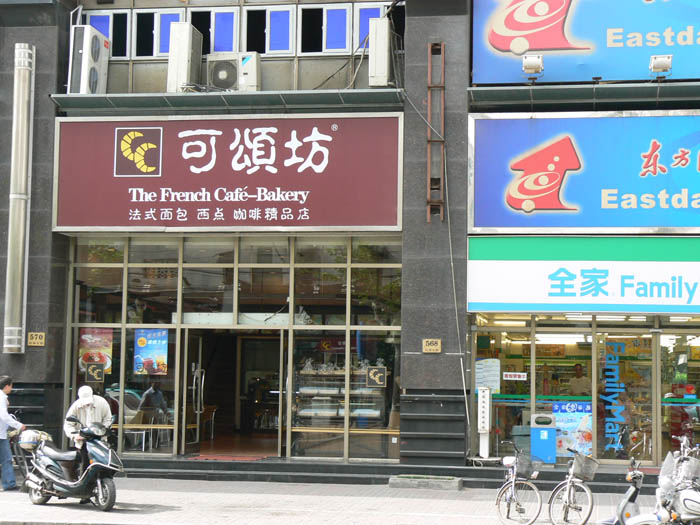
This is Croissaints de France, a popular Bakery Chain. It can seem bakeries selling fancy breads are on every block of Shanghai, I'll get a sandwich sometimes even though they use sweet mayonnaise. Maybe I miss-remember America, but I think bread is much more popular in Shanghai than in the US - perhaps it's considered something of a fancy treat over here. To the right is Family Mart, a convenience store.


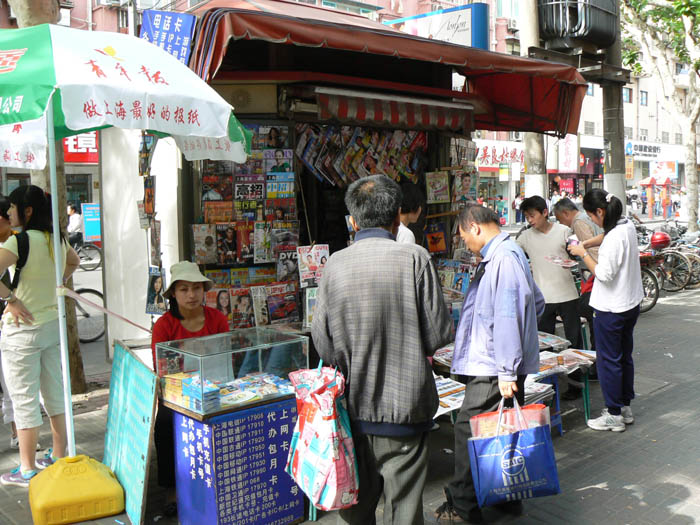
Newspapers aren't sold from machines in Shanghai. They're still popular, people buy them at convenience stores, or from hawkers in subway cars, or read the copies sometimes posted in Parks or Apartment Complexes. There's also a lot of stands, they'll have huge selections, and often they'll also have a little side-business selling Phone Cards, like you see in the front left:


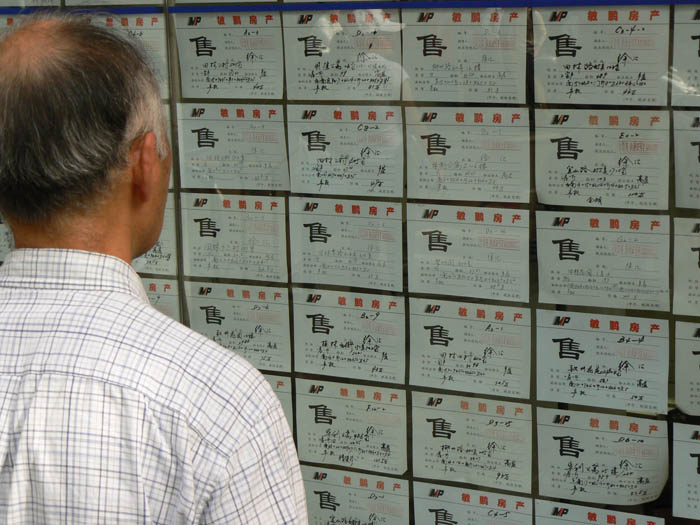
Scattered throughout the street are small offices which list apartments and houses to rent or buy:


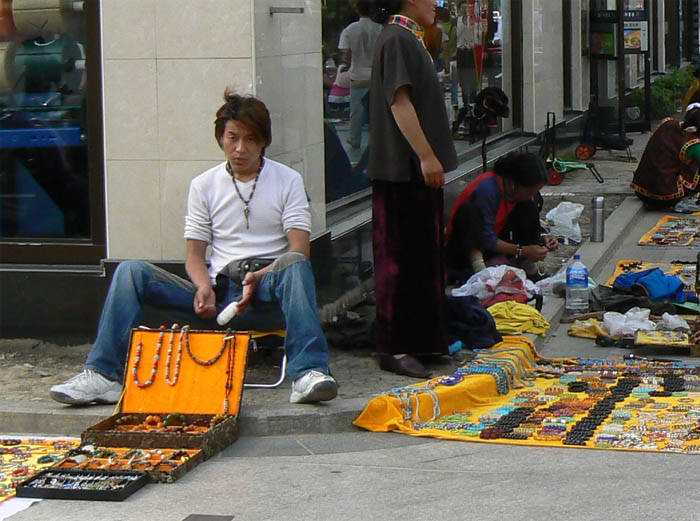
The shopping road ends with, and I suppose is anchored by, Trust Mart, a massive Target-esque department/grocery store. You think of such stores as wiping out the local competitiors, but that obviously isn't the case here. The first floor is given to small stores and chain restaurants, such as McDonald's, Ajisen Ramen, and a Mr. Donut. Out front, Tibetans sell Tibetan jewelries and chotchkies.