Thursday, September 14, 2006

Finding an Apartment

With my first apartment I moved in with somebody who had an extra room, they took care of all the details - when I moved out, I still didn't know what my landlord looked like! With my current apartment I wanted to live by myself, in a busy part of town. This involved some footwork. You can rent apartments off the Internet or a classified, like with the US, but the normal way to do it is through a real-estate office:


I just wandered around - first I found the neighborhood I liked, and then I wandered around until I found a real estate office. There's lots of them, all around, so if I wasn't happy with what they had to offer, I just went to another one.

Some of the offices look upscale, but a lot of them have the feel of back-alley black markets. They're not particularly clean, office furniture looks like it had been rescued from a dumpster, people sit around gabbing. Even now that I'm not in the market, sometimes I look at the signs they have posted in the window, or on A-frames, listing apartments to rent or buy.
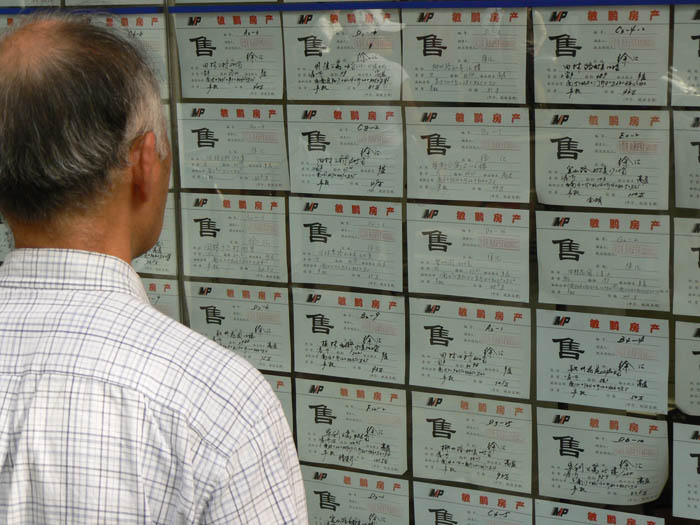


They make money from taking one third of the first month's rent. There's limited leeway to bargain - in my case, two different real estate agents has listed my apartment, so the person helping me was able to play the two off each other, and get a discount. And, the rental price of the apartment can also be bargained. Again, I sat back and let the person I was with take care of that. I'm out of my league, trying to bargain in China!

How are the apartment prices? Top business publications rate Shanghai as one of the most expensive cities to reside in. Living in a prestigious foreigner-owned apartment complex is going to cost at least as much as living in the SF Bay Area. The apartments listed below are cheaper. They probably house a lot of foreigners, but aren't quite in a prestigious part of town. They are listed by the RMB (eight RMB is about one US dollar) and by the square meter (one square meter is about eleven square feet). For example, the apartment on the bottom right is $1000/month, but is 1400 square feet.
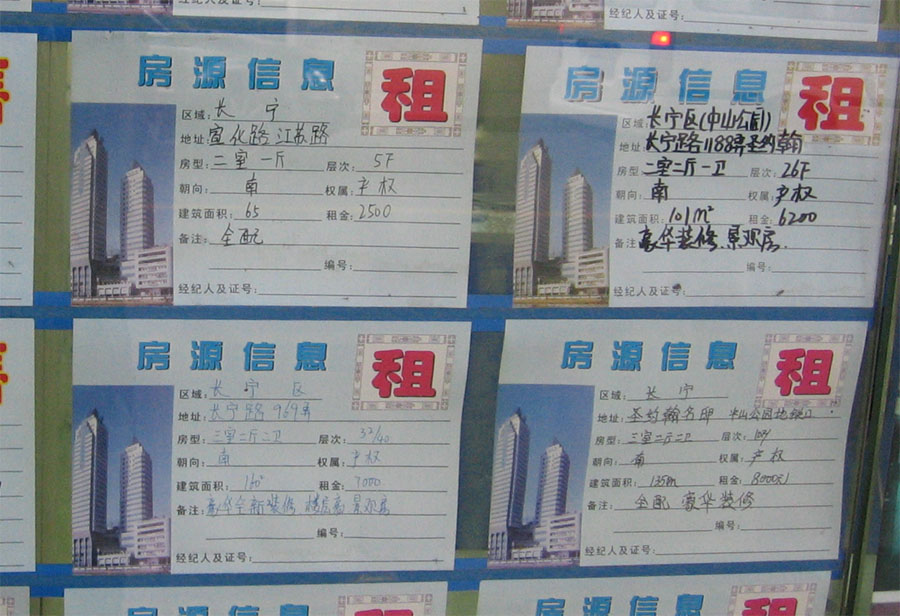


My furnished apartment is about a third of that, and I consider it very nice, near the subway, and in an upscale part of town, although it's a little small. On the other hand, most of the young and fairly well-to-do Chinese people I know rent apartments that are around $200 or $250 per month. They're every one saving up to buy a house. Owning a house is important in America, but to people I know in Shanghai, it's even more so - generally people won't get married until they own a house.

It's kind of a surprise, but while most of the real estate operators are independent, Century 21 has a small presence here. They mailed a brochure to my apartment so I might as well show it here:


The houses below range from $90,000 for a 500 square foot apartment, to $250,000 for a 1,300 square foot aparment. Both are in a nice and central part of town.


To be honest, at the premium to own rather than rent, I'm not sure it makes sense to buy an apartment, except as an investment. And I'd be suspicious of Chinese real estate as an investment - there's certainly good opportunities, but there's a significant chance that Shanghai real estate is in a bubble, and the government has shown a willingness to suddenly apply relevant laws on a whim - last month suddenly adding a capital gains tax, last year suddenly regulating mortgage rates, etc.

Just as with the US, real estate in Shanghai and a few other cities is drastically more expensive than living in the countryside. Chinese cities don't really have a suburbanization movement, and I consider that ideal as I really don't like suburbs. On a drive to the airport, you do catch the odd glimpse of foreigner suburb enclaves - I hear these rentals are massively expensive, and the buildings are in a thoroughly Western style, you could forget you're in China.

For many Chinese people, having the apartment be brand new is one of the most important factors. I don't think newer apartments are necessarily any better, although as a general rule, older apartment buildings tended to be built in a more utilitarian manner - for example, they may be missing elevators.

Thursday, September 07, 2006

Chinese Silent Movie: The Goddess

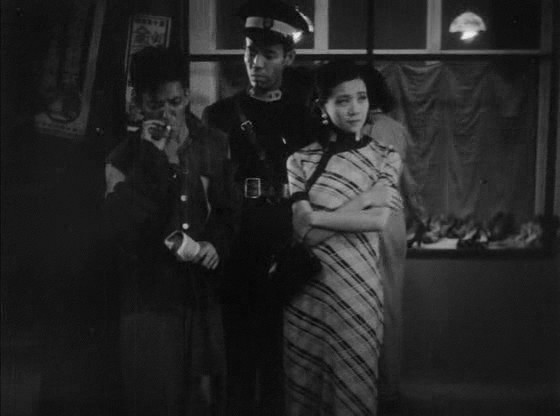
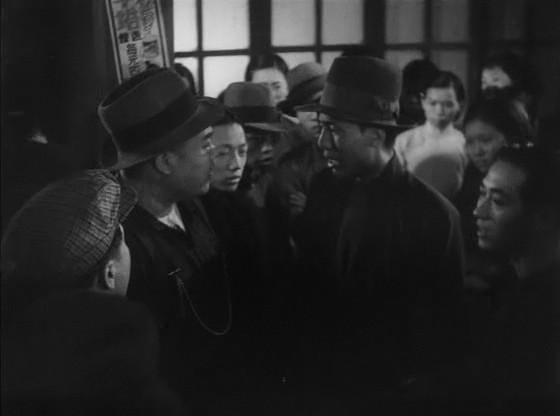
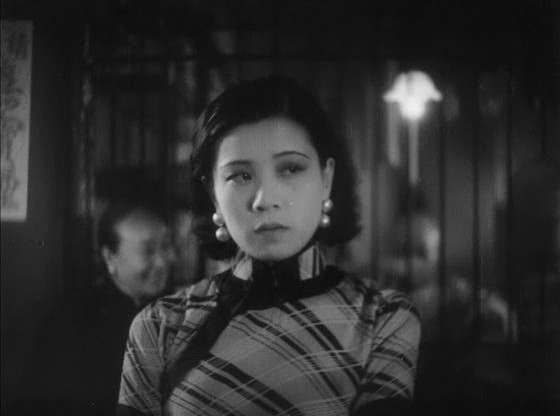
"The Goddess" is a B&W silent movie filmed in Shanghai and released in 1934. Its immediate interest is due to the time the film was made: at the last gasp (and possible peak) of "Old Shanghai". The film shows a partially Westernized city overrun with prostitution and petty gangsters, with traditional moral codes that shouldn't apply, and with the occasional oblique allusion to the Japanese invasion taking place, that would overrun Shanghai in only three years. That probably sounds very interesting, in all fairness I must say it revolves around a simple and silly melodrama, and mostly utilizes a small number of indoor sets. Also, while there is obvious technical skill to the cinematography, the filmstock is very degraded and there are weird scene-cuts throughout.


I chose one segment that shows the most of Shanghai, and also encapsulates the basic melodramatic thrust of the movie. Things to look out for include: stock footage of what I'm guessing is the Bund, sets depicting its night life, a rickshaw driver, the clothing worn by the men & women, the clear class differences, and the cheap apartment. The clip is about four minutes long:


This movie stars Ruan Lingyu - people I asked weren't familiar with "The Goddess" itself, but they all knew who Ruan Lingyu was. From watching just this one movie, I would describe her as almost beautiful, and half a step away from being a great actress - as it is, the movie works almost entirely because of her performance. She commited suicide the following year, supposedly due to the pressures of tabloids. The movie was the first directed by leftist filmmaker Wu Yonggang, who made a number of movies over the next forty years.


This post varied from my normal 1st hand observations because I'm recovering from the flu and not disposed to going out and snapping pictures!

Update 9/24/08 - This movie can be downloaded in its entirety from archive.org.

Thursday, August 31, 2006

A Short Trip to Hangzhou

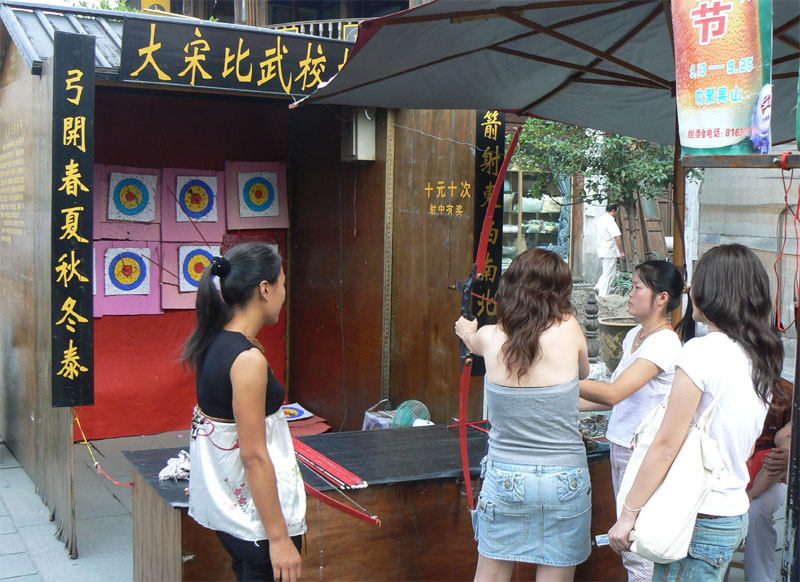
As the title suggests, I recently made a trip to Hangzhou, that was entirely too short. The fault is all mine: I left later than I should, I didn't get a train ticket ahead of time, and had to wait an hour and a half to buy the ticket and then board the train, and I was entirely lazy making my way from the station to West Lake, Hangzhou's principle tourist attraction. Instead I sort of wandered around the city. It was nothing special, but I eventually made it to the "Old Town."


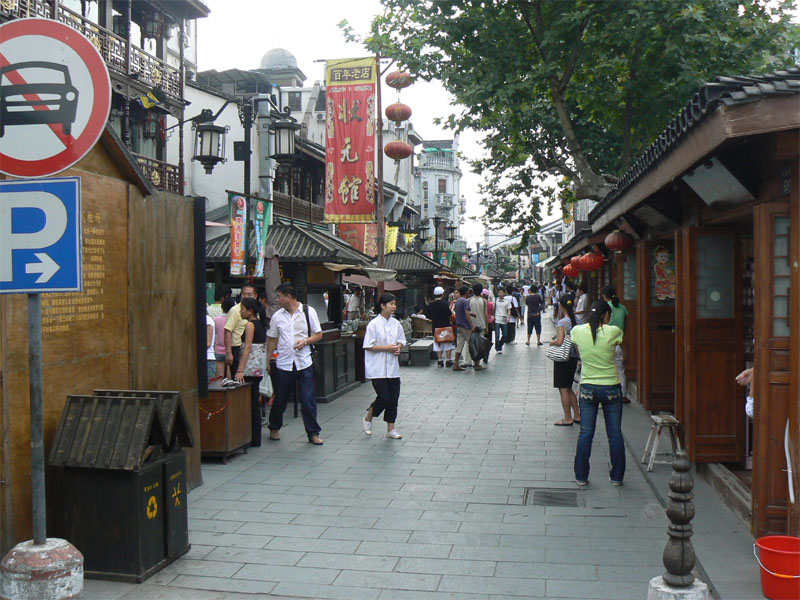
It's a turn-of-the-century looking part of Hangzhou, with a bunch of small shops aimed entirely at tourists. Still, while it certainly wasn't a highlight to the trip, I thought it was a lot cooler than the similar kitschy markets around Yuyuan Gardens, in Shanghai. Maybe because the sellers were a lot less pushy, maybe because it wasn't so over-crowded, or maybe I was just in a better mood that day.


They also sold foods, Hangzhou has distinctive street foods from Shanghai. It's not a traditional choice, but I was very impressed with one variation on Tujia Minority Chinese Style Pizza, with spongy bread and higher-quality meat. Occasionally, over the buildings, I could see a large, beautiful temple on a hill. It was a little out of my way, and I didn't get to have a closer look:


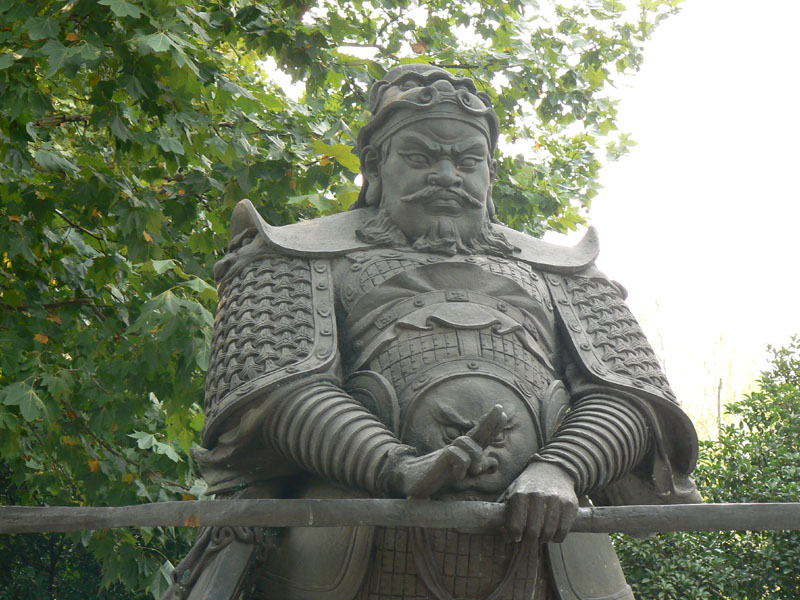
Walking down this road directed me in the direction of Hangzhou's West Lake, which is generally considered one of the top tourist attractions of China. It's a lake ten miles around, surrounded by at least a thin strip of parkground, and oftentimes larger parks, ancient buildings, temples, pagodas, low-key (if exclusive) shopping areasm, statues, and so forth.


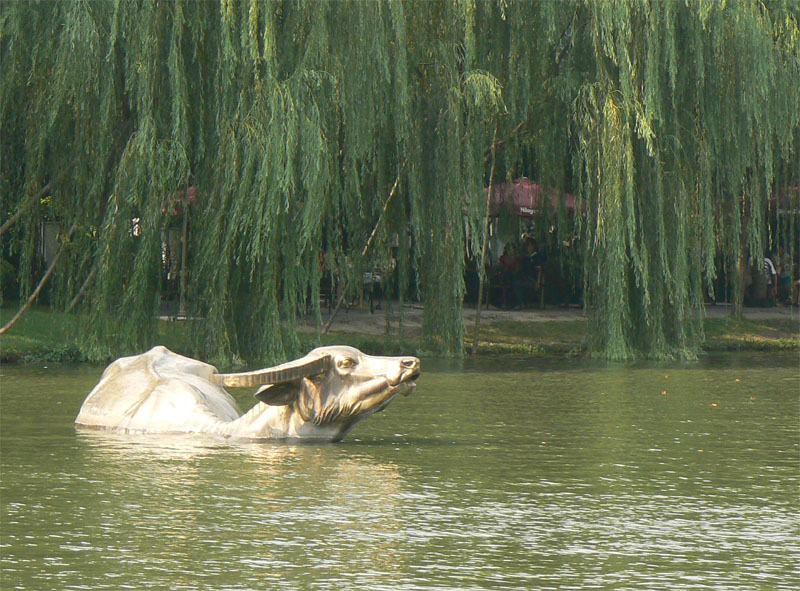
Partly the attraction of the lake is lost on me. I don't mean to say it isn't beautiful, which it certainly is. However the lake is also famous for its importance in over a thousand years of Chinese art, a subject I admit I'm pretty much completely ignorant about. My entire connection to the pavilion dedicated to Chinese poet Li Po, is a Chinese dive bar in San Francisco name "Li Po Lounge," where I once saw eXtreme Elvis. I will adress this ignorance, sometime in the indeterminate future. This golden bull is an allusion to a Chinese version of the Golden Goose story, a story I knew nothing about:


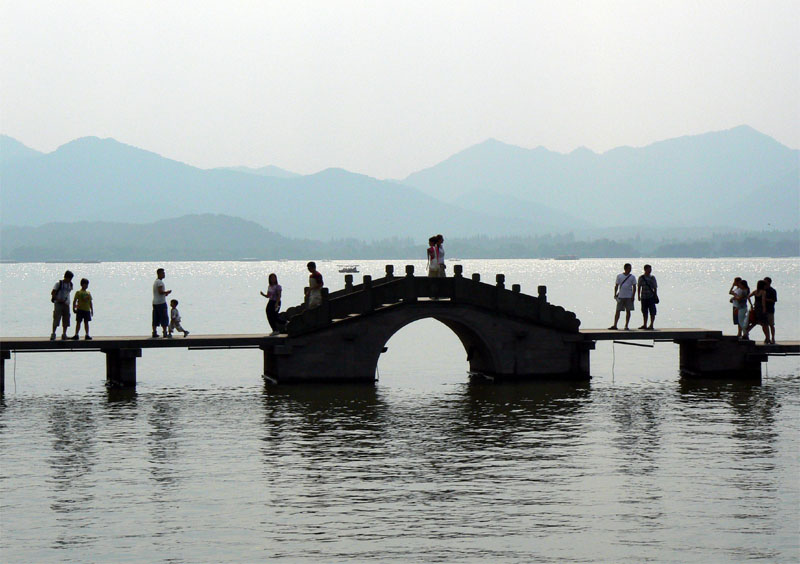
Hangzhou has more than its fair share of non-Chinese people, both tourists and locals. Still, there was a constant stream of Chinese people saying "laowai" or "waiguoren" as I passed by, meaning "foreigner" in CHinese. They generally weren't talking with other people, and they had no intent to talking with me. The reason why people say this baffles me, and also the Chinese people I ask about it. It also annoys me to no end, there is no way I could live in Hangzhou. I admit it happens in Shanghai sometimes, but very rarely, maybe once a week or so, no big deal. One short (and beautiful) bridge, and I got informed that I was a foreigner three times!


I didn't get to walk all the way across the lake, the way I would have liked. But it's a beautiful look across, even with the hazy afternoon sky. Check out the pagoda to the left, and the way the different hills all seem to have a slightly distinct color:


There were also some boats, both relatively small cruise boats, and old-style hand-cranked boats, which moved surprisingly fast. This isn't the most exciting of videos, but it gives a nice panorama to the lake, a look at the weird corkscrew propulsion, and at the beginning you can hear a little of a traditional Chinese-music quintet playing:


Hangzhou city has recently been growing rapidly too, as a second city to Shanghai. There's currently a maglev train being built, that will make the distance an amazing 25 minutes. Surprisingly, there's also a Ferrari Dealership, with a Maserati Dealership right next to it. The Porsche dealership is a few doors down. Honestly, I can't imagine seeing any of these cars on the city streets.

Tuesday, August 29, 2006

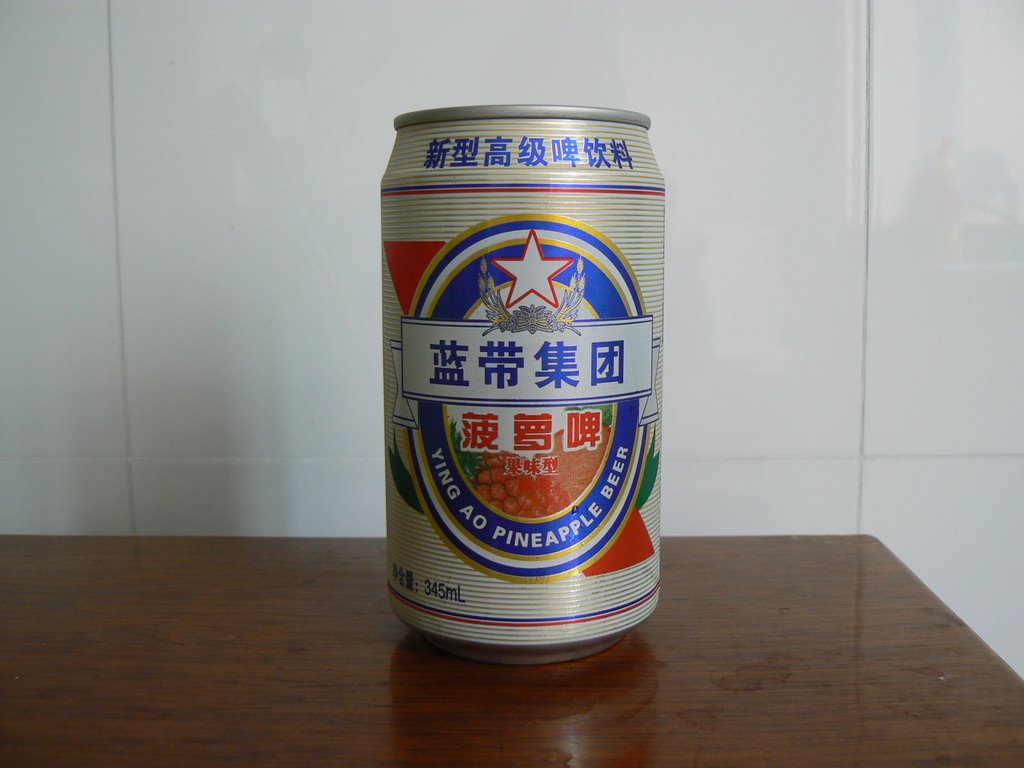
Pineapple Beer

I'm on a sort of a quest for Bittermelon Beer - or at least, that's the dramatic way to put it. Really, I just keep my eye open when I go to a new store and look at their alcohol selection. So far I haven't been lucky! As a substitute I decided to try out some pineapple beer.


This beer isn't available everywhere, but sometimes you see it around, mostly at the superstores they have around town. In this case, it was at Hymall, a disappointing Japanese-owned superstore that's nearest to my aparment. I've only seen the drink offered in a can. Same as most Chinese cans, its got the pull-top, like a cheap Mexican soda or a can of sardines. It's dangerous, and definitely you don't want to be drinking alcohol and opening cans of Pineapple Beer!


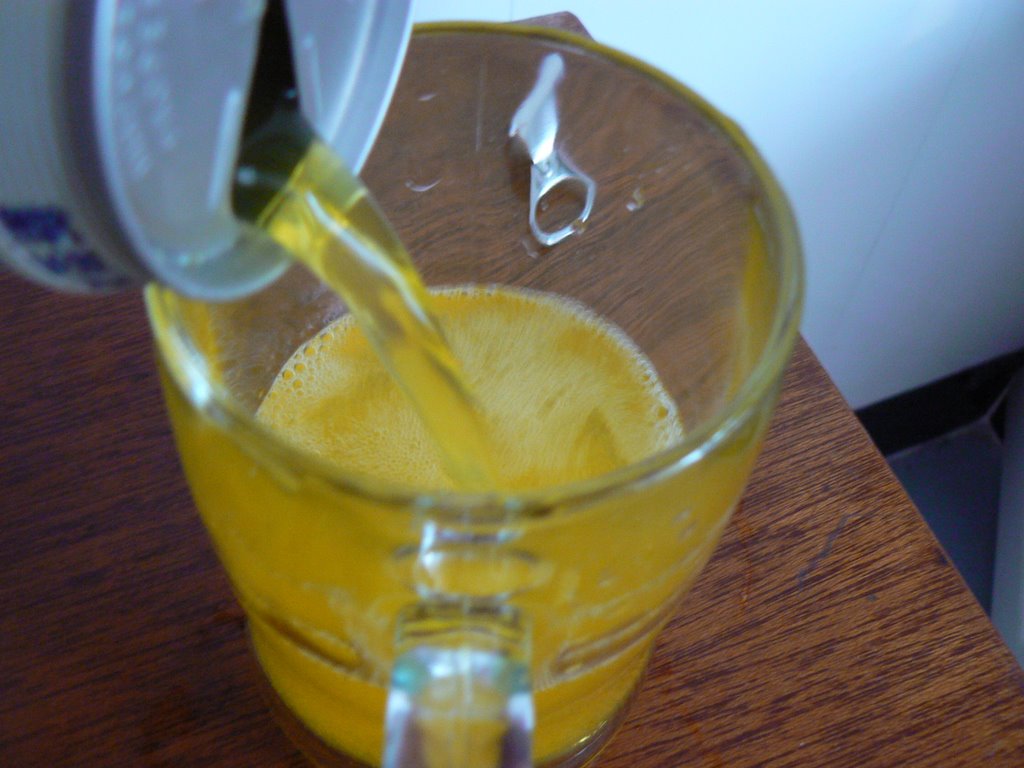
I wasn't sure whether this was going to be an actual beer with pineapple flavoring, which maybe could even be OK, or an alcoholic pineapple juice. My question was immediately answered - no beer pours this color!


The taste is what you would excpect from looking at it - a very artificial flavor, with a sickly, disgustingly sweetness. That said, the pineapple flavor and aroma are surpringle full, and the drink packs a moderate kick, without the alcohol taste. Still, similar Japanese fruit ciders are easily available in Shanghai, and taste much, much better than this.

Thursday, August 24, 2006

The Cutest Army

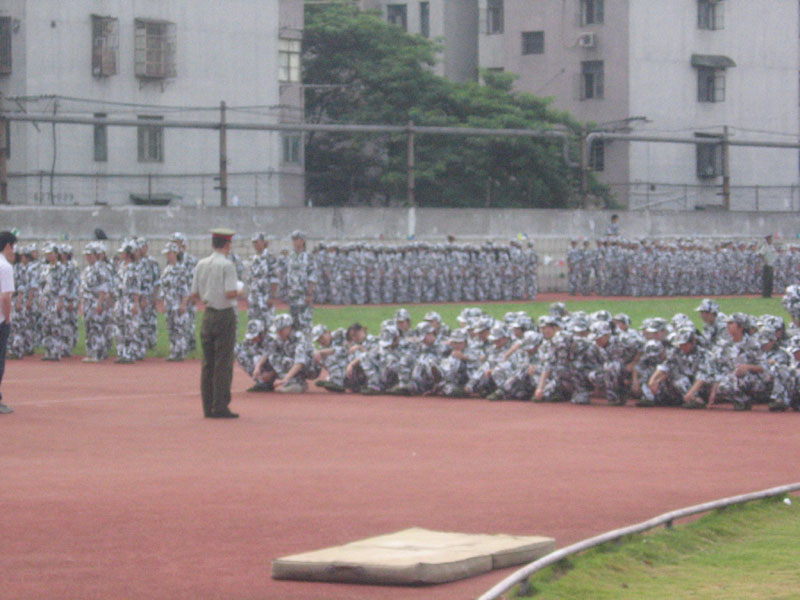
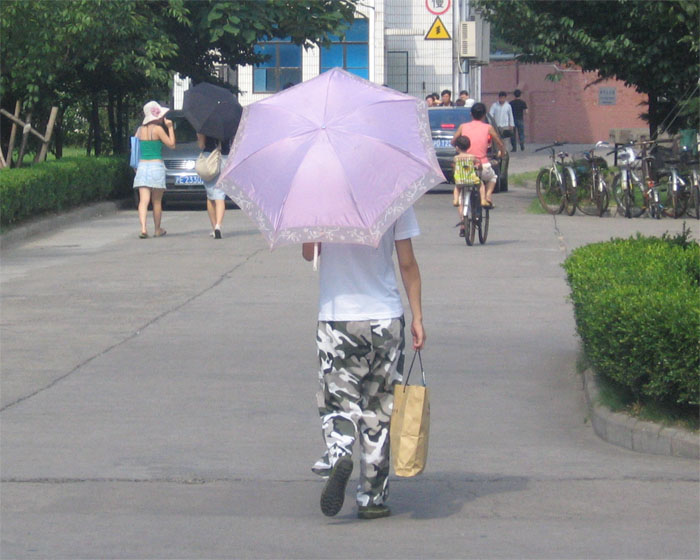
I'm taking an early-morning intensive Chinese course at a college in Shanghai. Originally I thought it would be fun to be part of a college atmosphere. But, the students studying Chinese are pretty much confined to a little corner on the sprawling campus, so I don't get much of the "Saved by the Bell" lifestyle. From what I have seen, though, Chinese university involves a lot of marching!


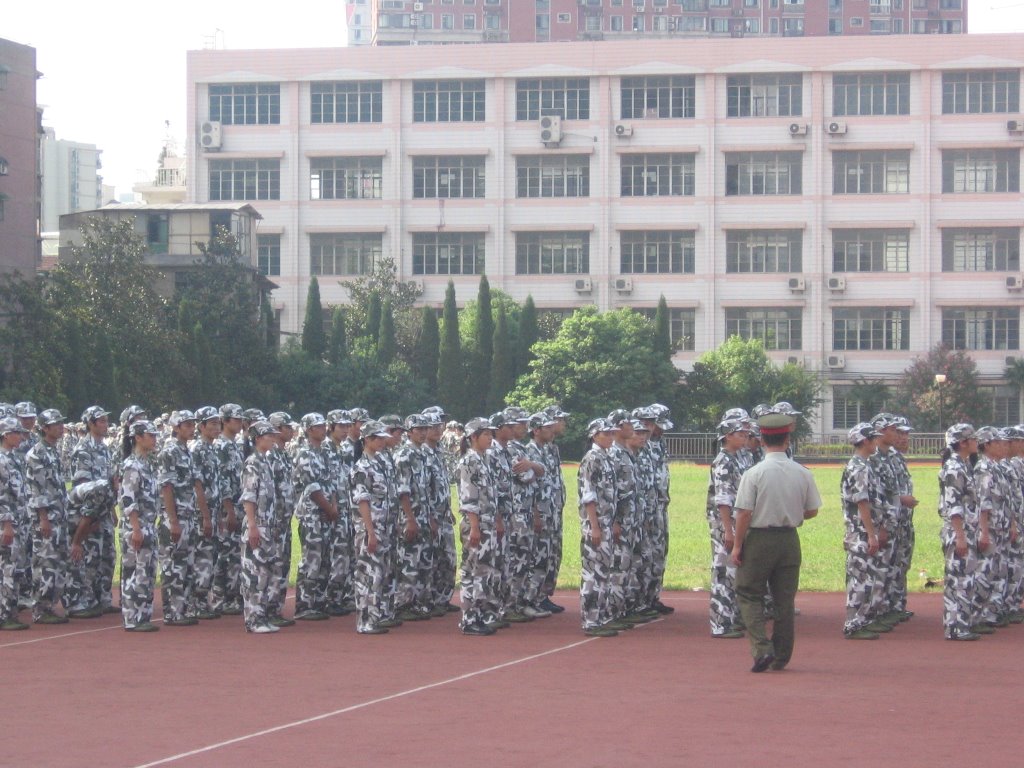
Yes, that's right, right outside my window are a bunch of 18 year olds, mostly girls, marching around in military uniforms. I'm very curious so I asked around about it. China doesn't have mandatory military service, but it does have military training. Freshman at junior high, high school, and university, will be given military training - usually three days for junior high students, a week for High Schoolers, and two weeks for college students. Outside of Shanghai or Beijing, a fair amount of people don't go to High School, and the large majority don't attend college - those people don't get the military training.


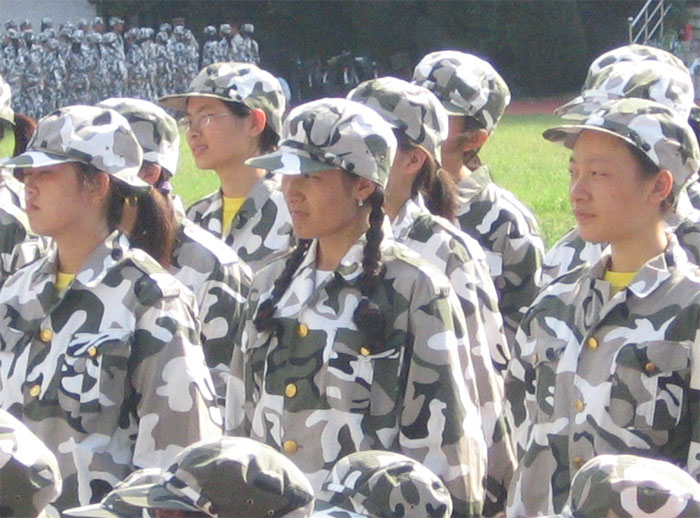
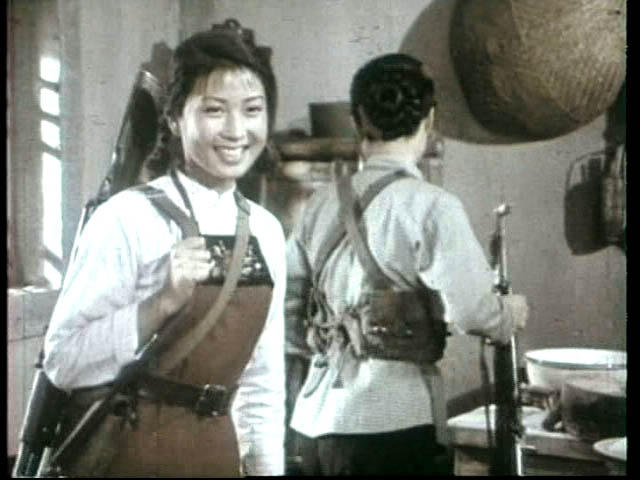
I like this girl with the pigtails - she reminds me of Cultural-Revolution era movies! Anyway at this college the military training is at the college for two weeks, but it's not standardized. Other people I talked to said they went to a special camp to train for a month, or that their college didn't have any military training, or that they only trained for a week. They told me that there was one college where you had to train in the military for a year! Although most of the people told me men and women were treated the same, one woman told me that at her college the men practiced firing a rifle for all of 8 shots apiece, at the very end of the training period, but the women didn't. Half the sky, half the sky...


While to me a very brief military training sounds kind of interesting, almost everybody I talked to about it said it was a waste of time. They marched around in heavy clothes, it was really hot, and sometimes they had practice emergency drills, really early in the morning. I mentioned the idea that the freshmen should band together and attack, say, Vietnam, but they didn't seem too keen on the idea. "It's not real military training," they told me. Which I guess is good, because what kind of genuine boot camp features parousels?

Friday, August 18, 2006

Near Jing'An Temple

I'm not sure what would be the epicenter of downtown Shanghai. I've heard people say it's the Huanpi Lu station area, but really I think Jing'An temple is as good as any of 3 or 4 other candidates. Like a lot of Shanghai, it's very large and it's growing quickly. Behind Jing'An temple you can see a lot of office towers going up:


Immediately surrounding the temple are bunch of Subway exits, Jing'An temple is on Shanghai's #2 subway line, that goes between Zhongshan Park and the recent Pudong development. There's lots of offices in Pudong, and lots of apartments near Zhongshan Park, so the subway gets spectacularly crowded around rush hour. A lot of the time there's street musicians playing in or near the subway station, mostly it's more traditional Chinese music. Here is an erhu player, and like a lot of street erhu players he's blind. Maybe with the background chaos of the video it's hard to appreciate, but he's really great at it.


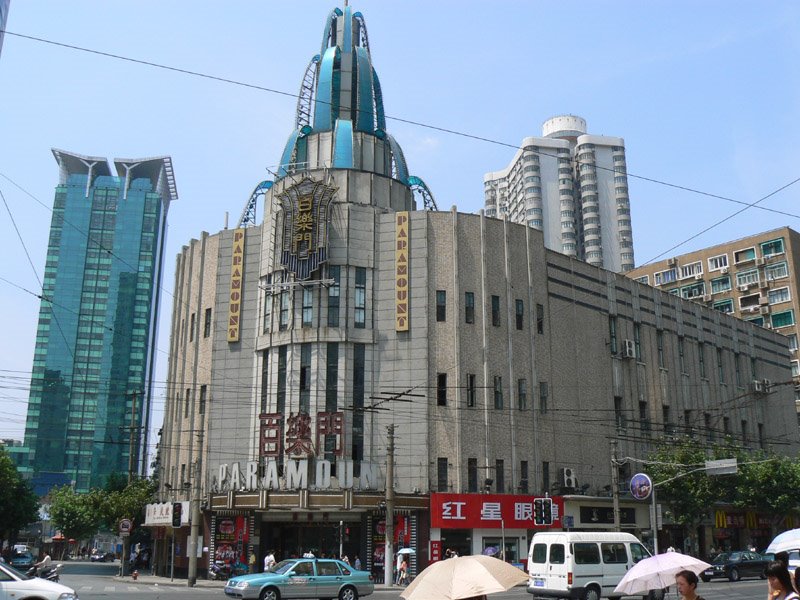
On the opposite corner from the temple is an old-time Paramount theater. It looks a lot like the old-time Fox theater near my old place in Oakland. It's in good shape, but it doesn't play movies. I believe it sometimes houses performances of plays, but most of the time it's a ballroom dance hall, how cool is that! Definitely I would go if I knew anything about ballroom dancing. There's even taxi dancers, like the 1930s or something. I'll have to check it out sometime, it seems about as "Old Shanghai" as Shanghai gets.


Speaking of old-time, while there are definitely some cute old brick houses around the area, there's also some shikumen. I'll be the one Westerner to cast a stone against Shikumen, a distinctive Eastern-Western early 20th century style of housing that adds character to neighborhoods, but would obviously be a terrible place to actually live in. A lot of them must have been torn down to make way for the new developments. 5 or 10 minutes walk north of the temple is a collection of shikumen, for the most part they're hidden behind a large wall!


Trees line the streets around the district - it's typical to areas of the former French concession, which the district borders. There's also a few smaller parks. The one near Jing'An temple is basic but I really like it. There's a Bali-nese restaurant looking over a small pond, shown in the picture on the left. It's beautiful, but my Indonesian ex-roommate says the food is expensive and horrible. There's also a lot of benches just to chill out, and additionally it's a popular place for tapdancing clubs to work out their routines:


Just because I like the video, and also for means of comparison, here's a tapdancer near my old apartment in Oakland, at Pat's Bar - he's better than the video, though.


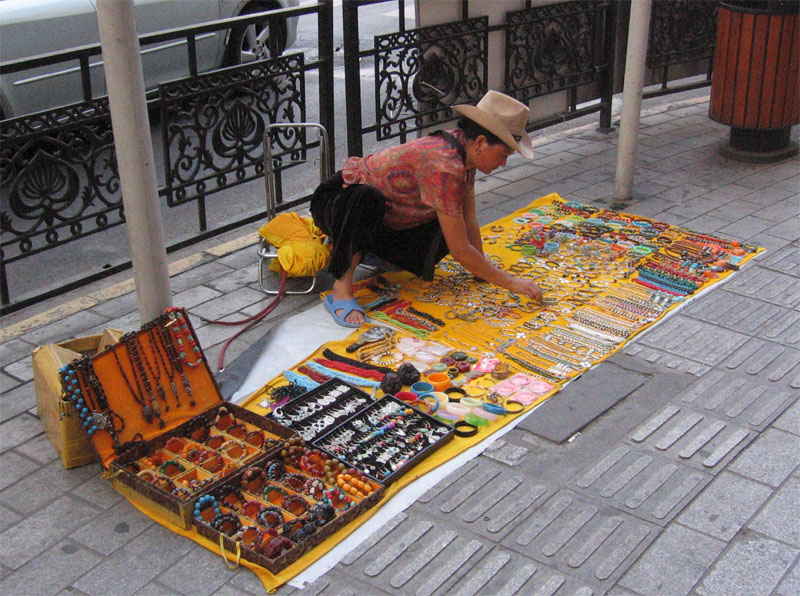
Near the station is a grocery store that sells imported and boutique products, it's definitely too expensive but sometimes it comes in handy - there's also a Beard Papa, a Japanese chain selling cream puffs. They're better than I expected. By the exits to the station is a pretty lively series of street stalls, dominated by people selling bootleg CDs or DVDs, as well as Tibetans selling various chotckies, they almost all sell more or less the same stuff:


Finally, restaurants in the area! I'm still learning what's good and I must admit my dinner today was one of the worst meals I've eaten in a long time. The area around Jing'an temple is notable for lots of foreign style restaurants, inluding all the American fast food like McDonald's, Burger King, and KFC...


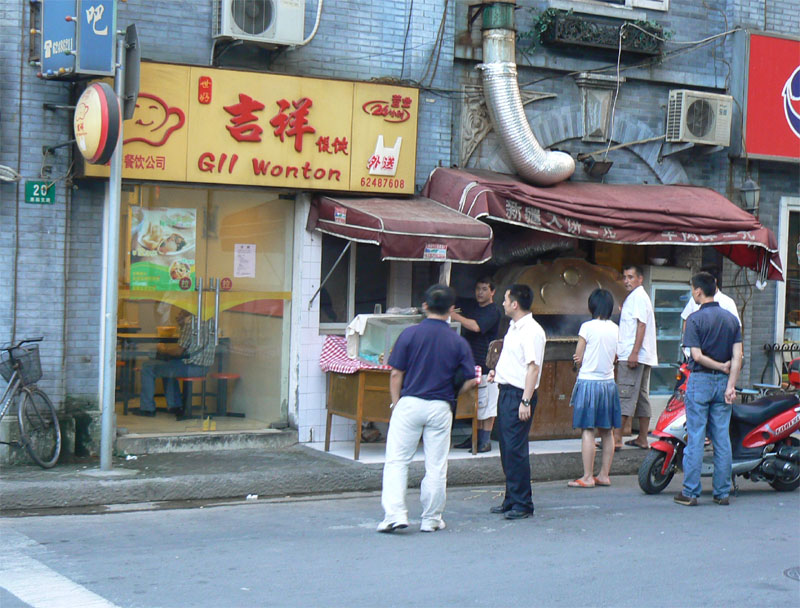
There's also plenty of pretty-nice Chinese restaurants that would be great for going out with a group of friends. But my preferences run towards low-key, everyday style restaurants, like won ton soup joints (although this chain isn't my top choice) or Muslim style eateries: